
Neighbouring Countries Cut Fuel Taxes, What About Indonesia? Airlangga's Response
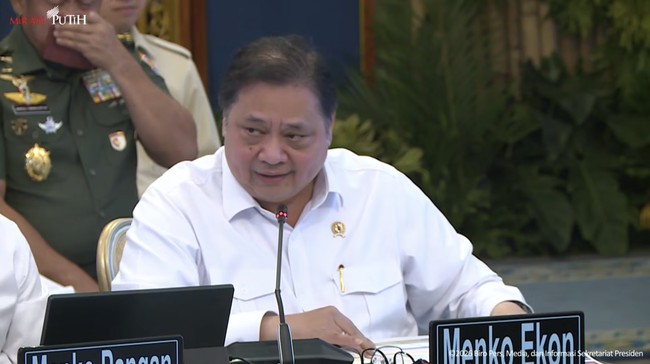
The Indonesian government is considering tax incentives to reduce the cost of fuel oil (BBM), which is fluctuating due to the conflict between Iran and the United States and Israel. This follows measures already implemented by neighbouring countries such as Australia and Vietnam.
Coordinating Minister for the Economy, Airlangga Hartarto, disclosed this. However, he emphasised that the government has not yet decided on providing those tax incentives.
“Regarding tax incentives, we will monitor developments, but for now, we have not made a decision on that,” Airlangga said during an online press conference on Tuesday (31/3/2026).
As is known, several of Indonesia’s neighbouring countries have already announced policies in response to the economic turmoil triggered by the US-Israel war with Iran. The war began with a US attack under President Donald Trump’s administration on Iran at the end of February 2026.
The US-Israel attack on Iran has disrupted energy commodity prices, such as fuel oil. This is particularly after Iran responded to the attack by closing the Strait of Hormuz, one of the world’s main oil and gas trade routes.
Global oil prices remained high in Tuesday morning’s trading (31/3/2026), amid escalating conflict heating up in the Middle East. As of 09:40 WIB, Brent crude oil was recorded at US$112.32 per barrel, while West Texas Intermediate (WTI) stood at US$102.53 per barrel, citing Refinitiv data.
The Australian government took emergency steps to curb the surge in cost of living due to rising global energy prices. On Monday (30/3/2026), Canberra announced a fuel tax cut, as well as a temporary waiver of road user charges for heavy vehicle users for three months.
In a press conference in Canberra, Prime Minister Anthony Albanese stated that the government would halve the excise duty on petrol and diesel. This policy is estimated to lower fuel prices by 26.3 Australian cents per litre.
“We understand that the cost-of-living pressures on the community are very real because the impact of the war in another part of the world is now felt directly here,” Albanese said, quoted by Reuters.
On the same occasion, attended by Energy Minister Chris Bowen, Finance Minister Jim Chalmers said the total cost of the policy to the government would be around 2.55 billion Australian dollars.
This latest step is part of a series of energy security policies taken by Canberra since the war began on 28 February. The government had previously announced the release of domestic reserves of petrol and diesel, as well as temporary relaxation of fuel quality standards.
In addition to the tax cut, the government also confirmed the implementation of the national fuel security plan. All state governments agreed to cooperate to ensure fuel distribution to the most needy regional areas.
Albanese explained that the plan has four levels of action, and Australia is currently at level two, ensuring national mobility continues. The highest level will focus on keeping critical services operational.
“While Australia’s fuel supply prospects remain secure in the short term, we must also be very clear to citizens that the longer this war lasts, the worse the impact will be,” Albanese said.
Meanwhile, Vietnam has officially temporarily eliminated environmental taxes on fuel oil to curb the surge in petrol prices.
Vietnam’s Ministry of Trade, in its official statement, explained that the environmental protection tax rate for petrol, diesel, and aviation fuel would be cut to zero percent. This emergency policy takes effect from Friday until 15 April to dampen domestic economic turmoil.
“This is considered an urgent and effective solution to stabilise the oil market and ensure national energy security amid escalating conflict in the Strait of Hormuz, which creates the biggest energy barrier ever,” the Ministry of Trade of Vietnam wrote in the official statement.
Data released by the ministry shows that the policy will reduce petrol prices by around 26% and diesel prices by just over 15%. This sharp decline comes after fuel costs skyrocketed dramatically at the start of this week due to tense geopolitical uncertainty.
India’s Finance Minister Nirmala Sitharaman had previously stated that the government is cutting central excise duties on domestically used petrol and diesel. This policy is described as a direct response to the crisis in West Asia.
In addition, the government has set new export tariffs for diesel and aviation turbine fuel. Sitharaman announced an export cost of 21.5 rupees per litre for diesel and 29.5 rupees per litre for aviation turbine fuel.
Source: jawawa.id (https://jawawa.id/newsitem/neighbouring-countries-cut-fuel-taxes-what-about-indonesia-airlanggas-response-1774968670)
Originally published by CNBC Indonesia (https://www.cnbcindonesia.com/news/20260331193341-4-722937/negara-tetangga-pangkas-pajak-bbm-ri-gimana-ini-kata-airlangga), translated from Indonesian