
Neighbourhood Watch: Keeping Communities Safe
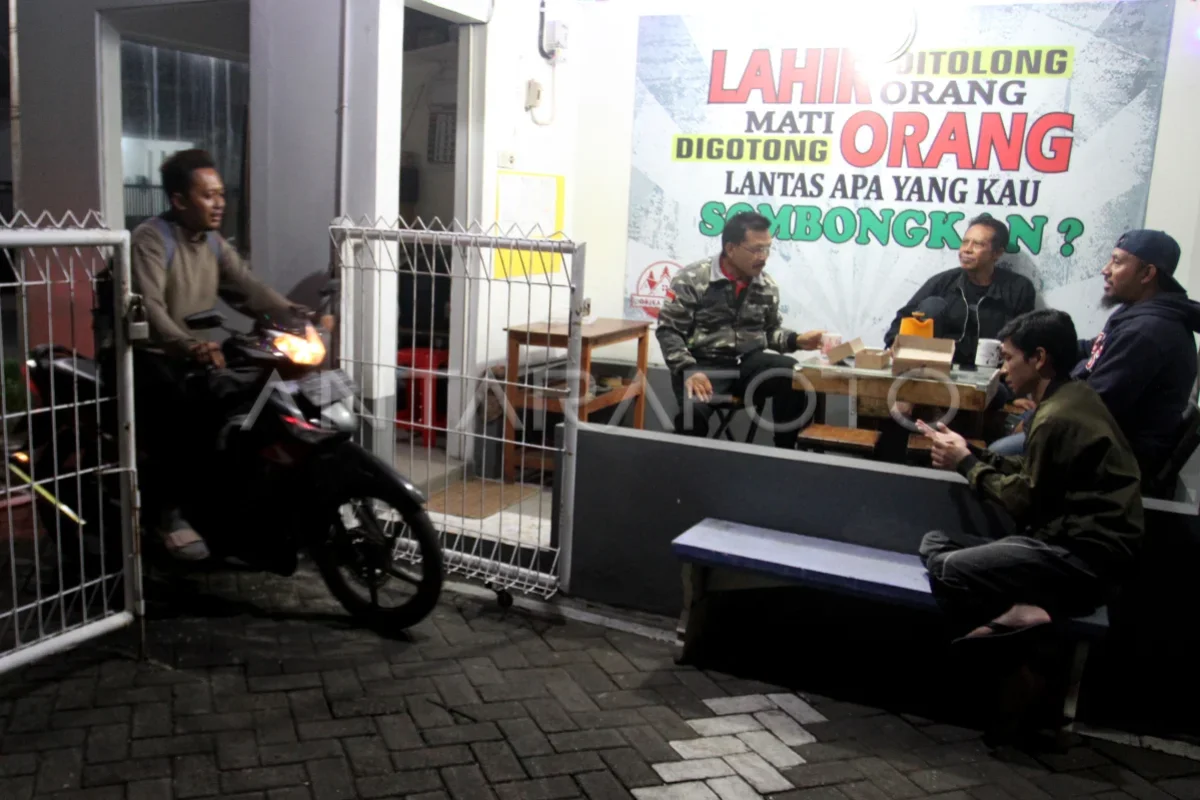
A strong sense of security comes from a balance between public vigilance, firm law enforcement and social care.
Surabaya (ANTARA) – A sense of security is a basic public need. It means more than simply living without crime; it is the peace of mind people feel when they go about their daily lives and children play without fear of danger. This sense of security grows from the presence of authorities, legal certainty and care among neighbours.
In urban areas, security cannot be left entirely to the government and police. Families and communities can recognise changes in behaviour and potential disturbances at an early stage. However, population mobility, busy lives and changing social patterns can weaken ties between neighbours.
In this context, the neighbourhood security system, or siskamling, remains relevant. Night patrols are not merely about keeping watch; they are a form of mutual cooperation that builds vigilance and solidarity.
That spirit has come to the fore again in Surabaya, East Java, after two teenagers aged 16 and 17 were allegedly assaulted by a group of motorcyclists on Jalan Bung Tomo in Ngagel in the early hours of Sunday (8 November 2026). Police are still investigating the incident.
Surabaya Mayor Eri Cahyadi has called on the public to reactivate siskamling to prevent security disturbances, including alleged thuggery. The city administration is also coordinating with police to investigate the background of children suspected of being involved in the group.
The call should encourage a community protection approach combining vigilance, law enforcement, family guidance and attention to young people.
Meaningful patrols
The strength of siskamling lies in residents’ familiarity with their surroundings. They know the condition of roads and alleys, which homes are empty, and the habits of people in the area. This local knowledge can help detect potential security problems.
For that reason, siskamling should form part of a prevention system, rather than being a ceremonial activity introduced only after a crime has occurred. Regular patrols can speed up the sharing of information, identify vulnerable locations and clarify emergency reporting channels.
The Surabaya City Government has promoted stronger security through the development of Pancasila Villages. The Municipal Civil Service Police Unit (Satpol PP) has reactivated neighbourhood security posts at the rukun warga (RW, community association) level, involving rukun tetangga (RT, neighbourhood association) and RW officials, and encouraging residents to take an interest in activity around their homes.
Surabaya Satpol PP Acting Head Irna Pawanti has also emphasised the early detection of risky behaviour among children, involving parents and schools.
However, the presence of a neighbourhood security post does not automatically guarantee safety. A post that is busy only when first reopened, without a regular schedule, assigned duties or communication with authorities, risks losing its purpose.
Strengthening siskamling should include mapping vulnerable locations based on verified incidents, emergency communication channels, incident records and coordination with bhabinkamtibmas (community police officers). Street lighting and CCTV cameras at strategic locations can provide additional support.
National Police Regulation No. 4/2020 on Community-Based Security, as amended by National Police Regulation No. 1/2023, provides a framework for public involvement in supporting security and public order.
Siskamling is not a rival police force. Residents’ role is to increase vigilance, prevent disturbances, protect victims and report incidents. Investigations and enforcement remain the responsibility of the authorities.
Residents’ courage must not be taken as permission to chase or assault people they suspect. Vigilante action can create new victims and disrupt legal proceedings. Safety and the presumption of innocence must remain guiding principles.
The roots of the problem
Preventing thuggery cannot be achieved simply by increasing patrols or reopening security posts. The issue needs to be examined more deeply when teenagers engage in behaviour that endangers themselves or others.
Surabaya Satpol PP has identified a number of children encountered by officers in connection with alcohol consumption, the creation of extreme content and activities involving thug groups. The children are said to be aged 12–15. Some are considered to be following their peers’ behaviour without understanding the consequences.
This account highlights the importance of understanding teenagers’ need for recognition and acceptance. Peer groups can offer a sense of belonging, but become dangerous when solidarity is built on intimidation, violence or conduct that harms others. This does not excuse wrongdoing; it is a reason to strengthen prevention.
The family is the first environment in which supervision and communication are established. Parents need to pay attention to changes in behaviour, understand their children’s social circles and provide an opportunity to talk without judgement.
Responsibility cannot be placed on families alone. Schools, communities and the government also need to provide healthy spaces for young people to grow.
Schools should strengthen character education, emotional management, non-violent conflict resolution and digital literacy. Youth organisations, sports communities, arts groups and other youth organisations can provide positive activities after school.
Children should be able to gain recognition through achievement and creativity, rather than through displays of courage in committing violence.
Supervision must be proportionate. A person’s appearance, hairstyle, clothing or accessories cannot be used to determine whether they are involved in thuggery. Attention should instead focus on concrete behaviour, such as threats, intimidation, calls to carry weapons and violence.
For children in conflict with the law, Law No. 11/2012 on the Juvenile Criminal Justice System mandates restorative justice and provides for diversion in cases that meet the requirements.
This approach does not remove responsibility; it creates scope for guidance and rehabilitation while taking victims into account. Action against violence must go hand in hand with efforts to prevent children from repeating such behaviour.
Keeping watch together
Community safety requires a clear division of responsibilities. The city administration should lead and coordinate. Satpol PP should strengthen guidance on public order and Pancasila Villages. The National Unity and Politics Agency (Bakesbangpol), together with the Anti-Thuggery Task Force, can support residents experiencing intimidation, while police handle criminal reports and legal proceedings.
The Surabaya City Government has urged residents not to be afraid to report threats or intimidation. This support system should be linked to siskamling, so residents know where to report and do not feel alone when facing security problems.
At neighbourhood level, RT and RW officials need to establish an accessible communication system. Residents should know whom to contact and what initial steps to take in an emergency.
Information must be handled carefully so that it does not become an accusation or expose the identity of someone who has not been proven guilty. Registering new residents should also be done proportionately, with respect for everyone’s privacy and rights.
Guidance for children should not end with calling in their parents or recording their details. It requires family support, counselling, school involvement, youth activities and referrals to social services as needed.
The city government can measure success by the continuity of neighbourhood security posts, follow-up to reports, changes in security disturbances at vulnerable locations, and outcomes from support for children and families.
Surabaya needs a safe and humane environment. Residents should have the courage to report crime, but not take the law into their own hands. Children need supervision, while still being given room to grow and put their lives back on track.
At its heart, siskamling is not merely about protecting a neighbourhood from people considered a threat. It is about nurturing care so that no resident feels alone when facing danger.
A strong sense of security comes from a balance between public vigilance, firm law enforcement and social care. From neighbourhoods where people know and look after one another, Surabaya can build social resilience while protecting its young people on the path towards Golden Indonesia 2045.
Source: jawawa.id (https://jawawa.id/newsitem/neighbourhood-watch-keeping-communities-safe-1794448415)
Originally published by Antara (Indonesian) (https://www.antaranews.com/berita/5848159/siskamling-merawat-aman-kampung), translated from Indonesian