
Needle traces at the end of oversight
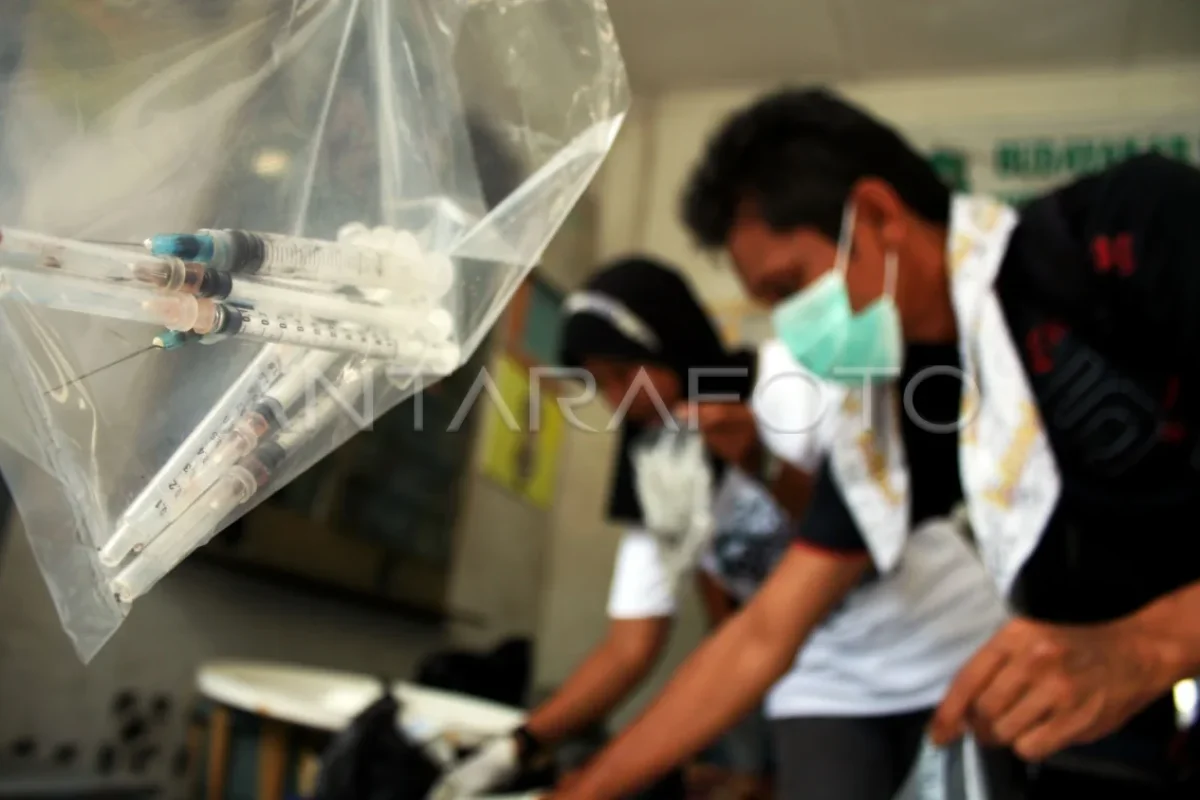
A single used syringe requires only a few centimetres of space. However, when a needle that should have ended up in a special container is instead found in a water channel, the problem becomes far larger. It is no longer merely a matter of scattered medical items, but a question of how tightly the waste management system works from upstream to downstream.
The discovery of suspected hazardous and toxic waste (B3) in the water channel on the left side of the Tambak Sumur toll exit in Sidoarjo Regency on 25 August 2026 served as an important reminder for Surabaya. At the site, a pile of syringes was found, while a paper bag bearing the logo of the Surabaya Regional General Hospital Eka Candrarini (RSUD EC) was also visible. The Surabaya city government subsequently carried out checks together with the Surabaya Environmental Agency (DLH), the Health Office, RSUD EC, and the Sidoarjo Regency government.
Initial results indicated that the syringes found had never been used by RSUD EC. The hospital also stated that medical waste management is carried out through a third party, with segregation of sharps waste, use of special containers, periodic transport, weighing, and electronic recording through the Festronik system.
For this reason, the case should not stop at the simple question of whose needles they are. The more important question is how medical waste could escape from a supposedly controlled management system and end up in an open space.
There is one interesting aspect of the used syringe case in Tambak Sumur. The identity on the packaging does not automatically prove the origin of the waste. A paper bag bearing the RSUD EC name was indeed found at the location, but according to the city government and the hospital, the packaging was an outpatient medicine bag. RSUD EC has replaced plastic bags with paper bags, while the items found still had the needle and syringe attached and used a brand that the hospital had never purchased.
The finding shows that tracing medical waste cannot rely on a single visual clue. Identification must be carried out by matching the type and brand of equipment, procurement records, the amount of waste produced, storage records, handover evidence, transport manifests, and the final processing location.
This is where the principle of traceability becomes important. Hazardous waste should not become an object without identity once it leaves a healthcare facility. Every transfer is part of a management chain that must be verifiable.
The legal framework for hazardous waste management is already available through Law Number 32 of 2009 on Environmental Protection and Management. The law contains provisions on the management of hazardous and toxic materials and hazardous waste and has been amended several times, most recently through Law Number 6 of 2023.
Government Regulation Number 22 of 2021 on the Implementation of Environmental Protection and Management requires every person who produces waste to manage the waste they generate. Specifically for hazardous waste, management includes, among other things, determination, reduction, storage, collection, transport, utilisation, processing, and disposal.
This means that responsibility does not end when waste is handed over to a transport company.
Source: jawawa.id (https://jawawa.id/newsitem/needle-traces-at-the-end-of-oversight-1787799246)
Originally published by Antara (Indonesian) (https://www.antaranews.com/berita/5712927/jejak-jarum-di-ujung-pengawasan), translated from Indonesian