
Nearly 200 Countries Gather for Emergency Talks in Türkiye: What Is Happening?
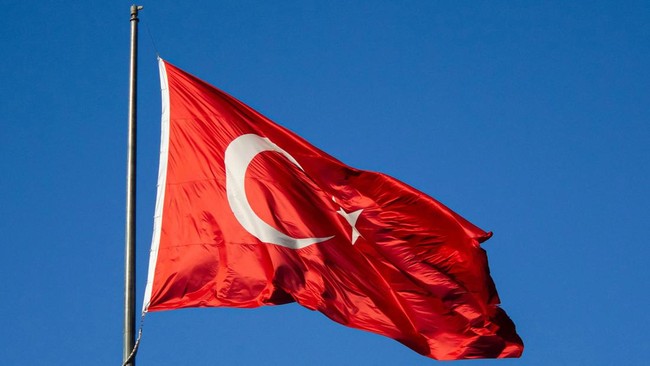
Representatives from nearly 200 countries officially gathered on Türkiye’s Mediterranean coast on Monday (9 November 2026). They will hold two weeks of COP31 climate talks amid escalating global turmoil and crises.
According to Reuters on Monday (9 November 2026), energy-security threats stemming from war and a surge in electricity demand from artificial intelligence (AI) are putting new pressure on the talks. The United States’ absence from the cooperation agenda is also feared to make collective efforts to combat global warming more difficult.
John Holdren, a professor of environmental policy at Harvard University, said the series of crises had created an exceptionally challenging backdrop. The turmoil is expected to make it harder for host Türkiye to secure a strong climate agreement.
“It is difficult to be optimistic,” Holdren said.
Türkiye’s COP31 presidency has focused its aims on electrifying more than a third of the global economy by 2035. This ambitious target represents a significant increase from the current level of around one-fifth.
Climate advocates have criticised the commitment, however, because it does not require the additional electricity to come from low-carbon sources. This has fuelled fierce debate over whether electrification alone can be counted as climate progress.
Meanwhile, a coalition of South Pacific island nations continues to push for a clearer global roadmap for moving away from fossil fuels. Oil-producing countries such as Saudi Arabia insist that fossil fuels can remain part of the energy mix if accompanied by emissions-reduction technology.
A United Nations Environment Programme (UNEP) report in October said the world was now on course to exceed the 1.5°C warming limit. This stark assessment is adding to pressure for faster action on the global climate crisis.
Manjeet Dal, an adviser to the Least Developed Countries bloc and director of Climate Analytics South Asia, pointed to a series of deadly extreme-weather events in Western Europe. He also cited the collapse of a glacier in Nepal in 2026, which killed more than 1,450 people and left thousands more missing.
“This year has proved to be one of the deadliest on record for disasters driven by climate change,” Dal said.
The impact of war and the AI surge
More specifically, the US-Iran war, now in its ninth month, has severely disrupted the flow of Middle Eastern oil shipments through the Strait of Hormuz. The blockage has sent global fuel prices soaring and prompted many governments to scramble for new supplies.
US President Donald Trump’s administration has responded to the turmoil in the Middle East by pursuing policies to maximise oil, gas and coal production. Asian countries including South Korea, India and Thailand have also agreed to backtrack by increasing their reliance on coal.
“Many people who might previously have felt uncomfortable arguing for continued, very high fossil-fuel use now feel emboldened to make that case,” Holdren said.
Brazilian diplomat Andre Correa do Lago, who led last year’s COP, sees renewable energy deployment continuing to surge despite the conflicts. The energy transformation has been driven in large part by the rapid expansion of very low-cost clean-technology exports from China.
“The wars have strengthened the case for accelerating the energy transition. The US is different in this respect,” do Lago said.
At the same time, the rapid spread of AI technology has driven up global electricity demand and contributed to greenhouse-gas emissions. At COP31, Türkiye will ask all delegates to sign a commitment to ensure that AI continues to be developed sustainably.
John Denton, secretary-general of the International Chamber of Commerce (ICC), said businesses wanted regulatory clarity. Companies are urgently seeking legal certainty amid growing uncertainty over the energy transition.
“Delivery cannot remain a slogan or be left to voluntary initiatives,” Denton said.
“COP31 must send a clear policy signal that gives businesses the confidence to invest in electrification and the wider energy transition,” he added.
“And turn adaptation needs into bankable projects.”
Source: jawawa.id (https://jawawa.id/newsitem/nearly-200-countries-gather-for-emergency-talks-in-turkiye-what-is-happening-1794217840)
Originally published by CNBC Indonesia (https://www.cnbcindonesia.com/news/20261109123635-4-783512/200-negara-tiba-tiba-kumpul-darurat-di-turki-ada-apa), translated from Indonesian