
Nearly 2,000 Hectares of Savanna in Tambora National Park Ablaze, Forestry Ministry Intervenes
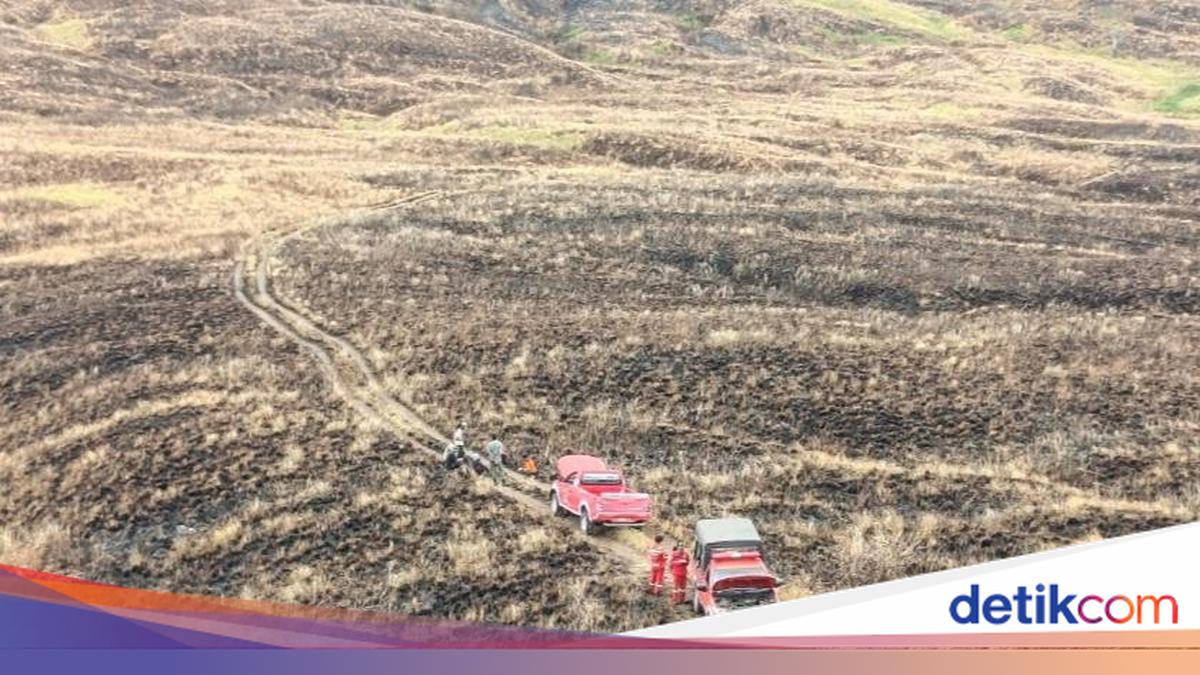
Around 1,956 hectares of savanna in Tambora National Park (TN Tambora), West Nusa Tenggara (NTB), have burned. The Ministry of Forestry (Kemenhut), together with a joint team, has stepped in to bring the fire under control.
Tambora National Park is a nature conservation area spanning 71,645.64 hectares that has been designated by UNESCO as a World Biosphere Reserve. The area is a habitat for various wild animals, including the yellow-crested cockatoo, red-headed lorikeet, Australian roller and Timor deer.
“This fire not only threatens wildlife habitats and a high-value conservation area, but also has an impact on the local economy. Beyond affecting air quality, the blaze can disrupt nature tourism activities,” said the Director General of Forestry Law Enforcement, Dwi Januanto Nugroho, in a statement on Thursday (9 July 2026).
Dwi said the fire was first detected on Sunday (5 July 2026) at the Piong Resort. Dry weather conditions, highly flammable savanna vegetation, fairly strong winds and limited water sources caused the flames to spread rapidly.
Since the fire broke out, Dwi continued, the Tambora National Park Office together with Fire-Conscious Communities (MPA) had attempted initial containment by limiting the fire’s spread. To strengthen the extinguishing operation, the Ministry of Forestry also deployed a Manggala Agni unit.
“At present, the Ministry of Forestry, through the Forest Fire Control Office for the Java, Bali and Nusa Tenggara Region (Balai Dalkarhut Jabalnusra) and the Directorate General of Forestry Law Enforcement, together with the Tambora National Park Office, Fire-Conscious Communities and other related elements, continues to carry out extinguishing operations in the field,” he said.
The Head of Balai Dalkarhut Jabalnusra, Bambang Setyo Antoko, explained that the firefighting operation is focused on suppressing the fire’s rate of spread, with strategies adapted to the terrain characteristics of Tambora National Park.
“The savanna characteristics in Tambora mean the fire can spread quickly, especially when winds pick up and water sources are limited,” he explained.
For that reason, the firefighting strategy is being adjusted to developing conditions in the field so that the fire’s spread can be controlled effectively. The extinguishing operation is still ongoing, involving all relevant elements.
“Fire control cannot rely on the government alone. Collaboration from all parties is needed so that prevention becomes a shared culture,” said Bambang.
He reminded regional governments, local authorities, area managers, tourism operators and communities to heighten vigilance during the dry season, avoid activities that could potentially trigger fires, and immediately report any indications of fire so that handling can be carried out as early as possible.
“The Ministry of Forestry will take firm action against legal violations that cause fires, in accordance with prevailing laws and regulations,” Bambang asserted.
Meanwhile, the Head of the Tambora National Park Office, Abdul Azis Bakry, said that protecting Tambora does not stop once the fire is brought under control, but continues with efforts to ensure the area’s functions are preserved.
“After the fire can be controlled, our work is not yet finished. Area restoration will be carried out in stages, alongside strengthened patrols, early detection and community involvement, so that the area’s ecological functions and its benefits for the community are maintained in the long term,” he concluded.
Source: jawawa.id (https://jawawa.id/newsitem/nearly-2-000-hectares-of-savanna-in-tambora-national-park-ablaze-forestry-ministry-intervenes-1783605127)
Originally published by detikBali (https://www.detik.com/bali/nusra/d-8567354/1-956-hektare-savana-tn-tambora-terbakar-kemenhut-turun-tangan), translated from Indonesian