
Nazi Archives Expose Old Shame of German Families
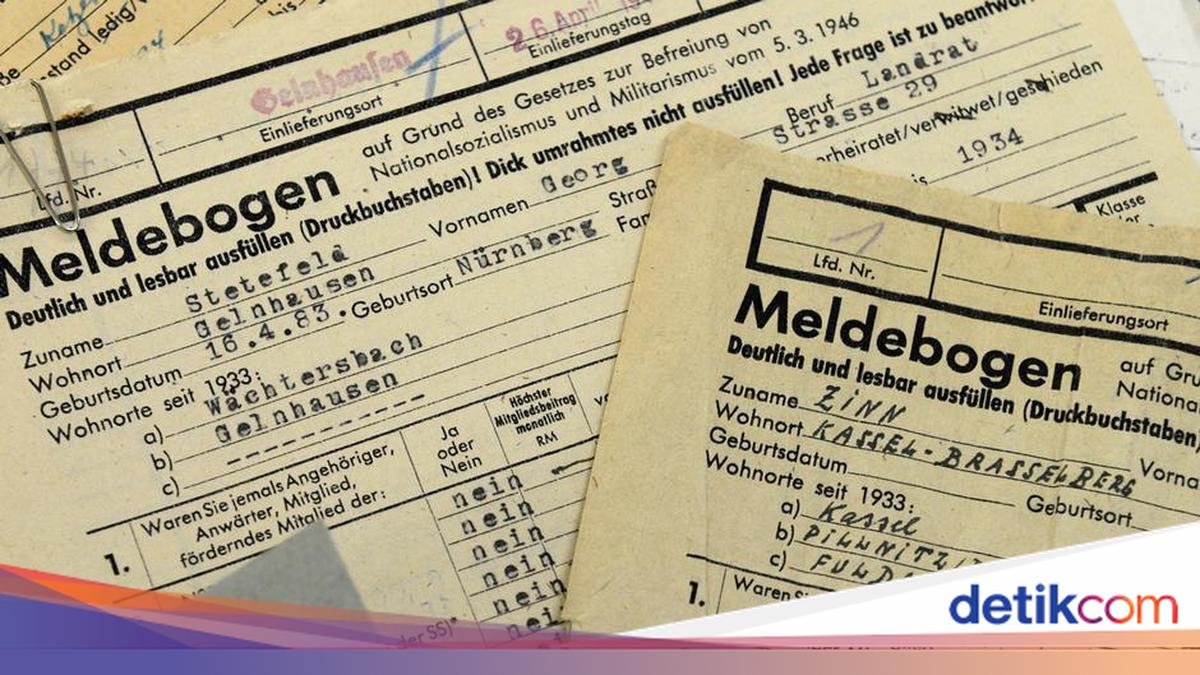
“I always knew my grandfather as a left-wing trade unionist. And now his name appears in the NSDAP membership archive.” That is how Hanno Dannenfeldt described his shock to DW. For years, his family believed his paternal grandfather had a clean record, untainted by involvement with the Nazi regime. Dannenfeldt is just one of countless Germans who wanted to find out whether their family members were ever part of the National Socialist German Workers’ Party (NSDAP). They flocked to the US National Archives when the NSDAP membership cards were recently published. However, they first encountered frustration. The archive website was often inaccessible due to overwhelming traffic. Even when access was gained, the navigation system proved complicated and unfriendly for casual users. To find a single name, people had to trawl through piles of documents, sheet by sheet.
Consequently, the German weekly ‘Die Zeit’ took the initiative to download all the microfilm reels from the US National Archives and process them to simplify searches. Users simply enter a name, and if necessary, a year and place of birth, and the search results appear. This paid service is likely also of interest to people in South America, given that many Nazi figures fled and hid there after the Second World War. Unfortunately, users must take out a subscription first to access the archive. Confronting history can be a painful experience. A single document can instantly change how someone views their own family after decades. On one hand, there are memories of a loving grandfather who always brought joy. On the other, it is now there in black and white: that same grandfather was once a member of the Nazi party.
In almost all families in Germany, the crimes of the Nazi era were rarely discussed openly, let alone the involvement of one’s own family. A study shows that more than two-thirds of Germans believe their ancestors were not perpetrators of Nazi crimes. Almost 36 per cent believe their family members were victims of the regime, while more than 30 per cent believe their ancestors helped potential Nazi victims, for example by hiding Jewish people. These beliefs, unfortunately, bear little resemblance to reality. Active resistance against the Nazi regime was carried out by only about one per cent of the population. In 1945, one in every five adults in Germany—around 8.5 million people—was registered as a member of the Nazi Party. At least on paper, they were part of the system that propped up the oppressive regime.
‘They were respectable people.’ After the war ended, involvement with the Nazi regime was erased from memory. Germany lay in ruins, occupied by the United States, Britain, France, and the Soviet Union. Hitler had committed suicide to avoid trial, while other war criminals were tried and sentenced at the Nuremberg Trials. ‘There was always an assumption that the perpetrators were those sitting in the dock. As a result, the rest of society seemed untouched,’ cultural scientist Aleida Assmann told DW. This view began to shift when citizens working as doctors, industrialists, and civil servants were also brought to court and asked to account for their actions during the Nazi regime. ‘At that time, people said, “Well, then everyone is on trial now. That can’t be right. They are respectable people,”’ said Christian Staas, a journalist for Die Zeit. ‘From that point on, many Germans began to reject these legal processes. The majority saw themselves as victims of Nazism, not as the guilty party.’
Because of this, many claimed not to have known about the mass murder of Jewish people. As part of the re-education programme forced by the Allies, all German citizens were required to watch documentary films about the concentration camps. The goal was simple: to block a nation’s collective denial of its own history. At the same time, the process known as denazification began. Every German citizen had to fill out a long questionnaire containing personal data, employment history, and whether they had ever been a member of the Nazi Party. Almost everyone tried to appear as if they were not deeply involved. Even an SS member could still be declared ‘clean’ if they could convince the authorities that they did not actually support Nazi ideology. A common excuse was that access to education and the job market often required party membership. Among the public, the denazification clearance certificate was nicknamed ‘Persilschein’—‘Persil certificate’—referring to a detergent brand famous for its slogan of washing ‘whiter’. ‘White is the colour of purity, without stain, and of course the symbol of innocence,’ said Aleida Assmann. Through this ‘Persil concept’, people seemed to wash away their guilt.
According to Assmann, the Western Allies, especially the United States, were more interested in rebuilding Germany as a functioning state. ‘They wanted a clear dividing line and a new beginning. Nazi society had to be transformed into a democratic society, but with the same people. How could that be done? By forgetting. People stopped talking about it.’ Konrad Adenauer, the first Chancellor of the Federal Republic of Germany, viewed the issue pragmatically. ‘You don’t throw out the dirty water until you have clean water,’ he said, justifying the appointment of former Nazi members to the new government. After the war, Germany was busy rebuilding a devastated country. In the 1950s came the ‘Wirtschaftswunder’—economic miracle—which brought new prosperity. It was only the next generation that began to ask the uncomfortable questions.
Source: jawawa.id (https://jawawa.id/newsitem/nazi-archives-expose-old-shame-of-german-families-1783774357)
Originally published by detikcom (https://news.detik.com/dw/d-8569881/arsip-nazi-buka-aib-lama-keluarga-jerman), translated from Indonesian