
Nayan Project by Gen-Z Educates on the Importance of Early Colour Blindness Detection
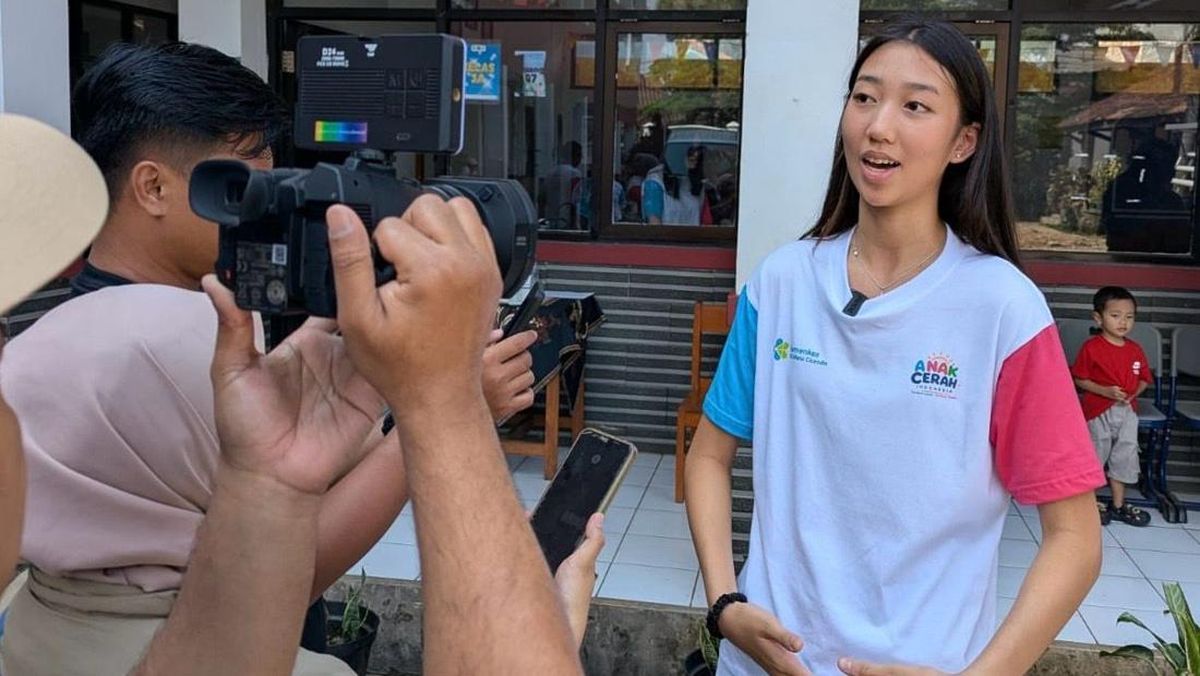
Awareness of the importance of early detection of colour blindness remains low in Indonesia. Prompted by this situation, a 16-year-old teenager, Celine Winarta, initiated the Nayan Project, an educational movement and campaign aimed at improving public understanding of colour blindness from an early age. The inaugural Nayan Project programme was held at SDN 022 Cicadas in Bandung on Monday (22/6). The name ‘Nayan’ is derived from Sanskrit, meaning ‘vision’. During the event, Celine Winarta, Founder of ACI, explained that colour blindness, or colour vision deficiency, is a condition that causes a person difficulty in distinguishing certain colours, particularly red and green. This condition occurs due to abnormalities in the cone cells of the retina. The Nayan Project is a community initiative by Anak Cerah Indonesia (ACI) in collaboration with Cicendo Eye Hospital and Panon Mahia Nusa. According to Celine, ACI has three main focuses: firstly, awareness and education regarding children’s issues and health; secondly, serving as a platform for young people who wish to contribute to society as volunteers; and thirdly, taking real action to care for children’s health. The inspiration for the Nayan Project stemmed from Celine’s personal experience with a friend who has colour blindness. Her friend was able to live a normal life because the condition was detected early. ‘However, because it was detected early, my friend can live normally and develop well. That moved me to do something,’ she said. This motivation was further strengthened after Celine read the book ‘Nayan and the Mystery of Colours’ by the President Director of the Cicendo National Eye Hospital, Dr. Antonia Kartika. Bandung was chosen as the first city for the programme because it is Celine’s hometown and the location of Cicendo Eye Hospital, which fully supports the campaign. ‘We are supported by RS Cicendo, which is also a national eye hospital. Thirdly, we read the book Nayan & Misteri Warna, written by Dr. Antonia, who also happens to be the President Director of RS Cicendo,’ she stated. After Bandung, Celine said the colour blindness awareness education will continue to other cities. The main focus is to reach state schools, given their large numbers. ‘We also want to educate the public that BPJS Kesehatan should cover colour blindness examinations. So far, it hasn’t, possibly due to a lack of information about colour blindness itself,’ she said. ‘Going forward, we hope the Nayan Project can continue to other provinces and beyond. Additionally, we will continue to strengthen the campaign through social media, considering Gen-Z and Gen-Alpha are digital natives,’ Celine added. Meanwhile, the President Director of Cicendo Eye Hospital, Dr. Antonia Kartika, Sp.M(K), M.Kes, stated that the prevalence of colour blindness in Indonesia varies. Based on Basic Health Research (Riskesdas) data, the prevalence is around 0.7 percent. However, several studies have found rates between 2 and 5 percent in school and community populations, with the majority of cases occurring in boys. She explained that although it affects future prospects and careers, education regarding colour blindness in Indonesia remains minimal. ‘Therefore, parents and teachers need to understand early signs, such as a child frequently misidentifying colours, difficulty following lessons that use colour codes, or experiencing confusion when reading coloured maps and graphs,’ Dr. Antonia said. She continued that early detection is not intended to limit a child’s future. On the contrary, by knowing the condition early, a child can adapt, develop their potential optimally, and anticipate obstacles that may arise in the future. ‘Awareness from an early age will make a child understand that colour blindness is not a deficiency that hinders achievement, but a condition that can be managed with proper knowledge and strategies,’ she added. Cicendo Eye Hospital supports the Nayan Project initiative because it is carried out by young people. The involvement of Gen-Z and Gen-Alpha is crucial for improving the vision of Indonesian children in the future. ‘Facts show that approximately 75% of a child’s development, whether motoric, emotional, or cognitive, originates from vision. The function of vision is not only to detect objects, whether seen clearly or blurry, but also to identify colours,’ added the author of the Nayan & Misteri Warna book. For a child, Dr. Antonia explained, colour vision is highly influential on education, as almost all subjects are related to colour. For example, a child is asked to look at a coloured graph, and the teacher asks which colour represents the highest figure. Sometimes, a person with colour vision deficiency will answer incorrectly, not because they lack understanding, but because their colour identification differs from other children. The Nayan Project activity at SDN 022 Cicadas began at 7:00 AM with eye examinations for around 200 participants, including students, teachers, and parents. Despite taking place during the school holidays, public enthusiasm was high, with hundreds of attendees present from morning until noon. ACI also partnered with stationery manufacturer Snowman to distribute gifts to all children participating in the activity. A cheerful atmosphere coloured the event, with children enthusiastically participating in every stage of the examination, from eye tests to various educational activities prepared by the committee.