
Navigating the Future Economy through the 2026 Economic Census
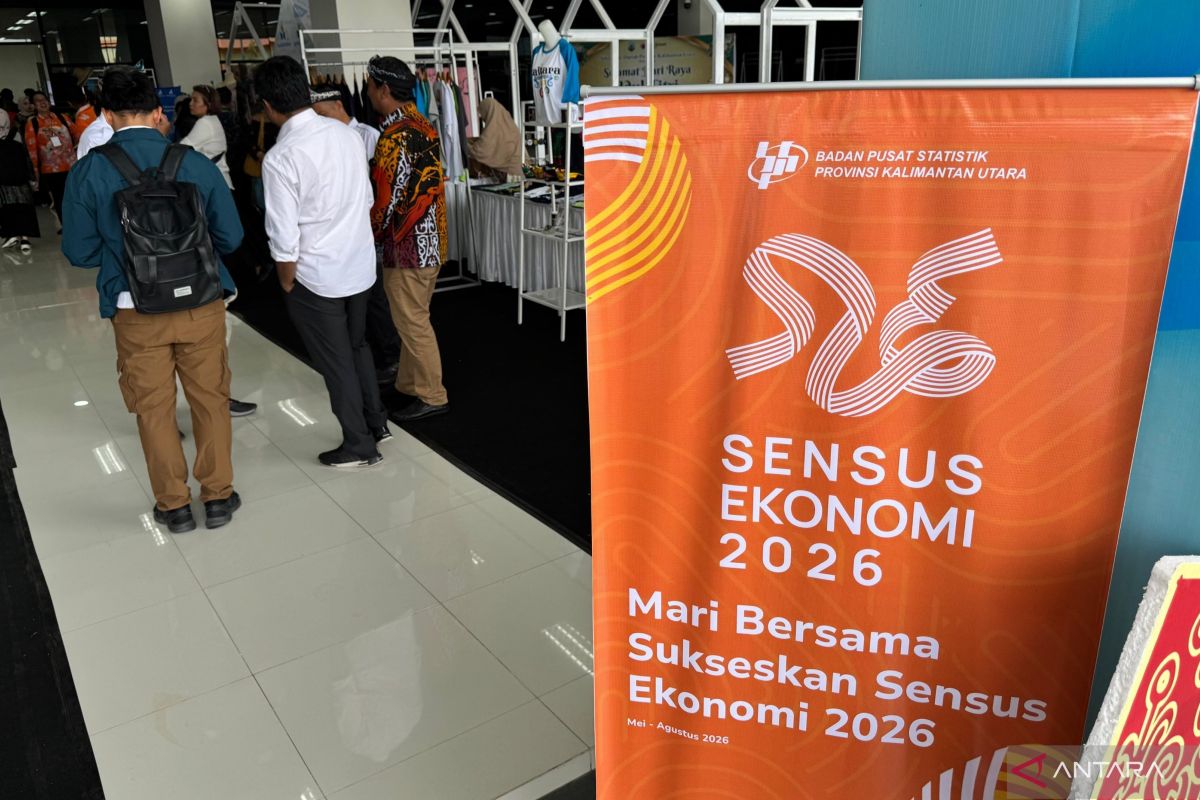
The world is moving within an increasingly uncertain landscape. Trade wars, global supply chain fragmentation, the global economic slowdown, and digital technology disruptions mean that change is occurring far more rapidly than a decade ago. Consumption patterns are shifting, new types of jobs are emerging, and conventional business models are gradually being displaced by platform-based economies.
In such a situation, the state can no longer rely on old assumptions to design future policies. Development requires a much more important foundation: accurate, relevant data capable of reading the changes of the era. This is where the 2026 Economic Census (SE2026) finds its strategic significance.
The 2026 Economic Census is not merely a routine data collection activity conducted every ten years. This census is a national navigation instrument to ensure that the direction of Indonesia’s economic development is truly based on the latest realities. Without strong data, the nation is like a large ship moving without a compass.
In the modern economy, data is often referred to as ‘the new oil’. However, unlike oil, the value of data lies not solely in its ownership, but in the ability to process it into precise knowledge and targeted policies. Nobel Prize-winning economist Ronald Coase once warned, ‘If you torture the data long enough, it will confess.’ This quote carries a profound message: the quality of policy depends heavily on the quality of data and how the state interprets it. Weak data will result in incorrect diagnoses, and incorrect diagnoses almost always lead to ineffective policies. Therefore, statistics are not merely a collection of numbers; statistics are the compass of development.
Indonesia currently possesses sufficiently strong economic capital. Amidst global pressures, national economic growth remains relatively stable at around 5 per cent. Unemployment rates continue to decline, inflation is relatively controlled, and poverty figures show an improving trend. This resilience demonstrates that the national economic foundation is robust enough to face various global shocks.
However, behind these achievements, there is a structural transformation moving very rapidly, which is often not fully captured by conventional statistical instruments. Today, the challenge of development is no longer just about calculating how much Gross Domestic Product is created. The true challenge is understanding how the economy is changing exponentially. The business world is becoming increasingly fluid, flexible, and digitised.
Economist Dani Rodrik refers to this phenomenon as a consequence of hyper-globalisation; where global economic integration causes shocks in one region to spread quickly to other countries. The impact is clearly visible in daily life. MSMEs must now compete in a rapidly changing digital market, informal workers are increasingly dependent on online platforms, and changes in consumer behaviour can shift markets in a matter of months.