
Navigating Jakarta’s Rush: Women’s Stories on the MRT
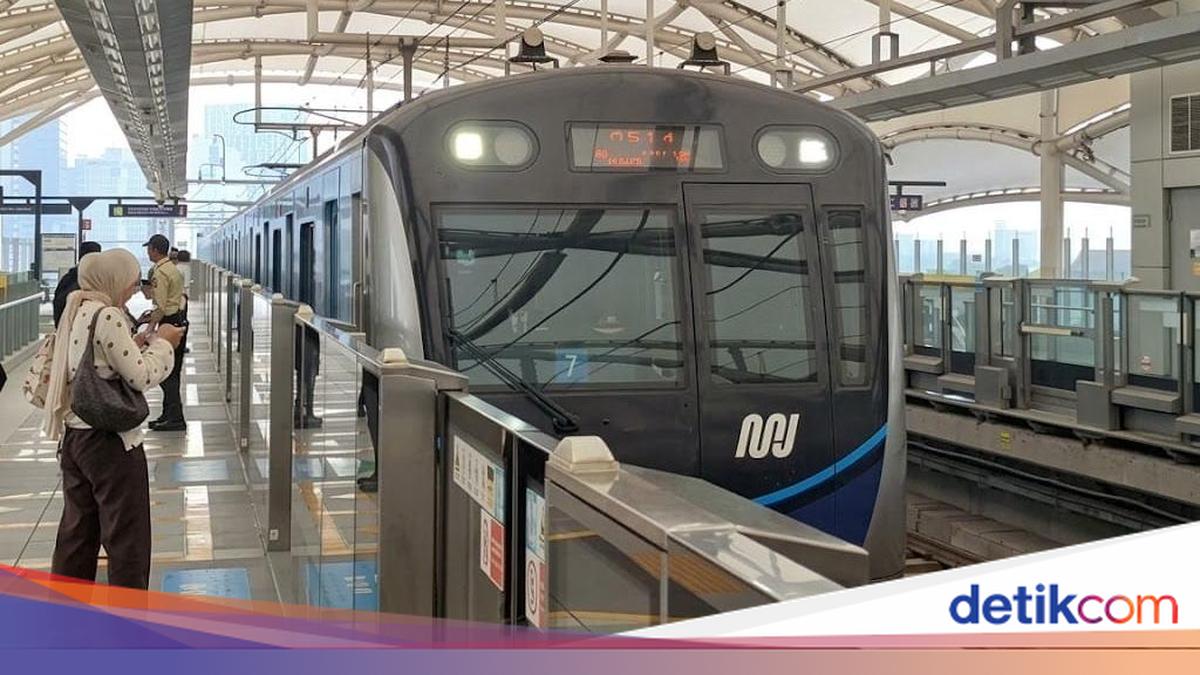
At around 5am, Aprilia, 32, is already busy in her kitchen preparing food for her child and husband. While waiting for the meal to cook, she also gets everything ready for work.
She often has to complete these routines quickly to avoid leaving for the office too late.
Once the household tasks are done, she and her husband get ready to leave. He usually takes her to the TransJabodetabek D41 bus stop near the Desari Sawangan toll gate in Depok, from where she travels to Fatmawati MRT Station.
“As a working mother, life can be quite hectic because I have to divide my time between the home, my child and work. I live in Sawangan with my husband and our toddler, while my workplace is in Cempaka Mas, so every day I have to manage my time and energy,” Aprilia told detikcom in Fatmawati, South Jakarta, on Tuesday (13 October 2026).
“In the morning, I usually start by preparing what my child and family need, as well as my own things for work. Then I leave for work and continue the journey by public transport,” she added.
Aprilia said the integration of TransJabodetabek with the MRT had made her commute easier, as she did not have to expend extra energy driving to work.
“My commute has become part of my daily routine. Sometimes it is tiring, especially when I have to leave early and return exhausted after work. But I also have responsibilities as a mother, so I have to manage everything to keep work going while still making time for my family. Public transport helps me manage that routine,” she said.
Small gestures make a big difference on public transport
As a commuter, Aprilia also regularly uses public transport in different circumstances, including when she was pregnant. During her pregnancy, however, she was more selective about which modes of transport to use.
She tended to choose services where she was more likely to find a seat. She said the opportunity to sit on public transport was a great help to pregnant women.
Working and carrying out other activities while pregnant can be physically demanding, she said, so being able to sit on public transport allowed her to rest briefly.
“I have taken the MRT while pregnant. I paid more attention to how I was feeling when travelling. When using public transport, I would think about whether the journey would be comfortable, whether I could get a seat and what the train would be like during peak hours. For pregnant women, easy access, clear information and other passengers’ awareness of the need to offer a seat are really important,” Aprilia said.
“Things that may seem simple, such as not having to jostle or being able to rest while waiting for a train, can mean a lot to a pregnant woman. That experience also made me realise that public transport should ideally be comfortable for everyone, including pregnant women and mothers travelling with children,” she added.
Kuma, 32, a mother of two, also spoke about her experiences using public transport. She often takes her children on public transport, saying she wants them to gain experience using it. Originally from Semarang, she now lives away from her hometown.
She believes public transport can help instil positive values in children, which she hopes will serve them well as adults.
“I often use the Jakarta MRT with my child, and I want to introduce public transport to them from an early age. Through these experiences, children can learn about different modes of transport, follow rules in public spaces and understand that travelling does not always require a private vehicle. For me, experiences like this are a fun way to learn outside the home,” Kuma told detikcom in Lebak Bulus, South Jakarta, on Wednesday (14 October 2026).
However, Kuma said she is more selective about public transport when travelling with her children, to ensure they feel comfortable and safe.
“When I have to choose between the KRL and MRT while travelling with my child, I tend to choose the MRT. In my experience, the journey is relatively more comfortable and is not as crowded at certain times,” she said.
“Travelling with a child requires extra attention. I have to make sure they feel comfortable and safe throughout the journey so I can focus on looking after them,” she added.
Kuma said facilities such as nursing rooms at Jakarta MRT stations were also helpful. On one occasion, she was late expressing breast milk and began to feel discomfort and pain.
As a breastfeeding mother, she needed a private space to express milk. While travelling, she decided to get off at an MRT station to use the nursing room.
Kuma said this was not the first time she had used a nursing room. She had used the facilities several times for breastfeeding and other needs involving her child.
“As a mother, one facility I have found particularly useful is the nursing room. I have used it several times to change my child’s nappy, breastfeed and express milk. A comfortable, private breastfeeding room is very helpful because a baby’s needs cannot always wait until the journey is over,” Kuma said.
“What impressed me most was the attention to small details. The nursing room I used had a water dispenser to help mothers prepare formula, as well as simple items such as a sponge or silicone cleaner for bottles and teats. There was also a sink for washing hands and cleaning bottles,” she added.
Lisa, 60, a public transport user, offered another perspective. She said integrated transport services made it easier for her to travel.
She recalled travelling with her daughter for a job interview, taking a TransJakarta bus and then continuing on the Jakarta MRT to reach their destination.
The Jakarta MRT runs from Lebak Bulus Station to Bundaran HI, passing through major office and government districts, as well as tourist and food areas such as Blok M.
“We’ve just accompanied my daughter to an interview, and now we’re going to Blok M to eat,” Lisa said at Blok M MRT Station on Thursday (15 October 2026).
However, Lisa said many passengers, particularly younger people, were reluctant to give up their seats to passengers with priority seating needs.
“Sometimes they don’t care and pretend to be asleep. They can sleep, but young people are afraid to give up their seats to older people, so they pretend to be asleep,” she said.
She said this was often the case during peak periods in the morning and evening. Passengers’ reluctance to offer priority seats sometimes left her standing for longer while she waited for someone else to give up a seat.
“Young people should be aware that when we older people get on, they should please give up their seats,” she said.
During detikcom’s observations of public transport services at different times of day, it was often difficult for passengers with priority needs to find a seat. Those unable to get one typically stood near the doors, waiting for their right to a seat to be recognised.
The situation worsened during the morning and evening commutes. Crowding on platforms and inside trains made it even harder for priority passengers to get a seat.
Conditions were different when staff accompanied priority passengers from the platform onto the train. Staff often helped direct them to seats and reminded passengers who were using priority seating despite not needing it.
Lisa’s daughter, Nindy, 27, said comfort was one of several reasons she chose to take her parents on the MRT.
She said the service was more accommodating for older people because it was less crowded and both the trains and stations were relatively clean. Priority lifts at every station also made it easier for her parents to enter and leave.
“The MRT is faster and avoids traffic, so the journey is less tiring. There are lifts here, so you don’t have to get exhausted going up and down stairs. It is also better organised, so you don’t have to jostle,” Nindy said.
Passenger safety on public transport needs attention
Behind these varied accounts lies a concern that often troubles women passengers: sexual harassment on public transport. According to information cited from the National Commission on Violence Against Women (Komnas Perempuan), the latest survey by the Safe Public Spaces Coalition (KRPA) found that 48.9 per cent of women using public transport had experienced sexual harassment. The incidents ranged from verbal to non-verbal harassment.
Transport analyst Djoko Setijowarno acknowledged that the issue still required attention from many parties. Facilities were often not matched by effective implementation, he said, leaving women passengers exposed to harassment.
“In general, facilities for women are already available. Trains—MRT, KRL and LRT—have women-only carriages at either end, and TransJakarta also has buses reserved for women. But implementation is still not optimal, and sexual harassment continues to occur,” Djoko told detikcom by telephone on Wednesday (14 October 2026).
He said staff on the ground had an important role in making passengers, particularly women, feel safe. Staff could proactively assist passengers who needed help.
“Every transport service should have staff monitoring suspicious behaviour,” he said.
He added that increasing the number of train carriages during peak hours was another possible measure to protect women and priority passengers. When people have more room to move and are not packed together, the risk of unwanted incidents can be reduced, he said.
He said this should be accompanied by support measures such as CCTV, spoken announcements from staff and educational stickers explaining different forms of sexual harassment. These measures could help reduce the risk of incidents.
The issue warrants attention as Statistics Indonesia’s Jakarta office (BPS DKI Jakarta) recorded an increase in public transport use in the capital in June 2026. The figures covered three modes: TransJakarta, Jakarta MRT and Jakarta LRT.
According to BPS DKI Jakarta, passenger numbers rose year on year. TransJakarta passenger numbers increased by 14.99 per cent, Jakarta MRT by 17.54 per cent and Jakarta LRT by 26.42 per cent.
“Add more train carriages and expand the women-only space during peak hours,” Djoko said.
Djoko advised victims who experienced an unwanted incident to report it to staff immediately or seek help from other passengers.
“If a woman experiences this, she should report it as soon as possible, or at least shout so that people around her become aware,” he said.
Rendy Primartantyo, head of the Corporate Secretary Division at PT MRT Jakarta (Perseroda), said the company was prepared to accompany victims and act as a witness if an incident occurred.
“Under MRT’s customer service standard operating procedure, MRT will help report the incident to the authorities if the victim wishes to pursue the matter. Jakarta MRT will accompany the victim and provide full support if CCTV footage or other evidence is needed,” Rendy told detikcom on Friday (16 October 2026).
“If a victim reports an incident, it is substantiated and they wish to proceed, Jakarta MRT will facilitate the report and accompany them as a witness, as well as provide evidence such as CCTV footage if required,” he added.
Rendy said the company also provided a range of facilities and services for women who may have priority needs. Nursing rooms, for example, were available at every station for breastfeeding mothers and people travelling with children.
The company also issues priority badges to help passengers obtain the facilities to which they are entitled, such as seats on trains. Priority seats are usually located at both ends of each carriage.
“Jakarta MRT is designed to be universal, meaning everyone can use it comfortably and safely. It is also operated to international standards, as commonly used by metro operators in developed countries,” he said.
“Safe and comfortable breastfeeding rooms show customers that public transport in Jakarta can also be used with dignity—for example, without having to change a nappy or breastfeed in a toilet,” he added.
Rendy said the company also deployed staff to patrol and assist passengers who needed help on platforms and in ticketing areas.
At Fatmawati Station, detikcom observed staff proactively helping passengers in need. Their assistance was not limited to offering priority seats.
Staff also helped in other ways, including accompanying a blind passenger to the toilet and waiting until the passenger had finished.
“So far, Jakarta MRT has provided security staff who regularly patrol stations and trains to anticipate incidents and maintain customers’ comfort. During peak operating hours, from 7am to 9am and 5pm to 7pm, every train has a women-only carriage,” he said.