
Natural Gas Roadmap Pushed as Reference to Accelerate Energy Sovereignty
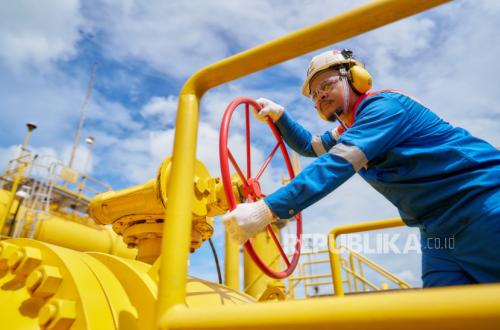
The Indonesian Oil and Gas Pipeline Experts Association (IAPMIGAS) is pushing for the acceleration of natural gas development to support national energy security through the launch of a policy document titled ‘Roadmap for Accelerating the Role of Natural Gas as a Transition Energy for Indonesia’s Energy Sovereignty’. The document contains a number of strategic recommendations to speed up infrastructure development, strengthen governance, and enhance the competitiveness of the gas sector.
IAPMIGAS Chairperson Rosa Permata Sari stated that natural gas holds an important position in supporting energy security while serving as a transition energy towards a cleaner system. However, this potential has not been optimally utilised due to various challenges.
‘Natural gas has a vital role in maintaining national energy security while supporting Indonesia’s energy transition process. Through this policy brief, IAPMIGAS seeks to present constructive and implementable recommendations to accelerate infrastructure development, strengthen governance, and increase the competitiveness of the national gas sector,’ Rosa said in a statement on Thursday (25/6/2026).
According to IAPMIGAS, the increasing national energy demand and Indonesia’s commitment to reducing carbon emissions make natural gas an increasingly strategic transition energy. Nevertheless, its development is still hampered by limited infrastructure, an imbalance between supply locations and demand centres, as well as a lack of regulatory harmonisation and investment certainty.
To address these issues, IAPMIGAS, together with government elements, industry players, academics, and professional associations, formulated a series of recommendations compiled in the roadmap document.
One of the main recommendations is the acceleration of national natural gas infrastructure integration through the completion of strategic projects, including the construction of interconnected transmission pipelines and distribution systems. This step is considered crucial for improving connectivity between supply sources and gas-consuming regions.
Furthermore, IAPMIGAS is pushing for the optimisation of the natural gas value chain through supply and demand synchronisation to make infrastructure utilisation more efficient. The development of LNG facilities, regasification terminals, and distribution networks is also deemed necessary to increase the flexibility of the national gas system.
Another recommendation is the acceleration of the LPG substitution programme through the construction of household gas networks and the utilisation of Compressed Natural Gas (CNG). This programme is expected to reduce dependence on LPG imports while easing the burden of energy subsidies.
IAPMIGAS also emphasised that strengthening standardisation, safety aspects, and the technical reliability of gas infrastructure must be a priority. The consistent application of technical standards and the improvement of human resource competencies are considered the foundation for the sustainability of the national gas industry.
The professional organisation also urged regulatory harmonisation and increased investment certainty through the simplification of licensing processes, tariff certainty, and cross-sectoral policy synchronisation to create a more conducive business climate.
The recommendations were launched at a Luncheon Talk & Policy Brief Launching forum that brought together regulators, industry players, academics, and energy sector stakeholders. IAPMIGAS hopes the document will serve as input for the government in formulating natural gas development policies to strengthen national energy sovereignty.