
Natuna Regent Encourages One-Roof Schools for Remote Areas
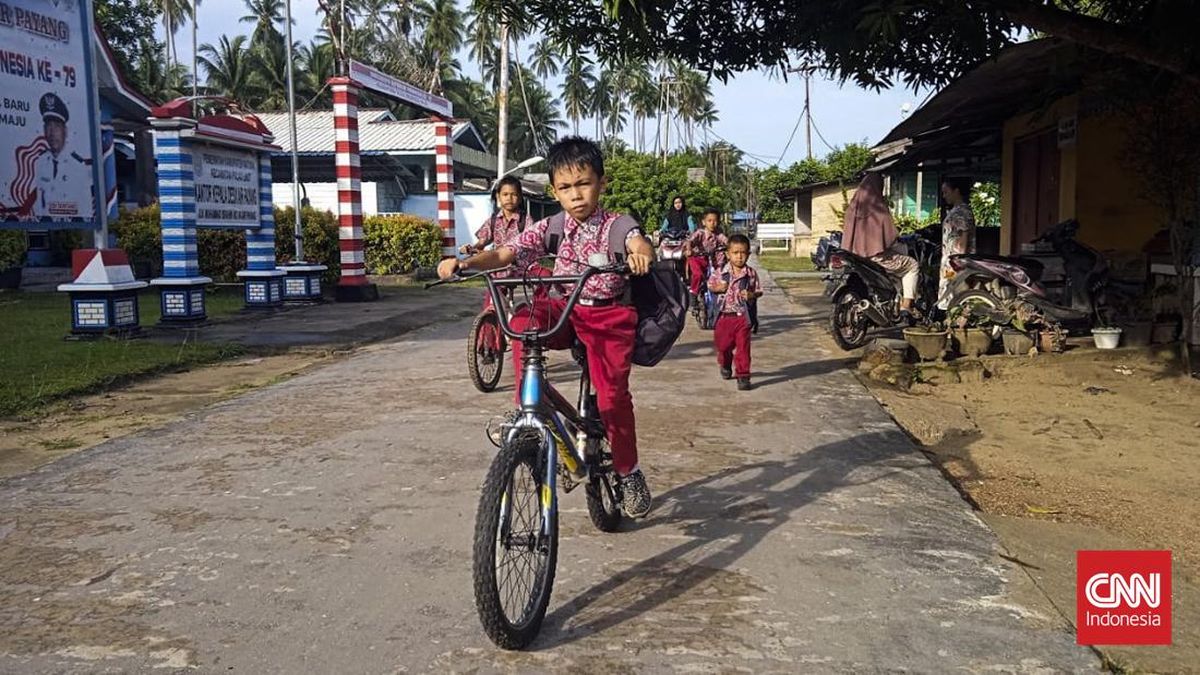
The Regent of Natuna, Cen Sui Lan, believes that the ‘Single-Roof School’ concept could serve as a solution for equalising education in remote areas or regions with minimal populations.
Cen Sui Lan stated that a Single-Roof School is an educational delivery model that integrates two levels of education, such as primary school (SD) and junior high school (SMP), within a single location under integrated management.
“We are prioritising single-roof schools for areas with small populations,” said Cen Sui Cap Lan in Natuna, Riau Islands, on Sunday (21/6).
The implementation of this model, according to her, allows the government to save on the costs of constructing school buildings as well as providing other supporting facilities and infrastructure.
One area planned to implement this concept is Selaut Village, an island village separated from both the regency capital and the capital of the West Bunguran District, which serves as its administrative centre.
Currently, Selaut Village only has one primary school, SD Negeri 007 Selaut, with the number of students in each study group not reaching 10. The village also lacks a junior high school (SLTP).
As a result, every student graduating from SD Negeri 007 Selaut must continue their education in another area, involving a sea journey of more than 30 minutes via speedboat.
If a separate junior high school were built, she noted, it would drain a significant portion of the budget, as besides constructing a building, personnel costs would increase government expenditure due to the addition of a headmaster and staff.
“The number of students at SD Negeri Selaut is also not large, perhaps not even six people per class,” she said.
She explained that for the 2026/2027 academic year, the Natuna Regency Government plans to open a junior high school unit in Selaut Village by temporarily utilising the SD Negeri 007 Selaut building until further policies are established.
According to her, the presence of a junior high school in Selaut Village is vital to reducing the risk of maritime accidents faced by students when travelling to school. Furthermore, this step is expected to prevent population migration driven by educational needs.
“We are concerned that after children complete their primary education, they will move away with their families. If this continues, eventually this village could become empty,” said Cen Sui Lan.