
NATO Fighter Jets Twice Fail to Shoot Down Drone; Missile Debris Falls to Ground
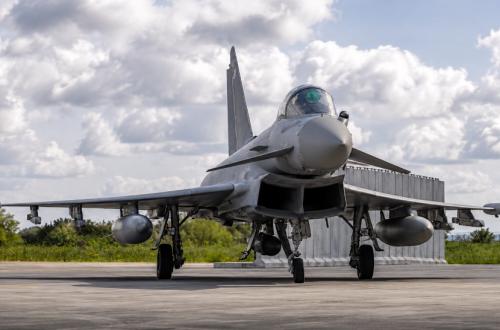
VILNIUS — An air-security incident in the Baltic region has raised questions about the effectiveness of NATO’s defence systems. Fighter jets on the alliance’s air-policing mission twice failed to shoot down an unidentified drone that entered Lithuanian airspace, while fragments from one interceptor missile were found on the territory of the NATO member state.
The incident took place from Tuesday night into the early hours of Wednesday (10–11 November 2026), when several unidentified aerial objects were detected moving from Belarus towards the Baltic states. The drone activity prompted air-danger warnings in Lithuania, Latvia and Estonia, as well as temporary restrictions on aviation and shipping activity in Finland.
Euronews reported on Wednesday (11 November 2026) that NATO fighter jets made two attempts to shoot down a drone near Biržai in northern Lithuania. Both attempts failed, allowing the drone to continue flying towards Latvia.
One of the missiles reportedly missed its target. Fragments were later found in the Biržai area, prompting Lithuanian authorities to deploy a specialist team to secure the site.
Lithuanian Armed Forces Chief of Defence Rear Admiral Giedrius Premeneckas confirmed that NATO fighter jets had failed to destroy the aerial object despite trying twice.
“Air-defence aircraft made two attempts to destroy the object, but did not succeed because of various conditions. One missile missed, fell and was later found in Biržai district,” Premeneckas said at a news conference, according to Lithuanian public broadcaster LRT on Wednesday (11 November 2026).
The Lithuanian military has not established the drone’s country of origin. Authorities also do not know what type of unmanned aircraft it was or whether it was carrying explosives.
Crossing Lithuania and Poland
The incident began when military radar detected three drones in Belarusian airspace moving towards Latvia. The three objects did not initially enter Lithuanian airspace, but their direction of travel prompted heightened alert as they approached NATO’s borders.
Premeneckas said a fourth drone was subsequently detected entering Lithuania from Belarus at about 1.20am local time on Wednesday. It briefly crossed Polish airspace before suddenly changing direction and re-entering Lithuania.
The change of direction meant that authorities had to keep updating their tracking and threat assessments. The drone then travelled north through Lithuania towards the Latvian border.
Fighter jets assigned to NATO’s air-policing mission were deployed to identify and track the unmanned aircraft. The Lithuanian military said the drone was identified near Kaunas, one of the country’s largest cities.
The pilots did not immediately fire because the drone was over a populated area. The military considered the risk that the aircraft or interceptor debris could fall and endanger the public if it were destroyed there.
The decision illustrates the dilemma facing air-defence operations when a potentially dangerous object enters civilian airspace. Firing at an aerial threat can create new risks if the target or interceptor ammunition falls on a residential area.
The fighter jets continued the pursuit until the drone reached the area around Biržai, close to the Latvian border. The military made two attempts to destroy the aircraft there, but both failed.
According to LRT, weather conditions also made the effort more difficult. The military has not published a full technical explanation of all the factors behind the failure of the two attempts.
Missile misses and debris falls on land
The failed interception led to a security operation after fragments from an interceptor missile were found in Biržai district. Lithuanian authorities activated an emergency response plan called Skydas, meaning “Shield”, to deal with the potential danger posed by the military debris.
LRT reported, citing Lithuanian Police spokesperson Ramūnas Matonis, that the Skydas plan was activated at about 3.55am local time on Wednesday. Officers secured the area around the village of Eiminiškiai and deployed personnel with explosives-handling expertise.
The operation involved the Lithuanian police counter-terrorism unit Aras, criminal investigation specialists and Lithuanian Armed Forces personnel. They examined the site and collected missile fragments to ensure there was no further threat to residents.
Ukrainian defence news outlet Militarnyi reported that the missile which missed the target had self-destructed before its fragments fell. The discovery on the ground therefore does not indicate that an intact missile struck a residential area.
LRT also reported that residents’ security-camera footage was thought to show the moment a missile exploded in the Biržai area. Some local residents said they heard a loud blast and felt a tremor around their homes.
However, the report did not establish that the footage showed the full sequence of the failed interception. It provides only visual evidence of a possible explosion involving one interceptor missile.
After officers collected the fragments and examined the site, police lifted the Skydas plan at 1.15pm local time. No injuries were reported.
As of the latest reports reviewed, authorities had not specified the type of missile used, the exact number of rounds fired or the country operating the fighter jets involved in the interception. The incident therefore cannot yet be definitively linked to a particular aircraft model or weapons system.
Source: jawawa.id (https://jawawa.id/newsitem/nato-fighter-jets-twice-fail-to-shoot-down-drone-missile-debris-falls-to-ground-1794448325)
Originally published by Republika (https://news.republika.co.id/berita/tod4o6451/jet-tempur-nato-2-kali-gagal-tembak-satu-drone-rudalnya-malah-jatuh), translated from Indonesian