
NATO at Risk of Collapse as Russia Applies Pressure
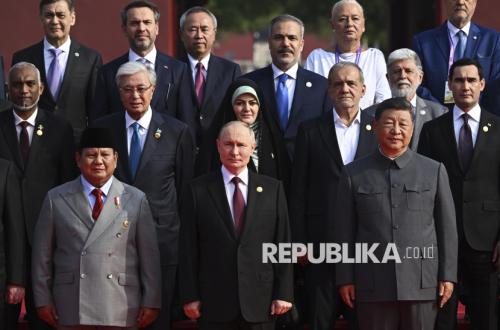
MOSCOW — Russia is seeking to undermine the unity of the North Atlantic Treaty Organisation (NATO) by using negotiations to end the war in Ukraine. Moscow has even offered bilateral non-aggression pacts to European countries, a move that could weaken the military alliance’s principle of collective defence.
Russia’s strategy has emerged amid stalled US-mediated peace talks with Ukraine. Rather than agreeing to a ceasefire, Moscow has made much broader demands, including changes to Europe’s post-Cold War security architecture.
During trilateral talks in Abu Dhabi on 10 November, the Russian delegation demanded that NATO withdraw its forces from Central and Eastern Europe and halt all plans to expand the alliance’s membership.
The demands refer to leaked documents obtained by several media outlets, including The New York Times, The Economist and a number of Ukrainian media organisations.
But Moscow’s demands do not end there. Russia has also proposed signing non-aggression pacts with European countries individually, including countries that are currently NATO members.
Russian negotiator Alexey Drobinin said such agreements could provide additional bilateral security guarantees to each country.
“Such agreements could be reached, among others, with individual NATO member states, which would then receive, for example, additional individual security guarantees from Moscow,” Drobinin said at a press conference after the Abu Dhabi talks, according to Al Jazeera on Monday (16 November 2026).
The move is seen as potentially undermining NATO’s most fundamental principle: collective defence. Under Article 5 of the North Atlantic Treaty, an armed attack against one member is regarded as an attack against all members of the alliance.
NATO was established on 4 April 1949 with the signing of the North Atlantic Treaty in Washington, DC. The military alliance was formed amid Cold War tensions between the US-led Western bloc and the Eastern bloc under Soviet influence. Its 12 founding members were the United States, Canada, the United Kingdom, France, Belgium, the Netherlands, Luxembourg, Denmark, Iceland, Italy, Norway and Portugal. Its primary purpose was to establish a system of collective defence against security threats in the North Atlantic region.
After the Soviet Union dissolved in 1991 and the Cold War ended, NATO was not disbanded. Instead, it expanded to include former Eastern bloc countries and broadened its operational remit, including to conflicts outside the North Atlantic area. NATO’s expansion into Eastern Europe subsequently became a source of tension with Russia.
Moscow has repeatedly viewed the alliance’s enlargement as a threat to its national security, particularly after several former Warsaw Pact countries joined NATO. This was one of the factors behind growing tensions between Russia and the West in the run-up to Russia’s full-scale invasion of Ukraine in February 2022.
By offering bilateral agreements, Russia could fracture solidarity among NATO members. European countries might choose to secure their individual relationships with Moscow rather than uphold their collective defence commitments.
Former Russian diplomat Boris Bondarev warned that the strategy could leave European countries to face Russia alone.
“NATO will collapse and European countries will face Russia alone,” Bondarev told Al Jazeera.
Bondarev, who left Russia’s Foreign Ministry in protest at Moscow’s full-scale invasion of Ukraine in 2022, said the offer of non-aggression pacts was an overt attempt to destroy European unity.
He said bilateral agreements of this kind would probably include clauses barring signatories from becoming involved in a conflict between Russia and another European country.
If implemented, such provisions would erode European countries’ ability to help one another resist Russian aggression.
“European countries would surrender to Russia without firing a shot in their own defence, without losing a single soldier or using a single bullet,” Bondarev said.
Russia’s strategy is also linked to domestic political dynamics in Europe. Moscow is seen as seeking to exploit the growing strength of right-wing political groups that tend to oppose military and financial aid to Ukraine.
Russia is said to want to prolong negotiations until the political climate in key European countries changes in a way that better serves the Kremlin’s interests.
In France, far-right leader Marine Le Pen has promised to end military and financial aid to Ukraine within six months if she wins the presidential election next April. Le Pen is currently described as one of the leading candidates.
Meanwhile, Germany’s governing coalition is under pressure amid disputes over the budget and debt, as well as economic stagnation. The situation could pave the way for an early election that might benefit the far-right Alternative for Germany (AfD) party.
The AfD wants to stop aid to Ukraine, begin peace talks with Moscow immediately and lift sanctions so that Germany can resume buying Russian oil and gas.
If Le Pen and the AfD strengthen their political positions, Ukraine could lose support from two major European countries at a time when US President Donald Trump’s administration is also continuing to press Kyiv to compromise.
Kyiv-based analyst Aleksey Kusch said these political shifts could narrow Ukraine’s room for manoeuvre in confronting Russian pressure.
“We will not be able to withstand the combined position of the European Union and the United States, and the opportunity to manoeuvre between Washington and Brussels will disappear,” Kusch said, according to Al Jazeera.
Maria Kucherenko, executive director of the Strategic Intelligence Institute, also said Russia’s maximalist demands were part of the Kremlin’s established negotiating pattern. Moscow, she said, prioritises its political interests over the creation of lasting security guarantees.
According to Kucherenko, Russia is deliberately shifting discussions away from a ceasefire and ending the war towards a restructuring of Europe’s security order.
Russia is also said to prefer negotiating directly with Washington rather than involving European leaders.
The demands were presented to US special envoys Jared Kushner and Steve Witkoff, but not directly to European leaders.
Ukrainian President Volodymyr Zelenskyy, meanwhile, said Russian President Vladimir Putin was living in a different reality. Zelenskyy said Moscow’s demands were difficult to accept because they did not reflect the actual situation on the battlefield.
The latest round of talks in Abu Dhabi produced no breakthrough towards ending the war. Ukrainian negotiator Davyd Arakhamia described them as among the most difficult since diplomatic efforts began in 2022.
As diplomacy remains deadlocked, Russian attacks on Ukrainian territory continue. Moscow is also continuing to target Ukraine’s energy infrastructure and civilian facilities ahead of winter.
The developments show that peace talks on Ukraine now concern more than the territory disputed by the two countries. NATO’s future, European solidarity and the continent’s security order are also at stake in the geopolitical contest.
Source: jawawa.id (https://jawawa.id/newsitem/nato-at-risk-of-collapse-as-russia-applies-pressure-1794869465)
Originally published by Republika (https://news.republika.co.id/berita/tolrjc393/nato-terancam-bubar-ditekan-rusia), translated from Indonesian