
NATO Adds IDR 2,200 Trillion for Military, But Is Europe Becoming Less Secure?
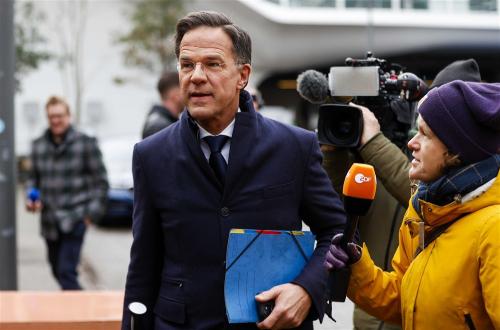
NATO has acknowledged that an unprecedented surge in defence spending will not be sufficient unless it is swiftly translated into combat-ready military strength. Amid growing concerns over Russia, the Western military alliance now faces a new challenge: converting billions of dollars in defence expenditure into actual troops, weapons, and real combat capabilities. The warning was delivered by NATO Secretary General Mark Rutte following a meeting of defence ministers ahead of the alliance’s summit next month. According to Rutte, member states have demonstrated a strong commitment to increasing defence spending to 5 percent of gross domestic product (GDP) by 2035, with some countries expected to reach the target much sooner. He revealed that NATO members in Europe and Canada added more than USD 90 billion in real terms to defence spending last year, with the nominal increase reaching around USD 139 billion. This represents one of the largest surges in NATO’s history. However, Rutte stressed that money is not the end goal. ‘You cannot stop a missile or a tank with a dollar or a euro,’ he said. He stated that NATO’s biggest challenge now is no longer simply finding additional funds, but ensuring that the money is quickly transformed into usable combat capability. ‘That means more troops, more resources, and a stronger defence industrial base,’ he said. Rutte’s remarks come as NATO countries accelerate the modernisation of their militaries in the wake of the Russia-Ukraine war, which has lasted more than four years. The conflict has prompted many European nations to increase defence spending after decades of enjoying what has been termed the post-Cold War ‘peace dividend’. NATO’s focus is now shifting from mere expenditure to operational readiness. To achieve this, defence ministers agreed to enhance transatlantic defence industrial cooperation, including expanding weapons production capacity, strengthening military supply chains, and accelerating defence technology innovation. Rutte affirmed that NATO will remain a transatlantic alliance linking North America and Europe. However, he said NATO also needs a militarily stronger Europe to confront evolving security challenges. He even described the ongoing process as part of a major transformation that some NATO officials are beginning to call ‘NATO 3.0’. ‘This may be the biggest transformation in NATO’s history,’ Rutte said.