
Nationalism that Revitalises Industry and Society
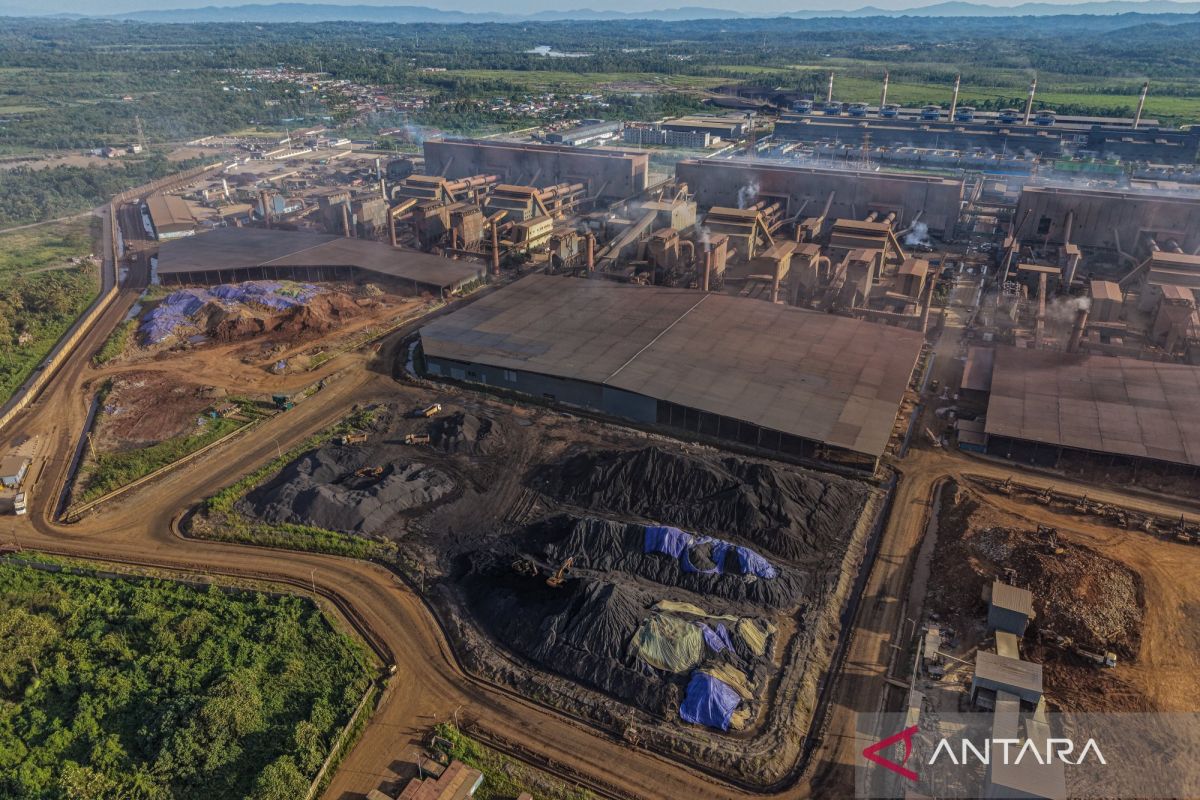
In many developing nations, economic nationalism is often born from long historical wounds—experiences of being colonised, exploited, and forced to serve as raw material suppliers for other nations’ industries. Indonesia underwent this phase for decades, where mineral wealth was exported in its raw form, while added value, technology, and large-scale employment grew abroad. Consequently, downstreaming (hilirisasi) emerged not merely as an industrial policy, but as a symbol of national dignity.
In the nickel sector, this spirit is particularly evident. The government has encouraged smelter construction, restricted raw material exports, and redirected industrial focus to ensure Indonesia is no longer just a spectator in its own land. The overarching narrative is that sovereignty over natural resources must return to the hands of the nation. However, amidst this enthusiasm, unsettling questions are arising on the ground: what if the proclaimed nationalism is not fully felt by national industries and the communities living around mining areas?
These concerns do not stem from seminars or elite discussions in the capital, but from the anxieties of mining-adjacent communities experiencing industrial slowdowns. When global nickel prices weaken and demand drops, the impact extends far beyond economic reports or international trade graphs; it reaches small eateries, local contractors, hauling drivers, daily traders, and mining families. In North Morowali, for instance, the industrial slowdown in smelters has begun to affect the surrounding economic activities, with kiosks losing customers as contractor activity declines and fears of layoffs grow. In Kolaka, Southeast Sulawesi, indigenous communities have even protested as the cessation of mining activities paralysed the local economy.
This phenomenon demonstrates that today’s nickel industry is no longer just a matter of large-scale investment and mineral exports, but has become the foundation of social life in many regions. When industrial activity slows, the effects are immediately felt in daily life: vehicle credit payments are at risk of stalling, educational costs become a heavier burden, and village economies gradually lose their driving energy. In this context, industrial policy should be viewed not only through production statistics or global price stabilisation, but also through the lens of social resilience.
The government faces a difficult challenge. On one hand, national production must be maintained to prevent global nickel prices from crashing; on an other, the sustainability of the industry and the protection of labour are urgent needs. Furthermore, there is a growing focus on the position of national companies attempting to survive amidst the dominance of global capital. One such example is the Ceria Group through its Merah Putih Smelter project in Kolaka, which is viewed as a representation of domestic investment striving to compete in an increasingly complex nickel industry. Its status is recognised as a Domestic Investment Project (PMDN), a National Strategic Project, and a National Vital Object.
This is where the debate on economic nationalism becomes pertinent. Nationalism cannot be realised solely through export bans or the construction of processing facilities; it also demands genuine support for the ability of national industries to survive and grow. Foreign companies inherently possess much stronger capital buffers, including access to international financing, cross-border supply chains, and the capacity to withstand global market pressures. Meanwhile, national companies often struggle with much more limited financial capabilities. Therefore, there is a hope that the state acts not only as a regulator but also as a protector of the national industrial ecosystem—ensuring national companies have the necessary environment to thrive in their own country.
This debate invites a broader reflection on the meaning of nationalism in the modern industrial era. Today, nationalism must be translated into the ability to create a balance between economic growth, social protection, and the sustainability of national industry. Indonesia should be proud of its success in driving downstreaming, which has shifted the nation’s bargaining position in the global market, positioning Indonesia as a key player in the future battery and electric vehicle supply chains. However, this great success will only be truly complete if the communities surrounding mining areas also feel secure about their economic future. It is vital to build policies that are more sensitive to social impacts, ensuring that when industry slows, the government intervenes quickly to maintain the economic stability of local communities through labour training, local economic diversification, and the strengthening of MSMEs.