
National Standards for Electric Vehicle Transport on Ferries Must Be Established
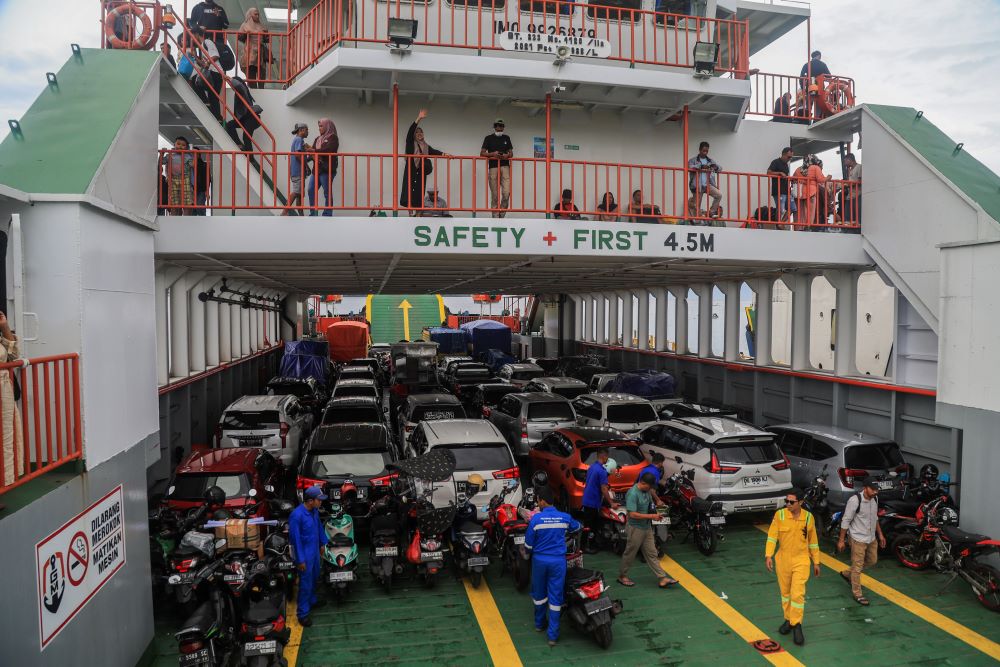
The Central Board of the Association of River, Lake, and Ferry Transport Entrepreneurs (DPP GAPASDAP) is urging the government to immediately establish national standards for transporting electric vehicles (EVs) on passenger ships. The move is considered important to ensure maritime safety while providing certainty for operators and service users amidst the increasing use of electric vehicles in Indonesia. DPP GAPASDAP Chairman Khoiri Soetomo stressed that his party fully supports the development of electric vehicles as part of the national transportation transformation towards a more environmentally friendly and sustainable transport system. However, according to him, transporting electric vehicles on ferries requires specific safety regulations and procedures because they have different characteristics compared to conventional fuel-powered vehicles. “We do not reject electric vehicles using ferries. Electric vehicles are part of the future of national transportation. However, maritime safety must remain the top priority. What is needed is not a ban or differential treatment, but clear, uniform safety standards that can be applied by all operators in Indonesia,” said Khoiri. He explained that ferry transport carries a great responsibility as it carries passengers, vehicles, and goods in a confined space during the voyage. Therefore, every development in transportation technology must be accompanied by an adequate safety system. GAPASDAP assesses that there are still differing understandings and practices in the field regarding the procedures for transporting electric vehicles on ferries and roll-on/roll-off (Ro-Ro) ships. This condition has the potential to cause confusion among service users, port officers, and ship operators. As a form of commitment to maritime safety, GAPASDAP has actively encouraged capacity building and discussions regarding the transport of electric vehicles on ferries. Khoiri revealed that at least three national workshops and discussion forums have been held to discuss the readiness of the ferry sector to face the electric vehicle era. These activities were the result of collaboration between GAPASDAP, Biro Klasifikasi Indonesia (BKI), the National Transportation Safety Committee (KNKT), and Jasa Raharja Putra. Through the forum, stakeholders discussed the characteristics of electric vehicles, potential risks that may arise during the voyage, emergency mitigation procedures, and the safety standards required by ship and port operators. According to GAPASDAP, all parties agreed that the development of electric vehicles is an inevitability that must be anticipated seriously and professionally. Experiences in various countries also show that electric vehicles can be transported safely using ferries and Ro-Ro ships as long as they are supported by appropriate operational procedures, adequate safety equipment, and trained human resources. Therefore, GAPASDAP is asking the Ministry of Transportation to immediately formulate and establish uniform national guidelines across Indonesia. The proposed guidelines should cover a number of important aspects, including inspection standards for electric vehicles before entering the port and ship, vehicle placement procedures on the car deck, emergency handling procedures including potential thermal runaway in lithium batteries, and safety and fire extinguishing equipment standards suitable for the characteristics of electric vehicles. In addition, GAPASDAP is also pushing for training standards for ship crews and port officers, evacuation procedures in the event of an incident, and national operational standards that apply equally across all ports and ferry operators. Khoiri added that what GAPASDAP is fighting for is not restrictions on electric vehicles using ferries, but regulatory certainty that guarantees the safety of all parties.