
National Political Dynamics Heat Up, Existence of Volunteer Organisations Again in the Spotlight
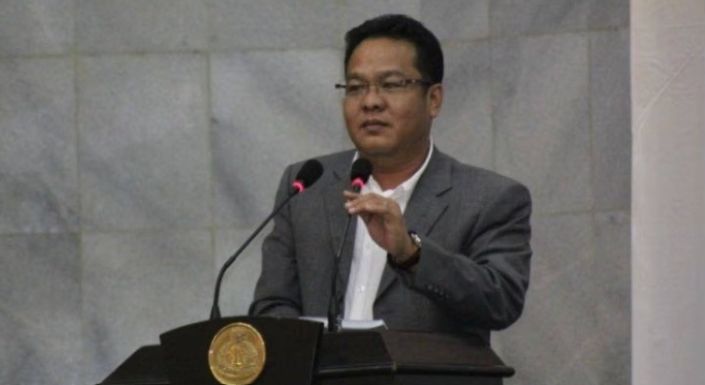
National political dynamics have returned to the spotlight amid debate over the direction of political volunteer organisations following the end of one government period.
This situation has become a momentum to strengthen national political consolidation while ensuring that the government of President Prabowo Subianto remains focused on carrying out its development agenda and serving the public interest.
1998 activist Yulian Paonganan, also known as Ongen, highlighted the existence of Projo, which has been known as a volunteer organisation supporting Indonesia’s 7th President Joko Widodo. He questioned the consistency of the organisation’s movement after the change of government.
According to Ongen, volunteer organisations should be able to transform clearly and contribute positively to democratic life, not merely become active when the political momentum heats up. “Projo is a pseudo-volunteer group. It is busy when there are political interests, but after that its direction is unclear,” Ongen said on Wednesday (26/8/2026).
He assessed that Projo’s image as a Jokowi volunteer organisation makes the group still difficult to detach from the dynamics of power politics. According to him, this phenomenon demonstrates the importance of clarifying the position of volunteer organisations in the political landscape after a change of national leadership.
Ongen then used the term shadow cabinet as an analogy to describe groups outside the government structure that are perceived as having influence over political direction. “As for the term shadow cabinet coined by Feri Amsari and colleagues, it is merely an analogy. It should not be regarded as an official government cabinet,” he said.
He stressed that volunteer organisations hold no formal position within the cabinet structure of President Prabowo Subianto’s government. Therefore, according to him, the government must continue to operate based on constitutional mechanisms and the people’s mandate.
“Projo is synonymous with Jokowi’s volunteers. But the question is, after the Jokowi era, what does Projo actually want to become? If it only emerges during elections or political moments, the public can judge for themselves,” he said.
Ongen also reminded volunteer groups not to position themselves as if they were the determinants of national power. According to him, Indonesia’s political system has constitutional mechanisms that place the people as the primary holders of the mandate.
“Do not think that volunteers are the determinants of power. Power has its mechanisms, its constitution, and it is the people who decide,” he asserted.
In the context of the current government, he assessed that all political elements and civil society should provide space for President Prabowo Subianto to carry out his governmental mandate and the national development agenda.
According to Ongen, criticism of volunteer organisations also needs to be placed within the framework of strengthening democracy. Organisations born from grassroots movements should be able to demonstrate consistency of struggle, transparency of stance, and tangible contributions after political contests have ended.
“If volunteers are only busy ahead of elections, and afterwards are busy seeking positions and influence, the public has the right to ask: are these actually volunteers or political vehicles?” he concluded.
Source: jawawa.id (https://jawawa.id/newsitem/national-political-dynamics-heat-up-existence-of-volunteer-organisations-again-in-the-spotlight-1787788216)
Originally published by Media Indonesia (https://mediaindonesia.com/politik-dan-hukum/926389/dinamika-politik-nasional-menghangat-eksistensi-organisasi-relawan-kembali-jadi-sorotan), translated from Indonesian