
National Police Chief's Operations Assistant Pushes for Transformation of 110 Service and Command Centre
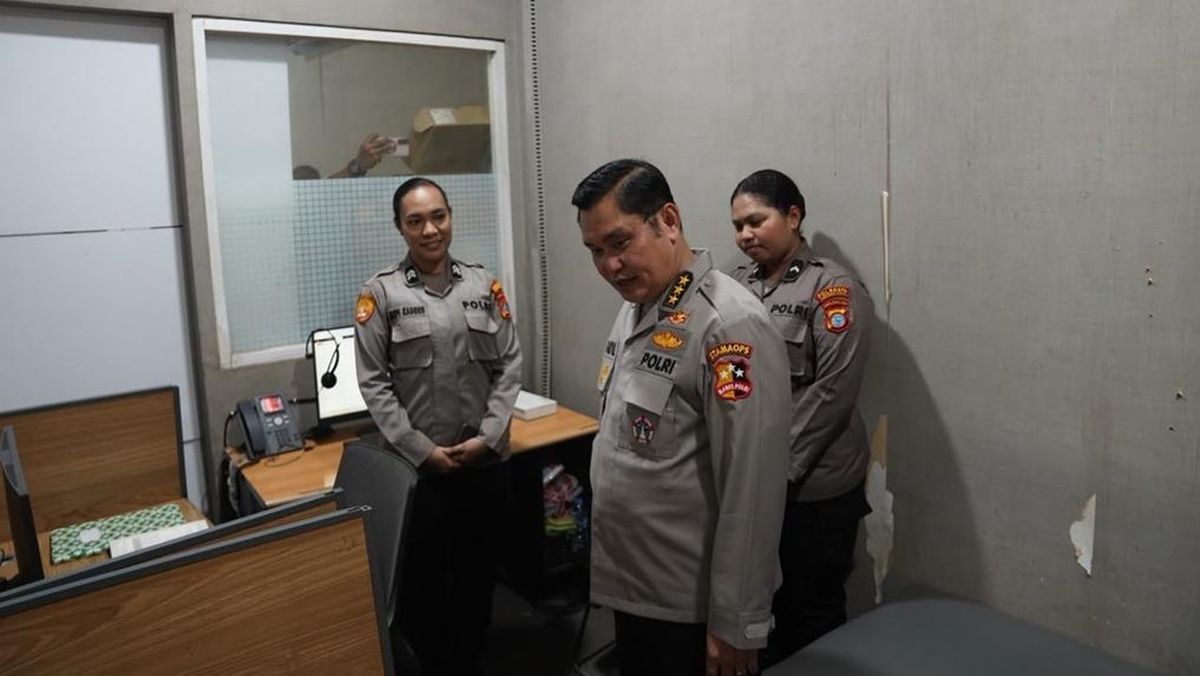
Assistant for Operations to the National Police Chief (Astamaops Kapolri), Commissioner General M. Fadil Imran, is pushing for a transformation of police services through the strengthening of the 110 Police Service, Command Centres, Integrated Police Service Centres (SPKT), Samapta units, and patrol functions. The goal is to deliver a faster, more coordinated response focused on solving the public’s problems. This was conveyed by Fadil Imran during a working visit to the Sorong City Police Resort, Southwest Papua, on Thursday. During the visit, the Astamaops Kapolri directly observed the implementation of the 110 Police Service, Command Centre mechanisms, and the coordination patterns between operators, Pamapta, SPKT, and field personnel. Based on data from the National Police 110 Command Centre Post, the Sorong City Police Resort received 3,392 calls from January to June 2026, with 2,672 calls successfully answered, achieving a success call rate of 88.18 percent. This marks an improvement from the 80.37 percent rate recorded in 2025, placing the Sorong City Police Resort second in the Southwest Papua Regional Police jurisdiction. While appreciating the improvement, Fadil stressed that the success indicator for public service does not stop at the number of answered calls. ‘An answered call is the beginning of service, not the end. We must ensure that after the public reports a problem, someone is dispatched, how long it takes for the police to arrive, and whether the public’s issue is truly resolved,’ Fadil stated. He argued that the police service paradigm must shift from merely receiving reports to ensuring every report is followed up until the public genuinely receives assistance. He explained that the service flow must be seamless, starting from a report received via the 110 service, verified, forwarded to the nearest personnel, acted upon in the field, and monitored for its resolution. ‘Don’t just ask how many calls we answered. Start asking how many citizens we actually helped. That is a far more important measure of service,’ he said. To support this, the Astamaops Kapolri requested that units begin measuring response times in stages, from the moment a report is received, to the assignment of personnel, and the arrival of officers at the scene. This measurement is considered crucial for leadership to identify which stages of service still need improvement. Beyond strengthening the 110 service, Fadil also emphasised the importance of integrating police functions so that the public is not burdened by the internal organisational structure. ‘The public does not need to worry about which unit handles what. For the public, it is simple: I need the police. It is our job to ensure that need is forwarded to the most appropriate and fastest personnel,’ he asserted. He stated that the 110 service, Pamapta, SPKT, Samapta, patrols, traffic units, and criminal investigation must be part of a single, interconnected service system, so that every piece of information received can be immediately turned into an operational decision and action in the field. Fadil also introduced a new paradigm for the Command Centre function. He stressed that a Command Centre should not be viewed merely as a large room with big screens and expensive technology, but as a command hub capable of receiving information, analysing situations, making decisions, mobilising personnel, and ensuring public issues are handled. ‘Do not imagine a Command Centre as just a big room with many screens or expensive technology. All of that is just a tool. The essence of a Command Centre is how we receive information, understand the problem, make decisions, move personnel, and ensure the public’s problem is resolved,’ he clarified. He therefore urged all ranks not to wait for complete facilities to start building an effective service system. According to him, a Command Centre can function optimally as long as it has ready operators, an active 110 service, connected radio communications, data on deployable personnel, and leaders capable of making quick decisions. In addition to strengthening responsive services, the Astamaops Kapolri also encouraged the use of crime and public order disturbance data as a basis for formulating crime prevention strategies. Based on National Police DORS data, 2,429 crime cases were recorded in the Sorong City Police jurisdiction throughout 2025, while 1,503 cases were recorded from January to June 2026. Motor vehicle theft remains the most dominant crime. Fadil requested that this data not remain as an administrative report but be translated into operational information through the mapping of crime-prone locations and times, so that patrols can be directed more precisely. ‘Data must be able to answer: where do crimes most frequently occur, at what times are they most prone, what are the patterns, and which patrols are closest. From there, we can deploy personnel more accurately,’ he said. He hopes that a data-driven approach will shift policing patterns from being largely reactive to becoming more preventive through the presence of officers at locations and times with high vulnerability. In closing, Fadil emphasised that all these transformations ultimately aim to deliver police services that are faster, more humane, and whose benefits are directly felt by the public. ‘In the end, the public does not judge how sophisticated our technology is or how big the screens in our Command Centre are. The public judges whether, when they need help, the police are present,’ he concluded.