
National Police Chief Visits Muhammadiyah and Nahdlatul Ulama, Agrees to Safeguard Public Order
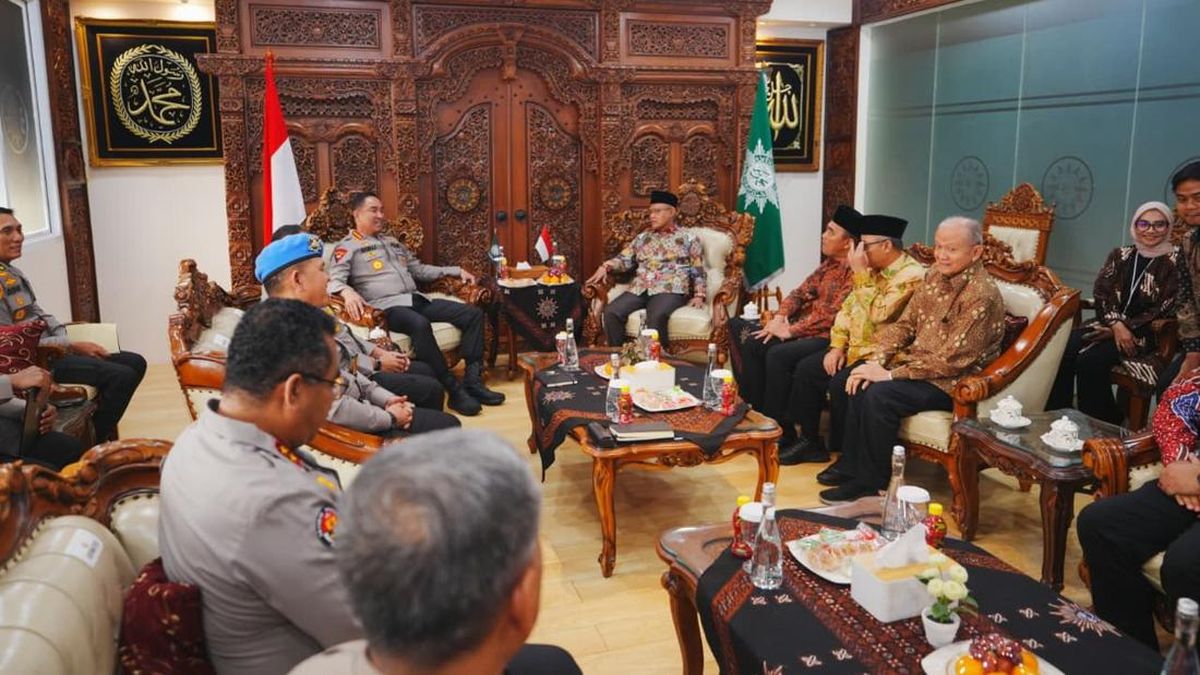
National Police Chief General Suyudi Ario Seto visited the leadership of Muhammadiyah and the Executive Board of Nahdlatul Ulama (PBNU) on Wednesday (28 October).
During his visit to Muhammadiyah’s central leadership, Suyudi expressed his appreciation for its ongoing support for religious outreach and community activities, including in the regions.
“We are very grateful for and appreciate the support of Muhammadiyah’s central leadership and its branches, extending to remote parts of the archipelago, in working alongside National Police personnel. We have been able to build synergies and collaborate in religious outreach and community activities across Indonesia,” he said in a written statement.
He said the existing cooperation would continue, with a shared commitment to encouraging good conduct and preventing crime. The National Police and Muhammadiyah, he added, had complementary roles in building a safe, peaceful and prosperous society.
Suyudi said one focus of their cooperation would be to strengthen public education and literacy to prevent drug abuse, online gambling, fraud, street crime, gang activity and illegal street racing.
He said education would be expanded through places of worship, schools, universities, Islamic boarding schools and other community settings so that prevention could begin at an early stage.
“Muhammadiyah and we have agreed to work hand in hand in the field to provide education and raise awareness among the public, whether at places of worship, schools, universities or Islamic boarding schools,” he said.
At the meeting, Muhammadiyah chairman Haedar Nashir said many problems continued to have a serious impact on the public, including drugs, online gambling, other forms of gambling and exploitative lending practices.
He said tackling crime required more than enforcement and should also involve strengthening people’s resilience so they would be less likely to fall into harmful activities.
“We agreed to strengthen the resilience of communities so they do not become caught up in drugs, online gambling or other gambling, or even loan-sharking and other practices that harm people’s lives,” he said.
During his visit to PBNU, Suyudi stressed the importance of working with religious leaders and community organisations to maintain public security and order.
He said PBNU’s longstanding support for the National Police was an important foundation for serving the public.
The National Police and Nahdlatul Ulama shared the goal of building a safe and stable society, he said. Support from religious leaders and community organisations was also needed to ensure security efforts reached more people.
“We hope that the cooperation we have built so far can work even better and be felt more clearly by the public,” he said.
Suyudi also highlighted the need to guide young people amid rapid technological developments and social change. He said children and teenagers needed guidance to help them address challenges appropriately and avoid breaking the law.
“We have a major responsibility because our children are the nation’s next generation and an asset that we must protect and nurture. We must ensure that we guide them properly,” he said.
PBNU chairman KH Abdul Hakim Mahfudz said that NU had always been committed to serving the public, including supporting an orderly society in which people could carry out their daily activities and worship properly.
Gus Kikin also said that rapid change required a collective response, particularly in guiding young people and maintaining social cohesion. He hoped relations between PBNU and the National Police would grow closer and benefit the wider public.
Source: jawawa.id (https://jawawa.id/newsitem/national-police-chief-visits-muhammadiyah-and-nahdlatul-ulama-agrees-to-safeguard-public-order-1793332295)
Originally published by CNN Indonesia (https://www.cnnindonesia.com/nasional/20261030095809-12-1421298/kapolri-sambangi-pp-muhammadiyah-hingga-pbnu-sepakat-jaga-kamtibmas), translated from Indonesian