
National Police Chief Visits Gus Dur's Grave to Honour Reform Spirit
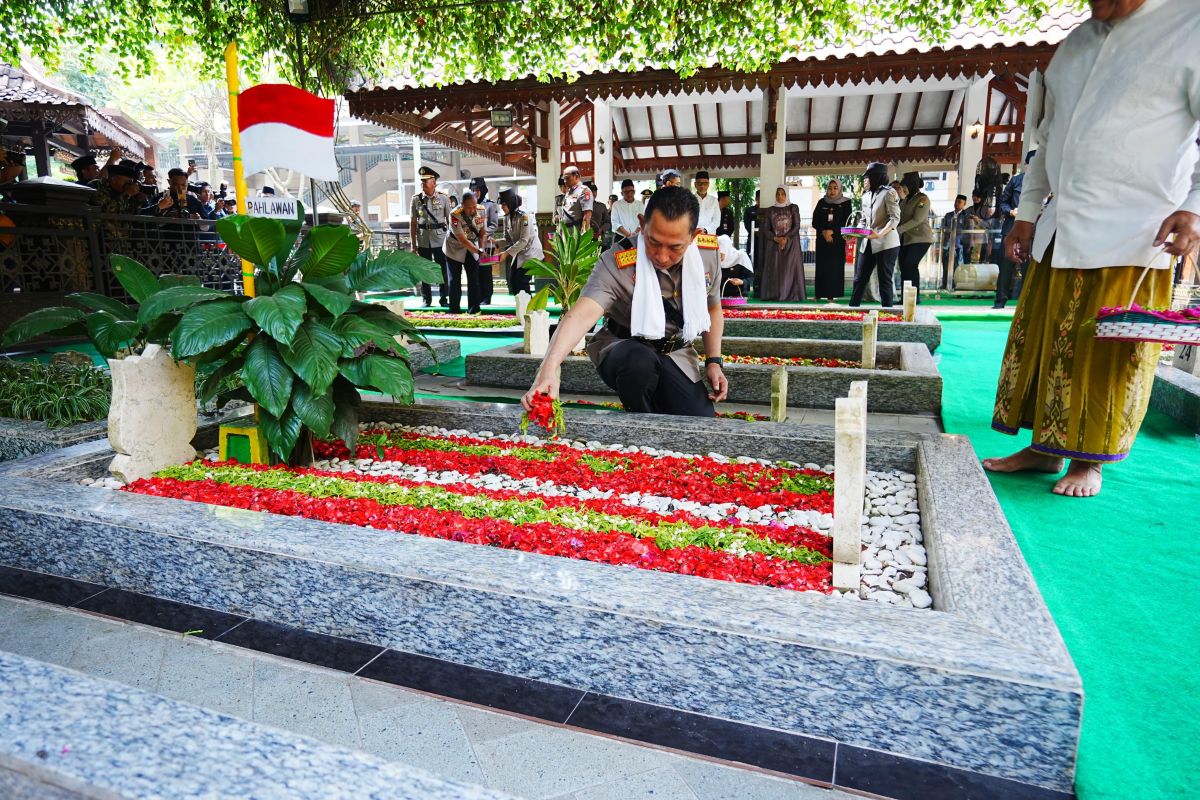
Jakarta (ANTARA) - The Head of Public Relations for the Indonesian National Police, Inspector General Johnny Eddizon Isir, stated that the visit by National Police Chief General Listyo Sigit Prabowo to the grave of the 4th President of Indonesia, Abdurrahman Wahid, also known as Gus Dur, ahead of the 80th Bhayangkara Day, is a form of respect for Gus Dur’s role in the national reform movement.
According to Johnny, Gus Dur made significant contributions to strengthening the National Police as a professional and independent institution. This moment also serves as a reminder for all members of the Bhayankara (Police) to uphold the spirit of reform and professionalism, while improving the quality of public service.
“This pilgrimage is a form of respect and appreciation from the National Police to the nation’s figures who have contributed greatly to the journey of democracy and reform in Indonesia. Gus Dur played an important role in the nation’s history, including the process of strengthening the National Police as a professional and independent institution,” Johnny said in a statement in Jakarta on Saturday.
He added that the momentum of the visit ahead of the 80th Bhayangkara Day serves as a reminder for all police personnel to continue maintaining the spirit of reform, professionalism, and the quality of service to the community.
The National Police Chief conducted the pilgrimage to Gus Dur’s grave at the Tebuireng Islamic Boarding School complex as part of the series of commemorations for Bhayangkara Day, which is observed every 1st July.
During the activity, the Police Chief wore a songkok, offered prayers, and scattered flowers on the grave of the 4th President of Indonesia.
The Police Chief’s arrival was welcomed by the caretaker of the Tebuireng Islamic Boarding School, KH Abdul Hakim Machfudz, also known as Gus Kikin, who presented a turban as a symbol of respect.
Gus Dur served as the President of Indonesia from 20 October 1999 to 23 July 2001. During his leadership, the reform agenda was continuously strengthened through the promotion of military professionalism and civilian supremacy in governance.
A significant milestone of that era was the formal separation of the TNI (Indonesian National Armed Forces) and the Polri (National Police) through MPR Decree Number VI of 2000 regarding the Separation of TNI and Polri, and MPR Decree Number VII of 2000 regarding the Roles of TNI and Polri.
Johnny assessed that Gus Dur’s intellectual legacy is a vital part of the process of establishing the National Police as a professional, modern, and independent institution.
In addition to being known as a figure of reform, Gus Dur is also remembered as the “Father of Pluralism” for his consistency in fighting for the values of tolerance, diversity, and respect for the rights of all citizens.
Source: jawawa.id (https://jawawa.id/newsitem/national-police-chief-visits-gus-durs-grave-to-honour-reform-spirit-1781945537)
Originally published by Antara (Indonesian) (https://www.antaranews.com/berita/5615977/kapolri-ziarah-ke-makam-gus-dur-kenang-semangat-reformasi), translated from Indonesian