
National Police Chief: Posting Officers to Civilian Posts Based on Agency Needs
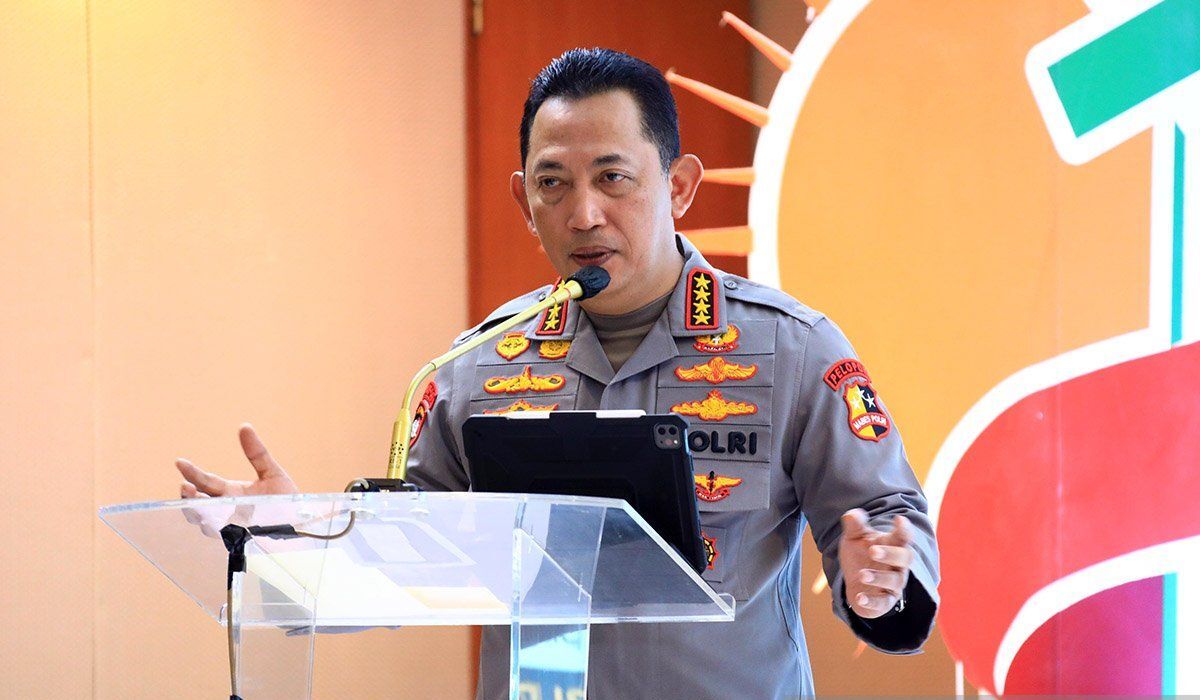
National Police Chief General Listyo Sigit Prabowo has stressed that the assignment of police personnel to positions outside the police structure, or civilian posts, will be carried out selectively. The assignment is entirely based on the needs of the agency submitting the request and must follow mechanisms stipulated in statutory regulations.
The statement was made in response to the House of Representatives’ (DPR) ratification of amendments to Law Number 2 of 2002 concerning the State Police of the Republic of Indonesia (Polri Law). Besides regulating the retirement age, the law also clarifies regulations regarding the assignment of Polri personnel outside the Bhayangkara Corps institution.
During a press briefing in Jakarta on Wednesday (10/6/2026), General Sigit explained that Polri prioritises the principle of reciprocity in personnel placement. However, he underscored that the process does not proceed unilaterally from within Polri.
‘On our side, we certainly open up space for reciprocity so that if Polri is placed outside the structure, we also provide that space,’ Sigit said.
The National Police Chief corrected public perception by stating that the placement of police officers in civilian posts is not done unilaterally. This process must begin with an official request from the ministry or agency that requires the specific expertise of police personnel.
Furthermore, filling such posts must still go through a strict bureaucratic procedure under the supervision of the Ministry of Administrative and Bureaucratic Reform (PAN-RB).
‘As long as there is a request, and then it goes through the relevant ministry, in this case the PAN-RB Ministry, through an open bidding mechanism or a mechanism determined in accordance with existing regulations, of course we will follow those stages,’ he asserted.
Sigit confirmed that Polri would not push or assign its personnel if there is no genuine need from an external institution. ‘However, as long as there is no request, Polri will also not assign or push for it. Because that is indeed the concept,’ he added.
The technical implementation of this assignment will be further regulated in derivative regulations from the newly enacted Polri Law. Previously, at a DPR Plenary Meeting on Tuesday (9/6/2026), the parliament approved the Bill on the Third Amendment to Law Number 2 of 2002 into law.
With this legal framework in place, it is hoped that synergy between Polri and civilian institutions can proceed more professionally without undermining the spirit of bureaucratic reform.