
National Police Chief Confirms Civilians May Hold Certain Positions within Polri
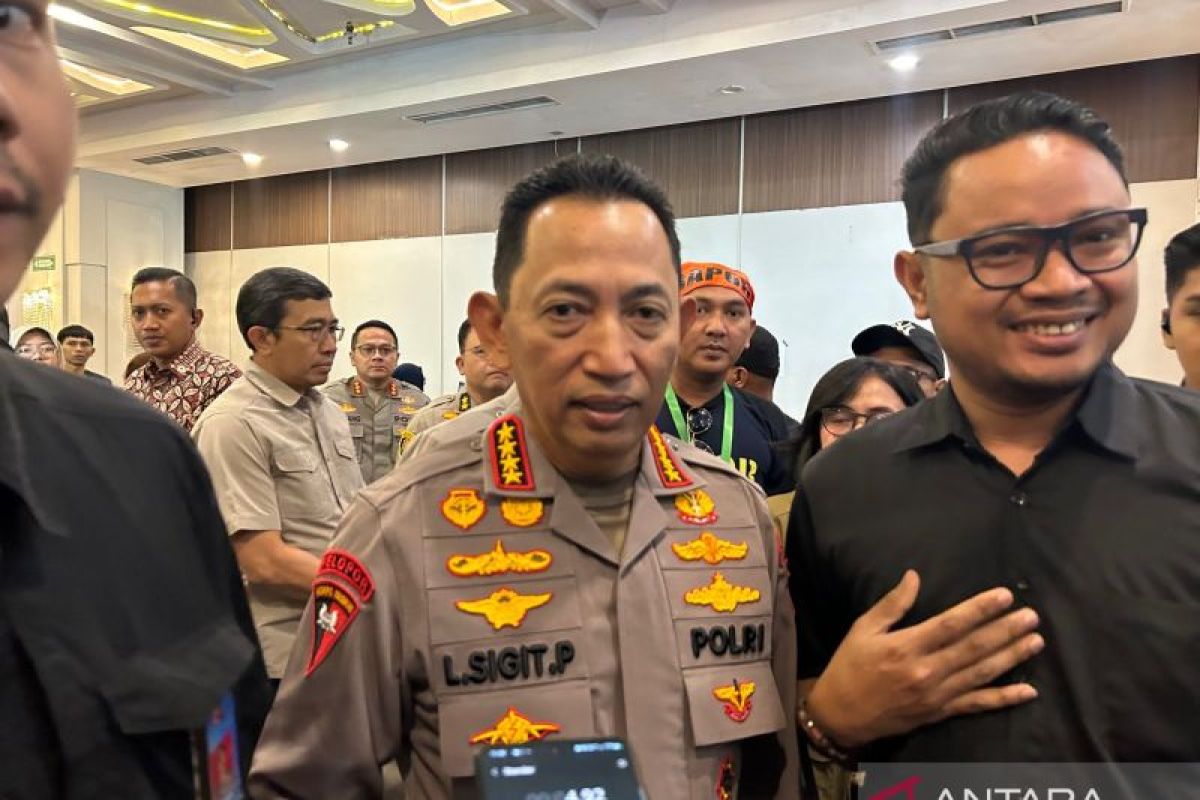
Jakarta (ANTARA) - The Chief of the Indonesian National Police, General Listyo Sigit Prabowo, has emphasised that professional civilians may hold certain positions, particularly those of a non-operational nature, within the Polri environment as an expression of the principle of reciprocity.
“Yes, we are indeed providing space (the principle of) reciprocity for Civil Servants (ASN) to enter Polri, that is the case!” said Sigit, when met after attending the opening of the III Congress of the Confederation of Indonesian Trade Unions (KSPI) in Jakarta on Sunday.
The four-star police general responded positively to the proposal as a form of equal treatment, noting that police members are also given the same opportunity to hold positions outside the Polri structure.
“When we are given space outside our structure, we also provide space for ASN from outside Polri to enter Polri,” he stated.
The principle of reciprocity refers to a mutual relationship between two or more parties, where an action, treatment, or policy is met with an equivalent response.
In the Ministry of Immigration and Correctional Services (Imipas), for instance, there are at least three high-ranking police officers holding strategic positions: the Director General of Corrections, Inspector General Pol. Mashudi; the Director of Immigration Supervision and Enforcement, Brigadier General Pol. Yuldi Yusman; and the Inspector General of the Ministry of Imipas, Commissioner General Pol. Yan Sultra Indrajaya.
Previously, the Minister of Human Rights, Natalius Pigai, proposed that the revision of Law Number 2 of 2002 concerning the Indonesian National Police serve as a momentum to strengthen professionalism and governance by opening opportunities for professional civilians to fill several key non-operational positions within Polri.
Pigai stated that the proposal targets positions not directly related to the operational functions of the police, but rather strategic support fields such as administration, planning, human resource management, finance, inspectorate, personnel, digital transformation, and organisational governance.