
National Planning Minister says RWA tokenisation part of national development
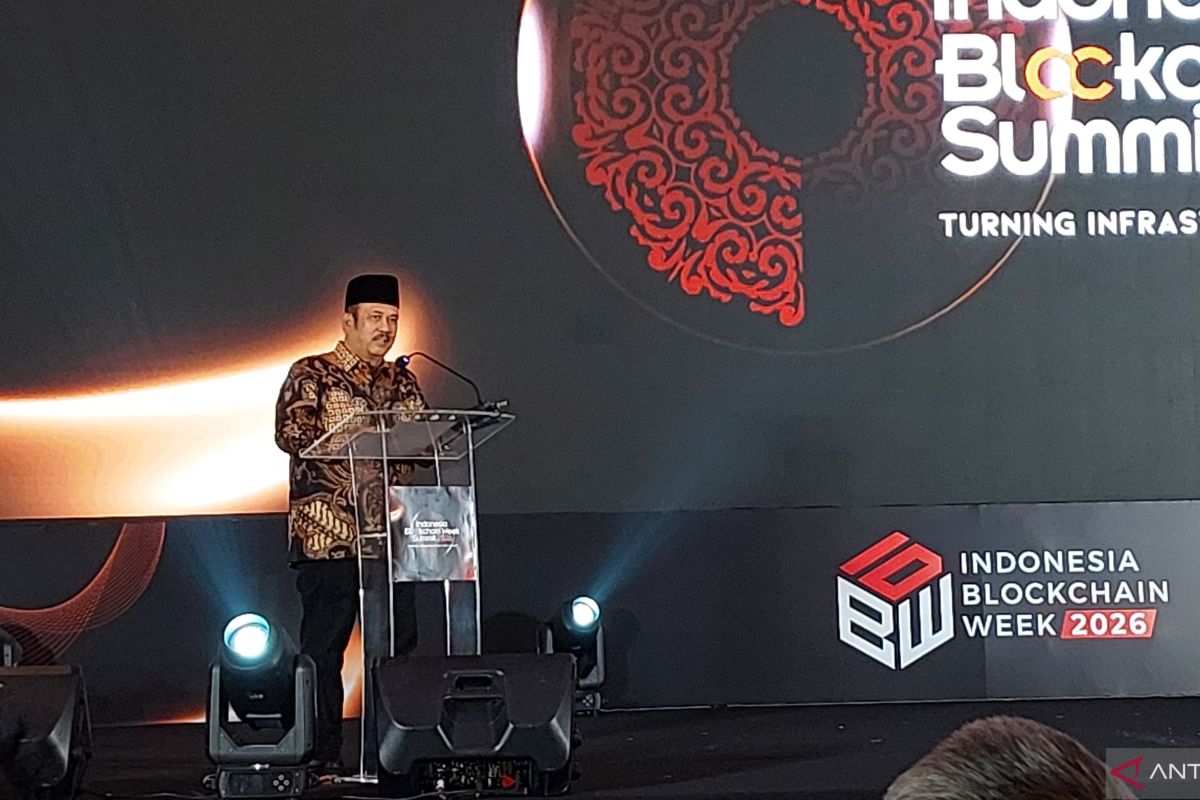
Jakarta (ANTARA) - National Development Planning Minister/Head of the National Development Planning Agency (Bappenas) Rachmat Pambudy has said the government is beginning to promote the use of blockchain technology through the tokenisation of real world assets (RWA) as part of the digital transformation and national development agenda.
Rachmat said RWA tokenisation is considered to have the potential to broaden access to investment and financing by allowing various assets, ranging from securities, commodities, gold, property to infrastructure, to be represented in the form of digital tokens.
“Tokenisation of real world assets is one concrete example of how blockchain can be translated into an instrument that drives digital technology,” Rachmat said at the Indonesia Blockchain Week 2026 event in Jakarta on Wednesday.
Rachmat explained that under this scheme, assets that previously required relatively large capital for investors to access can be represented and divided into smaller units. This opens opportunities for small, medium and large investors to participate in the digital investment ecosystem.
According to him, tokenisation also has the potential to increase the liquidity of assets that were previously relatively difficult to trade while expanding access to sources of financing.
The use of blockchain, including through smart contracts, can support transaction processes and the management of rights over assets in a more structured manner. However, the development of this ecosystem still requires governance readiness, especially regarding the validity and legality of the assets underlying tokenisation, infrastructure and the supporting ecosystem.
“Therefore, the way forward is not merely to multiply assets and tokenisation, but to expand use cases that have clear economic benefits. With this framework, tokenisation can develop more healthily,” he said.
The government considers that the use of blockchain needs to be placed within the national development framework, particularly to support the development of the digital economy, digital government and more transparent data governance.
Blockchain technology can also reduce inequality, because it can bring together all levels of development actors from the village level to the international level.
Therefore, technological development is not only directed at pursuing digitalisation, but must be able to answer development needs, improve efficiency, transparency, traceability, integrity and trust in economic activity.
Rachmat said digital transformation itself is an important part of the 2025-2045 national long-term development agenda as a lever for economic and governance transformation.
In the 2025-2029 National Medium-Term Development Plan (RPJMN), digital transformation is supported by three main pillars, namely digital society, digital infrastructure and digital government. Investment in new technology, strengthening the data ecosystem, research and innovation are also part of this agenda.
The government is targeting digital transformation to ultimately contribute to higher-quality economic growth, with the digital economy’s contribution to gross domestic product (GDP) targeted to reach around 12-13 percent by 2029.