
National Pepper Sector Encouraged to Adopt Sustainable Cultivation Practices
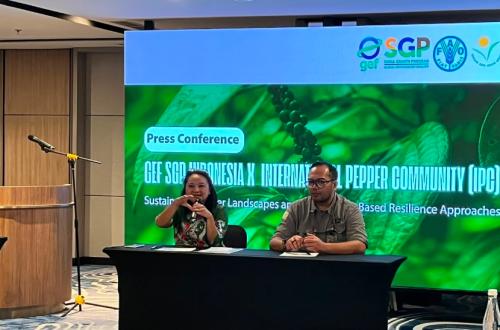
Sustainable cultivation practices are considered a key factor in enhancing the competitiveness of Indonesian pepper in a global market that increasingly demands eco-friendly and traceable products. To support this effort, the GEF Small Grants Programme (SGP) Indonesia and the International Pepper Community (IPC) have forged a partnership to strengthen farmers’ capacity, environmental conservation, and the development of value-added pepper commodities.
The partnership was marked by the signing of a memorandum of understanding in Jakarta on Wednesday. GEF SGP Indonesia National Coordinator Sidi Rana Menggala stated that strengthening the pepper sector cannot be achieved solely through increased production but must also ensure that cultivation practices preserve biodiversity and environmental sustainability.
"Sustainability must grow from the community at the grassroots level through local solutions that safeguard biodiversity," Sidi said. He added that the programme will encourage community innovation to prevent land degradation while improving farmers’ welfare. Mentoring will also be directed at equipping farmers with business management skills and the ability to meet international market requirements. "Local farmers need not only financial assistance but also life skills to compete at the international level," he stated.
IPC Executive Director Marina Novira Anggraini said that sustainability has now become the main foundation for the competitiveness of pepper commodities in the global market. The IPC will support the strengthening of the sector through the provision of market information, research, technical assistance, and knowledge exchange among producing countries. "The IPC views sustainability as the main foundation of competitiveness in strengthening the future of the global pepper sector," Marina said.
Beyond promoting sustainable cultivation practices, the partnership is also directed at increasing the commodity’s added value through the development of derivative products such as perfume, pepper coffee, and aromatherapy. "Our main target is to connect farmers with access to information so they can process raw materials into value-added products," Marina stated.
Director of PT Supa Surya Niaga, S. Kris, said the private sector is ready to strengthen the supply chain by linking farmers’ harvests to markets that enforce food safety and sustainability standards. "The global market demands products that are consistent, high-quality, safe, and produced through sustainable business practices," S. Kris said. The collaboration is expected to bolster the competitiveness of national pepper while helping farmers face the challenges of climate change, price fluctuations, and increasing market demands for sustainably produced commodities.