
National Parks Should Provide Jobs for Rural Communities
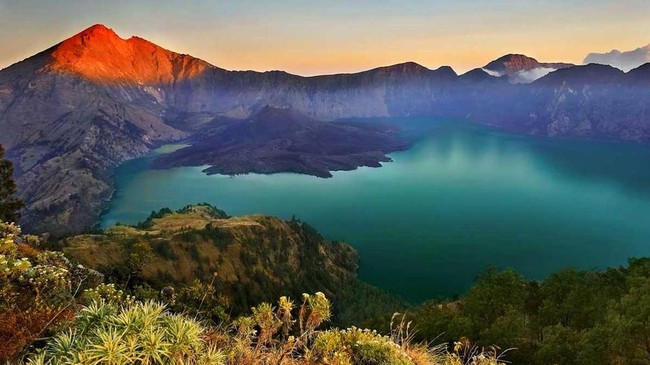
The seriousness of the government’s management of national parks should not be measured only by the size of protected areas, the amount of carbon emissions absorbed or the value of conservation funding secured. Another equally important measure is how many villagers gain jobs, new skills and decent incomes.
National parks should serve as both climate bulwarks and centres of local economic growth, rather than generating substantial economic value while leaving neighbouring communities unemployed.
The urgency is clear from the state of the national labour market. Statistics Indonesia (BPS) recorded 7.24 million unemployed people in February 2026, out of a workforce of 154.91 million, with an open unemployment rate of 4.68 per cent. The urban unemployment rate was higher, at 5.60 per cent, compared with 3.20 per cent in rural areas.
However, the lower rural figure does not mean that villagers have enough work. Many still work in the informal sector, in seasonal jobs or in occupations with low productivity and incomes.
The challenge is more pronounced among people with secondary education. In February 2026, the open unemployment rate among vocational high school graduates reached 7.74 per cent, the highest of any education group, while the rate for general high school graduates was 6.23 per cent. General high school graduates accounted for about 28 per cent of all unemployed people nationwide, while vocational school graduates made up around 22.35 per cent.
These figures point to a mismatch between secondary education and labour-market needs. As the government steps up national park management, its programmes should not recruit only people with backgrounds in forestry, biology or environmental studies, but should also create opportunities for graduates of general and vocational high schools and Islamic senior high schools in surrounding villages.
The establishment of the National Park Management Financing Innovation Task Force deserves recognition because it shows that the government is beginning to view conservation as a strategic agenda requiring funding, governance and cross-sector co-ordination.
Formed under Presidential Decree No. 8 of 2026, the task force is mandated to develop frameworks, strategies and innovative financing instruments for national park management and the conservation of iconic species. The government is also preparing pilot projects in several national parks, combining state support, philanthropy, green investment, ecotourism and environmental services.
However, innovative financing must not simply produce projects, contracts and carbon transactions. Every funding plan should include measurable targets for creating local jobs.
If national parks are said to absorb millions of tonnes of carbon emissions and have the potential to generate trillions of rupiah in economic value, villagers should see tangible employment benefits. They should not merely be named as beneficiaries in policy documents, but involved as workers, service providers, business operators, site monitors and conservation partners.
Minister of Forestry Regulation No. 27 of 2025 on the use of environmental services in nature reserves, conservation areas and game reserves has opened the way for the use of carbon services. The regulation requires assessments of biodiversity and social impacts, local community participation, free, prior and informed consent, and benefit-sharing mechanisms for management units and communities.
These provisions must be translated into more specific local employment policies. Benefit-sharing should not be limited to compensation or social assistance; it should also include training, certification, access to business opportunities and sustainable employment contracts.
Co-operation between national parks and municipal or regency governments is essential, since national park offices cannot solve employment challenges alone. Local governments oversee vocational education, job training, co-operatives, micro-enterprises, tourism, transport and community empowerment.
Through such co-operation, each national park can map its workforce needs and connect them with vocational schools, job-training centres, community learning centres and local training providers.
National park jobs do not always require a university degree. General and vocational high school graduates, as well as graduates of Islamic senior high schools, can be trained as forest-monitoring assistants, fire-prevention officers, camera-trap operators, GPS and basic-mapping technicians, carbon-data collectors, nature-tour guides, homestay managers, tourist drivers, solar-energy technicians, non-timber forest product processors and environmental education facilitators.
Forest-monitoring assistants could help observe areas vulnerable to illegal logging, changes in land cover, wildlife routes and potential fires using simple reporting applications. Fire-prevention officers could be trained to patrol, identify hotspots, maintain equipment and carry out initial emergency-response procedures. They would continue to work under the co-ordination of site managers and would not replace the authority of forestry police.
Camera-trap operators could install and maintain wildlife-monitoring equipment and check the images it captures. Local people have an advantage because they know the terrain, traditional routes and changes in conditions across the area. Information technology graduates from vocational schools could also manage camera data, booking systems, digital maps, communications equipment and field reports.
GPS, basic-mapping and carbon-data technicians could help measure tree diameters, record land cover, monitor damaged areas and collect data on vegetation growth. Experts would still need to check and verify the data, but community involvement would create new skills relevant to a low-carbon economy.
Tourism-school graduates could work as trail guides, wildlife-watching guides, hiking assistants, cultural guides, homestay managers and tourism service staff. They would need training in safety, first aid, environmental interpretation, basic foreign languages and responsible conduct around wildlife. Local guides have an advantage because they understand the area’s history, languages, traditions and character.
Other jobs could develop in supporting services, including tourist transport, catering, homestay management, equipment hire, cleaning and the sale of local products. Village co-operatives and village-owned enterprises could manage these services collectively. This would enable residents to become not only employees but also business operators who share in the economic benefits of tourism and environmental services.
Vocational school graduates in electrical studies could be trained as solar-energy technicians, maintaining solar panels, batteries, water pumps, energy-efficient lighting and communications equipment at management posts. These roles would link conservation with the energy transition, as national park facilities and neighbouring villages could reduce their reliance on fossil fuels.
Communities could also process non-timber forest products, such as honey, forest coffee, bamboo, medicinal plants, spices, handicrafts and local food products, provided the activities comply with conservation rules. Such work should be supported by training in processing, packaging, digital marketing, quality control and business licensing.
Another important profession is environmental education facilitator. General and Islamic senior high school graduates could be trained to work with schools, youth groups, tourists and communities to explain the links between forests, water, wildlife, fires, climate change and carbon emissions. They could bridge the scientific language used by site managers and people’s everyday experience.
These jobs should be designed as professions with competency standards, not treated as unpaid volunteering with no secure income. Local governments and national park managers should establish curricula, practical training, certification, work equipment, internship schemes and placement mechanisms.
It makes little sense to train people as tour guides if visitor numbers and tourism-management arrangements are unclear, or to train carbon-monitoring operators without funded projects and work plans.
Local residents should also be given priority. National park managers need recruitment policies that create opportunities for people from neighbouring villages, particularly young people who understand the terrain, language, culture and local social conditions.
Local knowledge is valuable in wildlife monitoring, fire prevention, managing human-wildlife conflict and providing tourism services. Local recruitment can narrow the gap between site managers and communities by putting conservation in the hands of people with a direct connection to the area.
The government should establish performance indicators linking conservation with employment. Each national park financing project should report the number of local workers employed; the proportion of jobs taken by graduates of general and vocational high schools and Islamic senior high schools; the number of women employed; the value of contracts awarded to village businesses; the number of people certified; and changes in household incomes.
Ecological indicators, such as reduced deforestation and increased forest cover, remain important, but must be complemented by social and economic measures. Villagers should not hear only about the potential for carbon trading worth trillions of rupiah while receiving little more than outreach sessions and promises of empowerment.
Carbon matters to the climate agenda, but it must not become the only language of policy. Behind every hectare of forest are people who need jobs, families who need incomes and young people who need a reason to build a future in their own villages.
The National Park Task Force should therefore make the creation of green jobs one of its main targets. In its first 12 months, the task force and local governments should map workforce needs in each priority national park, identify roles suitable for general and vocational high school and Islamic senior high school graduates, and establish training and placement programmes tailored to local needs.
The government should also ensure that training, equipment and mentoring are financed through conservation funding schemes, rather than charged to poor communities around protected areas. Well-managed national parks should indeed reduce carbon emissions and protect biodiversity.
But that success will mean more if it also creates new professions, raises village incomes and gives local people the opportunity to work in their own region. Good conservation does not merely protect forests from damage; it also ensures that people do not have to leave their villages because they cannot find work.
Source: jawawa.id (https://jawawa.id/newsitem/national-parks-should-provide-jobs-for-rural-communities-1792831856)
Originally published by CNBC Indonesia (https://www.cnbcindonesia.com/opini/20261024142502-14-779150/taman-nasional-harus-menjadi-sumber-pekerjaan-bagi-masyarakat-desa), translated from Indonesian