
National Park Carbon Trading and Support for the 2027–2029 State Budget
National Park Carbon Trading and Support for the 2027–2029 State Budget
Note: This article represents the author’s personal opinion and does not reflect the views of CNBCIndonesia.com’s editorial team.
With the Government confirming that Danantara will not pay dividends into the 2026 and 2027 State Budgets (APBN), finding credible and sustainable sources of state revenue has become increasingly important. Finance Minister Suahasil Nazara said Danantara dividends had not been factored into the budget plans for either year.
The Government believes Danantara’s contribution should be measured not only by dividend payments, but also by investment, job creation, increased production and asset optimisation. From a fiscal perspective, however, the absence of those dividends underlines the need for the APBN to strengthen other sources of funding without compromising economic stability or the public interest.
The 2027 APBN has been set at Rp3,435.1 trillion in state revenue and approximately Rp4,106.3 trillion in state spending, leaving a deficit of Rp671.2 trillion, or 2.40 per cent of gross domestic product. These figures show that the Government still has financing options, but its fiscal space is not unlimited.
Every new source of revenue must be assessed carefully. Additional income does not merely fund spending; it also eases financing pressures and helps preserve fiscal credibility.
In this context, carbon trading and a carbon tax could form part of a strategy to diversify state revenue. Neither should be treated as a substitute for major taxes or as an instant source of funds. Rather, they are fiscal and environmental instruments that can work in tandem.
A carbon tax encourages businesses to reduce emissions, while carbon trading assigns economic value to activities that cut or absorb emissions. If properly designed, the proceeds could help fund the energy transition, forest protection, ecosystem restoration and climate adaptation programmes.
Indonesia already has a legal basis for these policies. Law No. 7 of 2021 on the Harmonisation of Tax Regulations set the carbon tax rate at Rp30 per kilogram of carbon dioxide equivalent, or Rp30,000 per tonne of CO2e.
The economic value of carbon was previously regulated under Presidential Regulation No. 98 of 2021 and subsequently updated through Presidential Regulation No. 110 of 2025. Carbon trading through the exchange was also strengthened by Financial Services Authority Regulation (POJK) No. 10 of 2026, which amended POJK No. 14 of 2023.
The Government must nevertheless be realistic about the near-term revenue capacity of carbon markets. Bank Indonesia data up to the end of May 2026 show that cumulative carbon exchange transactions totalled around 1.98 million tonnes of CO2e, with a value of approximately Rp93.76 billion. This is still very small compared with the 2027 state revenue target. Carbon trading therefore cannot yet replace Danantara dividends or serve as the sole solution to the deficit.
At this early stage, its more appropriate role is as an additional revenue source, an emissions-control instrument and a means of attracting green investment. These limitations make it all the more important for the Government not to base the APBN on overly optimistic carbon revenue projections.
Indonesia’s carbon market still needs greater liquidity, methodological certainty, high-quality projects, credible buyers and trustworthy measurement, reporting and verification (MRV) systems. If potential carbon sales are included in revenue targets before carbon units have been verified and market demand established, the APBN risks falling short of its revenue projections.
Carbon income should therefore be recorded conservatively and treated as performance-based revenue, rather than as annual income that can be counted on. National parks have a strategic role in this regard. They are not merely conservation areas, but ecological infrastructure that provides environmental services, stores carbon, safeguards water systems, reduces disaster risk and protects local livelihoods.
If these ecological functions are damaged, the state must bear the costs of restoration, disaster relief, lost productivity and social conflict. Conservation spending is therefore not simply an expense; it is a fiscal investment that prevents greater costs in the future.
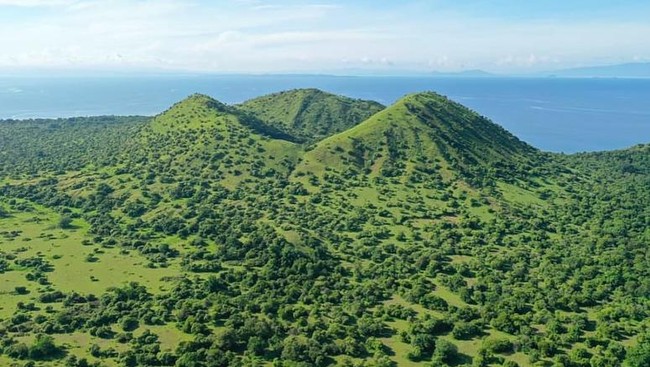
Batang Gadis National Park illustrates this potential. The area, covering approximately 72,803.80 hectares, is said to be capable of absorbing around 13 million tonnes of carbon emissions a year. If that figure meets measurement and verification standards, Batang Gadis could become an important example of results-based financing.
However, its ecological value must not simply be multiplied by a carbon price and entered as APBN revenue. The Government must first ensure additionality, permanence, safeguards against emissions leakage, registration in the national registry and the absence of double counting.
The fiscal benefits of national parks can be assessed through three channels. First, direct revenue from carbon units, payments for environmental services, non-tax state revenue and limited ecotourism. Second, indirect benefits from lower spending on disasters, environmental restoration, wildlife conflicts and infrastructure damage.
Third, macroeconomic benefits include the creation of green jobs, stronger local businesses, increased sustainable investment and an improved standing for Indonesia in international carbon markets. This approach is more comprehensive than measuring only entrance-fee income or the value of carbon-credit transactions.
In this context, the establishment of the Task Force for Financing Innovation in National Park Management must be followed by concrete, measurable work. The task force was formed under Presidential Decree No. 8 of 2026 and tasked with developing a framework, strategy and innovative financing instruments for national park management and the conservation of iconic species during 2026–2030.
The task force is expected to develop practical financing solutions, including blended finance and other innovative approaches. In a limited capacity, the author previously had the opportunity to assist the Presidential Staff Office’s Task Force for the Acceleration of Carbon Trading Implementation.
That experience showed that building a carbon market requires more than issuing regulations or introducing projects to prospective investors. It requires coordination across ministries, consistent data, methodological certainty, transaction oversight and public trust.
Carbon trading should therefore be seen as a long-term institutional undertaking that must continually improve in response to data and findings from the field. The author hopes the National Park Task Force will work effectively and transparently, without rushing to chase investment figures.
Its success should be measured not only by the number of projects offered or the value of announced carbon transactions, but also by the quality of restored ecosystems, verifiable emissions reductions, benefits reaching communities and greater efficiency in conservation spending.
The task force must also ensure that carbon trading does not create new land conflicts, unilaterally restrict community access or turn national parks into commercial zones at the expense of their ecological functions.
The author’s principal recommendation is to involve strategic research centres, universities, research institutions and civil society organisations promptly in identifying the national parks that can deliver the greatest and quickest climate and fiscal benefits. At a minimum, this mapping should assess the area of each site, carbon stocks and absorption, deforestation threats, MRV readiness, potential payments for ecosystem services, community readiness, land-tenure status and initial investment needs.
The findings should be translated into three categories. The first would comprise national parks with relatively complete carbon data that can soon deliver measurable climate benefits. The second would include areas with high potential that require initial investment in ecosystem restoration and community support.
The third category would comprise national parks to be prioritised for strict protection because their ecological value is too important, or because they are vulnerable to damage if opened up to economic activity. From the APBN’s perspective, the safest model is performance-based blended finance.
The Government would provide initial funding for mapping, patrols, restoration and verification. Philanthropic funds, multilateral institutions, green investors and carbon buyers would then finance subsequent stages based on measurable results. This would mean the state does not bear all the costs upfront, while investors would not gain access without meeting conservation standards.
The Government must also distinguish between gross and net revenue. The value of carbon transactions is not equivalent to APBN income, as costs remain for measurement, verification, registration, project management, area protection, benefit-sharing and risk reserves.
If a tonne of carbon is sold at a given price, the full amount cannot automatically be treated as state revenue. The Government needs a formula that distinguishes developer income, project operating costs, the community’s share, ecosystem restoration funds and state revenue.
Fiscal calculations must use net values after all conservation and social obligations have been met. The President’s Special Envoy for Climate Change and Energy could help connect the national park agenda with global climate finance, carbon markets, the energy transition and investment diplomacy.
That coordination must, however, take place within a transparent institutional framework. The Ministry of Finance must ensure consistency with the APBN system; the Ministry of Forestry must guarantee protection of the areas; the Financial Services Authority must oversee carbon trading; and communities must be able to monitor the benefits and impacts of projects at the local level.
Carbon revenue should not immediately be used for general spending unrelated to climate. The Government should introduce budget tagging so the public can see how much carbon income is spent on patrols, forest rehabilitation, wildlife protection, community adaptation and local economic development. This would make the link between revenue sources and spending objectives clear.
Ultimately, national parks could become one part of the solution to the 2027–2029 APBN’s fiscal needs, but not through exploitation or inflated revenue projections. A credible solution must rest on three principles: revenue is estimated conservatively, ecological benefits are independently verified, and economic gains are shared fairly between communities and the state.
With Danantara dividends absent from the APBN, the Government does need to seek new sources of funding. But its choices must ensure that every rupiah generated through carbon trading comes from forests left standing, ecosystems restored and communities whose livelihoods have improved.
Source: jawawa.id (https://jawawa.id/newsitem/national-park-carbon-trading-and-support-for-the-2027-2029-state-budget-1791733889)
Originally published by CNBC Indonesia (https://www.cnbcindonesia.com/opini/20261011215233-14-775152/perdagangan-karbon-taman-nasional-dan-dukungan-terhadap-apbn-2027-2029), translated from Indonesian