
National One-Way Scheme for Lebaran 2026 Return Flow Officially Halted This Afternoon
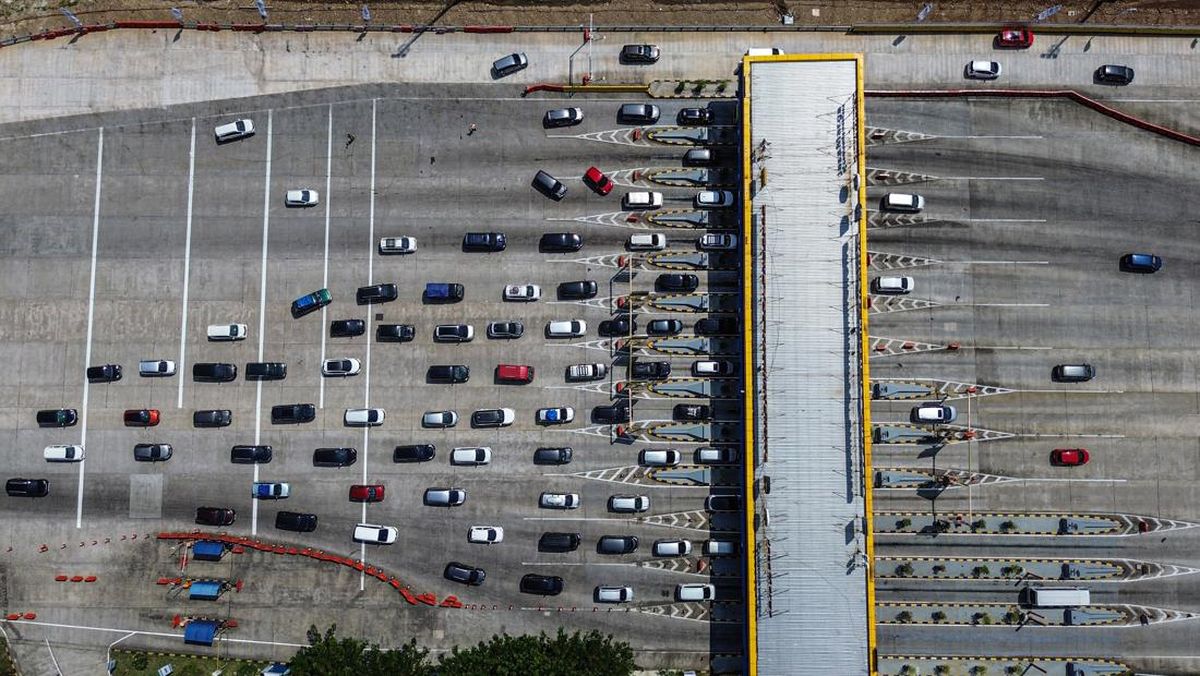
The Indonesian National Police Traffic Corps (Korlantas Polri) has officially halted the national one-way traffic engineering scheme for the Lebaran return flow, starting from Kalikangkung Toll Gate KM 414 to Cikampek KM 70. Korlantas Chief Irjen Agus Suryonugroho stated that the complete termination was implemented because the number of vehicles heading to Jakarta has subsided and returned to normal conditions. “This morning, we conducted an analysis and evaluation of the traffic count passing through Banyumanik Gate and Kalikangkung, which is quite subdued and normal,” he told reporters in Karanganyar on Wednesday (25/3). He explained that this total halt follows the previous implementation of a local one-way from Brebes Toll Gate KM 263 to Cikampek. He added that with the termination of the one-way scheme, the route from Cikampek to Semarang will return to normal operation. Agus explained that although the one-way engineering has been lifted, his side is still applying contraflow at certain points to anticipate residual density, as well as preparing functional routes in West Java. “At KM 70, we are still implementing traffic engineering from KM 70 to 55, applying a one-lane contraflow. Similarly, in West Java, we are still applying it and opening the Japek II South functional toll from Sadang, Deltamas to Setu, and then it can enter JORR,” he said. Previously, National Police Chief General Listyo Sigit Prabowo assured that the first peak of the Lebaran 2026 return flow had been passed on Tuesday night (24/3). This was conveyed by Sigit after inspecting the Jasa Marga Toll Road Command Centre in Jatiasih, Bekasi, West Java, on Wednesday (25/3) afternoon. He explained that based on data up to Wednesday at 12:00 WIB, the total vehicles entering Jakarta had reached approximately 2,040,000 units. Meanwhile, for the peak return flow that occurred yesterday, 256,338 vehicles were recorded entering the Jakarta and surrounding areas. “This is higher than last year, which was 223,163 vehicles. However, Alhamdulillah, we see that the peak return flow has roughly occurred last night; now we just need to disperse the rest,” he said.