
National Nutrition Agency Responds to Constitutional Court Ruling on Separating Free Nutritious Meal and Education Budgets
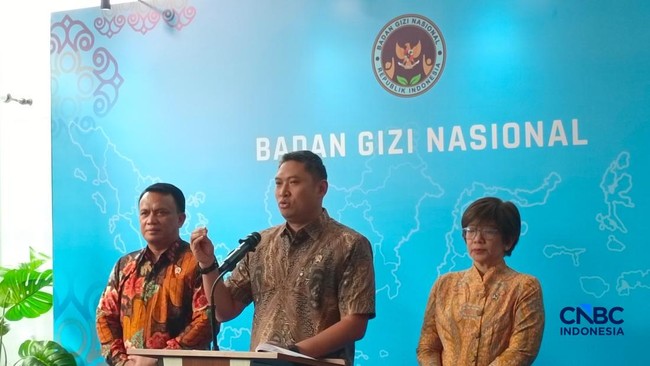
The National Nutrition Agency (BGN) has confirmed it will continue to implement the Free Nutritious Meal (MBG) programme in accordance with government directives, following a Constitutional Court (MK) ruling that mandates the separation of the MBG budget from the education budget starting from 2028.
BGN Head, Sudaryono, emphasised that as an implementing agency, the BGN will adhere to all policies subsequently decided by the government as a follow-up to the Constitutional Court’s decision. “Regarding the MK decision, we are an operational government agency; we carry out operations, and of course, we will implement whatever decision is made by the state and the policies of the government,” Sudaryono stated during a press conference at the BGN office in Jakarta on Friday.
Sudaryono explained that the subsequent mechanisms regarding the Constitutional Court’s ruling will fall under the authority of the government, including the Ministry of Finance and the Budget Committee. Consequently, he noted that discussions regarding the implications of budget policy are more appropriately addressed by the Minister of Finance. “Regarding the MK, I believe the questions should perhaps be directed to the Minister of Finance. Our core focus is on execution; we are focused on implementation, and so far, we will ensure that what is already running continues to proceed well,” he added.
Meanwhile, Sudaryono ensured that the implementation of the MBG programme will continue while the government conducts data alignment to expand the programme’s scope. This phase is focused on priority areas, particularly the outermost, frontier, and least developed (3T) regions that still face high stunting prevalence.
He noted that the government has obtained detailed data from the Ministry of Health regarding priority areas for intervention and is currently synchronising this data before expanding implementation. Sudaryono remarked that regions with high stunting rates are not limited to eastern Indonesia, such as Papua and East Nusa Tenggara (NTT), as several regencies in Java are also under government attention due to similar issues.