
National Nutrition Agency Removes 1,653 Schools from Free Nutritious Meal Programme, Sudaryono Explains Reasons
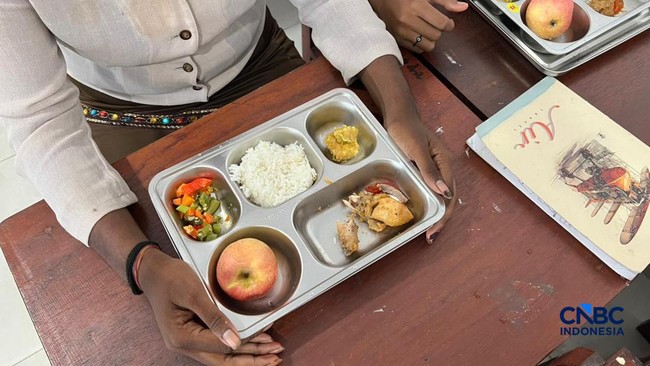
The National Nutrition Agency (Boch) has adjusted the target recipients for the Free Nutritious Meal (MBG) programme. A total of 1,653 educational units have been removed from the recipient list, while the expansion of the programme will be prioritised for frontier, outermost, and least developed (3T) regions, as well as areas with high stunting rates.
Head of the BGN, Sudaryono, stated that the majority of the thousands of schools removed from the list are international-standard private schools and educational units deemed capable of financing their own educational needs independently.
“The majority of the ,1653 that we have excluded from the list of beneficiaries are international-standard private schools, schools or educational units that collaborate with international or national institutions, and schools that are already financially independent, without relying on school operational assistance or BOS funds,” Sudaryono said in a statement, quoted on Friday (11/9/2026).
This update was conducted by the BGN in collaboration with the Ministry of Primary and Secondary Education and the Ministry of Religious Affairs. The mapped data covers more than 580,000 educational units, ranging from public schools, madrasahs, and Islamic boarding schools (pesantren) to other religious educational units.
From that total, more than 340,000 educational units have already received MBG services. This means there are approximately 240,000 educational units that have yet to be served.
“More than 340,000 schools have received or been served by the MBG programme in their schools, meaning there are still about 240,000 schools that have not received the MBG programme,” he explained.
Sudaryono noted that schools that have not yet received MBG do not automatically become recipients. The BGN will first conduct investigations and mapping to determine the priorities for service expansion.
“Our priority is, of course, schools or educational units located in 3T regions—frontier, outermost, and least developed—as well as other regions where stunting rates are high or extremely high,” he said.
One of the regions of concern is Maluku and Papua. Based on BGN data, there are still approximately 15,000 educational units in these two regions that have not received MBG services.
“For example, in Maluku and Papua, there are about 15,000 educational units that have not been served. Naturally, regions such as Maluku and Papua are priorities, along with other areas with high stunting rates and other 3T regions scattered across Indonesia,” he said.
To pursue this expansion, the BGN will increase the number of Nutrition Fulfilment Service Units (SPPG), or MBG kitchens, in priority areas. However, the opening of these MBG kitchens will not be done all at once, but rather gradually, considering the needs and readiness of each region.
“We will promptly open SPPG, the Nutrition Fulfilment Service Units, in those priority locations in a gradual and measurable manner,” said Sudaryono.
The BGN also ensured that the programme expansion will continue to prioritise safety, efficiency, and precision in targeting.
“Thus, the implementation of the opening of the SPPG kitchens can proceed safely, efficiently, and precisely as we intend,” he concluded.
Source: jawawa.id (https://jawawa.id/newsitem/national-nutrition-agency-removes-1-653-schools-from-free-nutritious-meal-programme-sudaryono-explains-reasons-1789106252)
Originally published by CNBC Indonesia (https://www.cnbcindonesia.com/news/20260911113501-4-767164/bgn-coret-1653-sekolah-dari-mbg-sudaryono-ungkap-alasannya), translated from Indonesian