
National Nutrition Agency Implements Budget Efficiency to Strengthen Governance and Enhance Free Nutritious Meal Programme
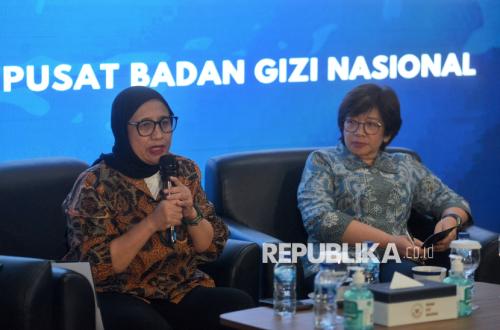
The National Nutrition Agency (BGN) has reaffirmed its commitment to increasing the effectiveness of the Free Nutritious Meal (MBG) programme through strengthened governance, budget efficiency, more precise targeting of beneficiaries, and the optimisation of available resources. These steps are being taken to ensure the programme is more accurate, sustainable, and provides maximum benefits to the community.
This was stated by the Head of the National Nutrition Agency, Nanik S. Deyang, during a BGN Press Conference held at the BGN Headquarters on Thursday (4/6/2026). The press conference served as an initial consolidation momentum for the new BGN leadership in formulating policy directions and strategic steps for the programme’s future implementation.
According to Nanik, the BGN’s primary focus is to ensure that every budget allocation and resource used can produce an optimal impact on the community groups most in need of nutritional intervention. “Our focus right now is to ensure the Free Nutritious Meal Programme runs more effectively, is precisely targeted, and provides optimal benefits to the public. Therefore, we are restructuring the programme’s implementation so that service quality can continue to be improved,” said Nanik.
As part of these efforts, the BGN is restructuring various aspects of the programme’s execution. These steps include refocusing beneficiaries so that nutritional interventions are more directed towards priority groups, a temporary moratorium on the construction of new kitchens, and the optimisation of already operational kitchens to ensure maximum utilisation.
Furthermore, the BGN is strengthening the guidance and standardisation of Nutrition Fulfilment Service Units (SPPG) to ensure all kitchens meet established food safety, service quality, and human resource standards. Through these measures, the BGN aims to ensure every meal distributed to beneficiaries meets high nutritional and safety standards.
Nanik noted that the restructuring is also intended to address the challenges of service equality across various regions. “Currently, there is still a high concentration of kitchens in agglomeration areas, while several frontier, outermost, and remote (3T) regions still require service reinforcement. Therefore, we are restructuring to ensure the programme’s benefits can truly be felt by all Indonesian children,” said Nanik.
To expand service reach, the BGN is preparing various adaptive MBG implementation schemes for 3T regions. The approach does not rely solely on building new facilities but also involves optimising existing infrastructure, such as school canteens, public kitchens, and community facilities that meet the programme’s operational requirements.
The BGN is also opening opportunities for collaboration with various stakeholders, including State-Owned Enterprises (SOEs), the private sector through Corporate Social Responsibility (CSR) programmes, foundations, and other parties interested in supporting the expansion of MBG services in needy areas.
During the same occasion, Nanik emphasised that service quality remains the top priority in the ongoing BGN consolidation process. “We want to ensure every kitchen produces safe, healthy, and nutritious food. Therefore, improving operational standards, increasing human resource capacity, and strengthening supervision are our main agendas,” she said.
Strengthening Governance
Meanwhile, the Deputy Head of the BQG, Agustina Arumsari, stated that governance strengthening will be achieved through improved internal control systems, data integration, information validation, and the development of more structured and measurable systems.
She noted that good governance must be built through a robust system so that programme implementation can be accountable, transparent, and sustainable. “We will strengthen data integration and information systems so that every policy is supported by valid data. Additionally, various recommendations from supervisory bodies will be part of our ongoing governance improvement efforts,” she said.
In sharpening programme targets, the BGN is also strengthening interventions for the ‘3B’ group—comprising pregnant women, breastfeeding mothers, and toddlers—as strategic groups in the effort to prevent stunting and improve the quality of human resources from an early age.
Source: jawawa.id (https://jawawa.id/newsitem/national-nutrition-agency-implements-budget-efficiency-to-strengthen-governance-and-enhance-free-nutritious-1780825714)
Originally published by Republika (https://news.republika.co.id/berita/tg3x9w368/bgn-lakukan-efisiensi-anggaran-perkuat-tata-kelola-dan-tingkatkan-efektivitas-program-mbg), translated from Indonesian