
National Nutrition Agency explores CSR and foreign grants to fund Free Nutritious Meal kitchens
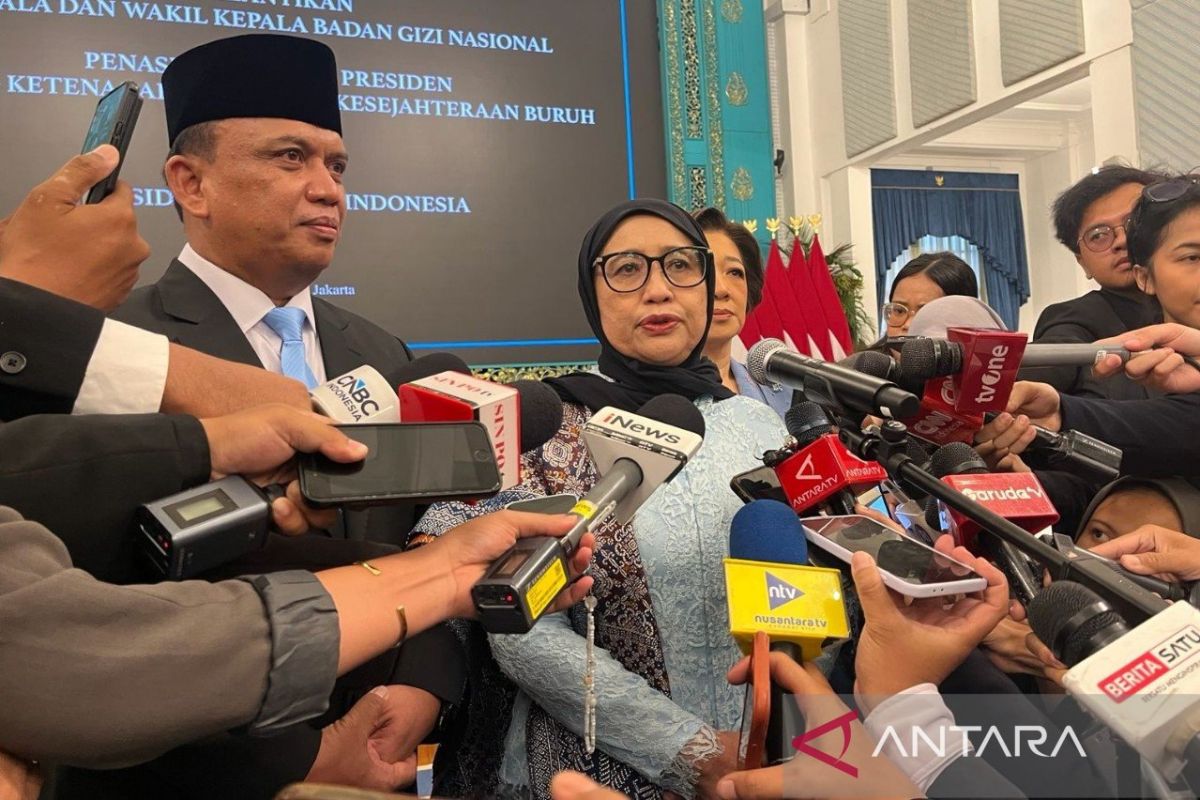
Jakarta (ANTARA) - The Head of the National Nutrition Agency (BGN), Nanik S. Deyang, stated that the agency is opening opportunities for alternative funding sources to support the kitchens of the Free Nutritious Meal (MBG) programme in frontier, outermost, and least developed (3T) regions. These sources include Corporate Social Responsibility (CSR) funds from State-Owned Enterprises (BUMN), foreign grants, and support from companies operating in local areas.
“For regions that have not yet been reached by investors, we will attempt to establish partnerships, or they could be funded through BUMN CSR, foreign grants, or perhaps from large companies operating in those areas to invest in building kitchens for the local community, as it is not an expensive undertaking,” Nanik said at the State Palace, Jakarta, on Monday.
Nanik explained that this move is part of the BGN’s efforts to reduce reliance on the State Budget (APBN) for the development of MBG kitchens in areas currently untouched by investors. Additionally, the agency is taking several budget efficiency measures to ensure the programme’s implementation does not burden state finances without compromising the nutritional targets for beneficiaries.
The first step taken is a moratorium on the opening of new service points and kitchens. Currently, there are 27,877 operational kitchen points based on virtual accounts, which will be reorganised to assess whether service capacity aligns with the number of beneficiaries in each region. The BGN has also temporarily halted new kitchen registrations while conducting a needs assessment across various regions, as current kitchen distribution remains concentrated on Java.
“Once we have completed the restructuring, we will calculate whether it is necessary to reopen them or not,” she said.
The next step involves refocusing beneficiaries so that nutritional interventions are directed towards groups that truly require them. An evaluation is being conducted on the current number of beneficiaries, which is recorded at approximately 63 million people.
“It is unnecessary, for instance, to include wealthy schools, as their nutritional intake at home is likely already better. Therefore, we will direct our focus towards children or beneficiaries who genuinely require nutritional intervention,” Nanik said. She added, “We will be refocusing to determine if the current 63 million people truly need it, or if the number can be reduced to accommodate those who have not yet received aid.”
Furthermore, the BGN will strengthen the supervision of service quality. By 2026, the programme’s focus will shift towards improving implementation quality rather than merely pursuing quantity. Evaluations will be conducted to ensure that operating kitchens comply with technical guidelines and possess appropriate service capacities.
Nanik stated that the MBG programme is a mandate that must be executed effectively, as it aims not only to improve the nutritional quality of Indonesian children but is also expected to stimulate the grassroots economy. “This is an excellent programme because we are responsible for both educating the nation’s children and stimulating the lower-level economy,” she said.
In performing her duties, Nanik is accompanied by the Deputy Head of BGN, Agustina Arumsari, who will assist in financial oversight, and Deputy Head Mayjen TNI (Ret.) Trenggono, who will support the development of kitchens in 3T regions and areas with underdeveloped infrastructure.