
National Mourning Ceremony for Ali Khamenei Begins in Tehran
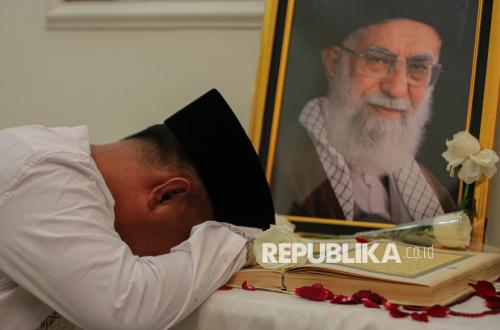
A national mourning ceremony has begun in the Iranian capital, Tehran, for former Supreme Leader Ayatollah Ali Khamenei, months after he was killed in an Israeli airstrike on the first day of the US-Israeli war with Iran on 28 February 2026. Crowds have been arriving at the site since dawn.
State television footage showed the religious leader’s coffin lying in state at the Grand Mosalla Mosque on Saturday, with large numbers of supporters arriving at the venue. The ceremony is scheduled to last three days in Tehran before Khamenei’s body is taken to the pilgrimage city of Qom and then to Iraq. The former supreme leader will then be buried in his birthplace, Mashhad, on Thursday. Khamenei died at the age of 86 in a targeted airstrike on his official residence in Tehran on 28 February 2026. His death was followed by more than five weeks of fighting between Iran, Israel, and the US, involving Iran-backed groups including Lebanon’s Hezbollah. US and Iranian representatives agreed to a ceasefire in early April 2026.
As supreme leader, Khamenei was Iran’s highest political and religious authority, with the final say on all strategic matters. He ruled the Islamic Republic with an iron fist until his death. Observers will be closely watching the appearance of Khamenei’s son, Mojtaba Khamenei, during the ceremony. Mojtaba was appointed as Iran’s new supreme leader a week after his father’s death. He was seriously injured in the attack that killed his father and has not appeared in public since his appointment, fuelling speculation about his health.
President Masoud Pezeshkian, Parliament Speaker Mohammad Bagher Qalibaf, and Foreign Minister Abbas Araghchi held separate meetings with foreign leaders and delegations in Tehran on Friday, on the sidelines of Khamenei’s funeral. Pezeshkian met with Russian Security Council Deputy Chairman Dmitry Medvedev, who visited Tehran as a special envoy of President Vladimir Putin. The Iranian president thanked Moscow for its condolences and support, and called for accelerating the implementation of Iran-Russia agreements and expanding cooperation in the economy, trade, energy, and transit, particularly through the International North-South Transport Corridor. Medvedev conveyed Putin’s condolences and condemned the US-Israeli attacks on Iran as a violation of international law and the UN Charter, reaffirming Moscow’s commitment to implementing the comprehensive strategic partnership agreement with Tehran.
Pezeshkian also held separate meetings with delegations from China, Namibia, and Afghanistan, thanking them for condemning the attack on Iran. He stressed Tehran’s readiness to expand political, economic, trade, cultural, scientific, and technological cooperation with these nations. In a meeting with Turkmenistan’s national leader Gurbanguly Berdimuhamedow, Pezeshkian praised Ashgabat’s support and called for the swift implementation of agreements in energy, transport, transit, trade, and investment. Berdimuhamedow said Turkmenistan would continue to support Iran and regional cooperation. Pezeshkian also met with Armenian Prime Minister Nikol Pashinyan, with both sides emphasising their historic ties and the need to protect bilateral relations from external interference. Pashinyan stated that Armenia would not participate in any project or action targeting Iran’s interests or security. In talks with Iraqi President Nizar Amidi, Pezeshkian described Iraq as a ‘brotherly’ state and urged Islamic countries to strengthen unity against regional instability. Amidi said Iraq condemned the attack on Iran and considered the Iranian people’s grief as its own.