
National Library Strengthens Local Government Role to Boost Literacy
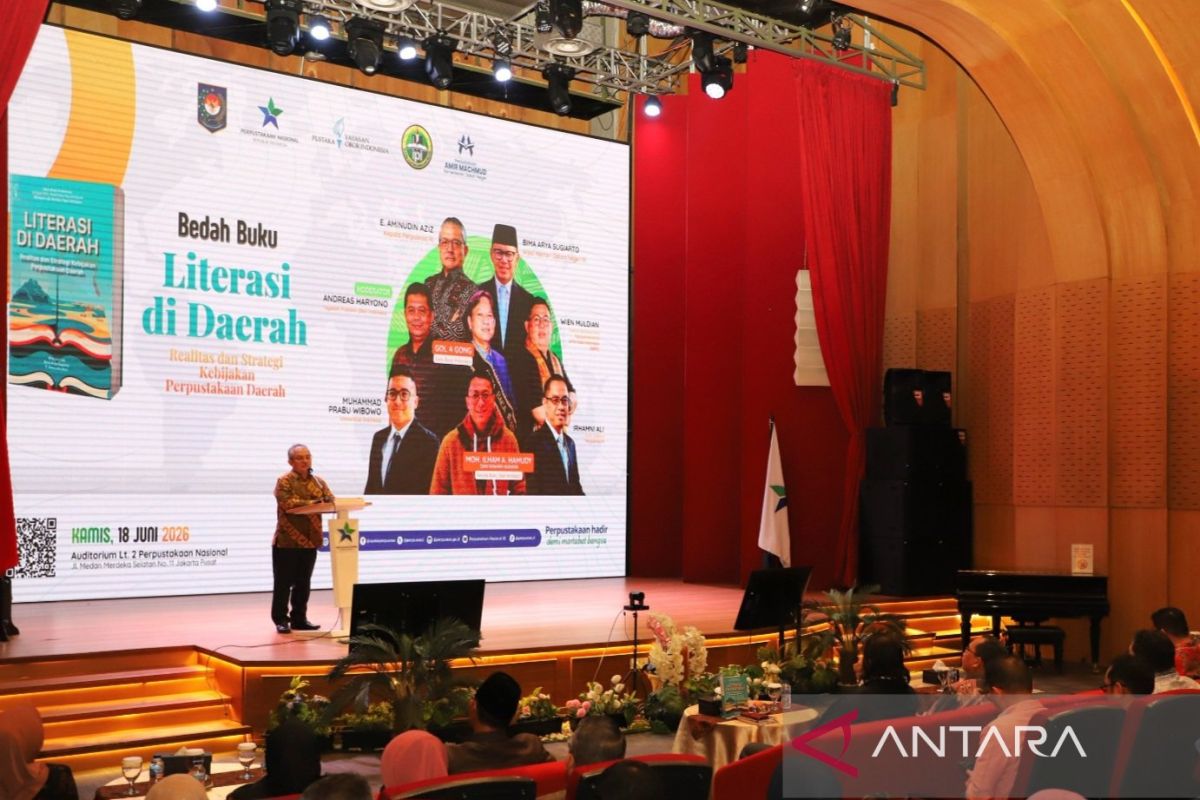
Jakarta (ANTARA) - The National Library (Perpusnas) is strengthening the role of regional governments to build literacy skills and a reading culture in the regions. Head of Perpusnas E. Aminudin Aziz stated that fostering a reading habit must be carried out through synergy between regional government officials who understand the strategies, policies, and implementation of literacy development, so they can become the main drivers for improving human resource quality. “Improving literacy will not run optimally if the organisers of literacy development do not have an adequate understanding of the strategies, policies, and implementation,” Aminudin said. According to him, regional governments are the main actors in literacy development because they have direct authority in their respective areas. His institution has refined the measurement instruments for the Community Literacy Development Index (IPLM) and the Reading Interest Level (TKM) so that the results are more proportional and reflect real conditions in the field. Previously, the provincial IPLM score was heavily influenced by district/city data aggregation, thus not fully reflecting the provincial government’s contribution to literacy development. “As a result of this instrument change, several regions experienced a significant decline in their IPLM scores. However, these results actually have a higher level of validity compared to the previous instrument,” Aminudin said. “Literacy is a shared responsibility. Its success requires collaboration between the National Library, regional governments, universities, professional organisations, and literacy activists,” he added. Meanwhile, Expert Staff for Apparatus and Public Services at the Ministry of Home Affairs, Anwar Harum Damanik, assessed that literacy books in the regions can become an important reference for the government, academics, librarians, and policymakers in formulating a more advanced, inclusive, and sustainable direction for regional library development. “The current literacy challenge is not only low reading interest, but also the community’s ability to face the development of digital technology. Therefore, libraries must transform into inclusive learning centres that are adaptive and relevant to the times,” he said.