
National Library Overhauls Literacy Measurement, School Libraries Under Scrutiny
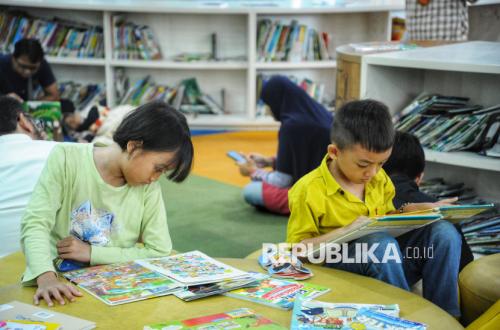
The National Library of Indonesia (Perpusnas) has begun implementing a new method to measure the Community Literacy Development Index (IPLM) down to the level of individual libraries in the regions. This approach is expected to provide a more complete picture of the condition of public, special, and school libraries.
Head of the National IPLM and Reading Interest Level (TKM) Team at Perpusnas, Irhamni, stated that the new method allows assessments to be conducted directly on each type of library. “This new method is more comprehensive, as we carry out measurements down to the individual library level in the regions, including special libraries, public libraries, and school libraries,” Irhamni said during an IPLM and TKM Calculation Workshop in Banjarmasin, South Kalimantan, on Wednesday.
He explained that the IPLM measurement uses four main dimensions divided into two groups. The compliance dimension covers aspects of collections and human resources, whilst the performance dimension includes library management and services. According to 2025 data from Statistics Indonesia (BPS), South Kalimantan’s IPLM score was recorded at 25.16. This score comprises a compliance dimension of 0.280 and a performance dimension of 0.246.
Irhamni said the IPLM measurement results will subsequently be correlated with the TKM to observe the development of literacy culture and the public’s reading interest. Based on provisional measurement results using the new method, public libraries managed by regional governments in South Kalimantan obtained a score of 85 on a scale of 100. However, a different situation is evident in school libraries, which only recorded a score of 23.
“The level of school libraries in South Kalimantan is at a score of 23 out of 100. This means substantial improvements are still needed at the school library level, where budget authority for school library development lies with the education department,” he stated. He assessed that the low score of school libraries indicates a need for guidance, collection improvements, strengthening of human resources, and enhancement of management and service quality.
Perpusnas hopes that provincial and district/city governments, education departments, and other stakeholders will strengthen coordination in developing libraries, particularly within the school environment. This synergy is considered crucial to continuously improve the IPLM and TKM scores whilst strengthening the literacy culture and reading interest of the community in the regions.