
National Library Launches Book on Asrul Sani's Intellectual Legacy as He Turns 101
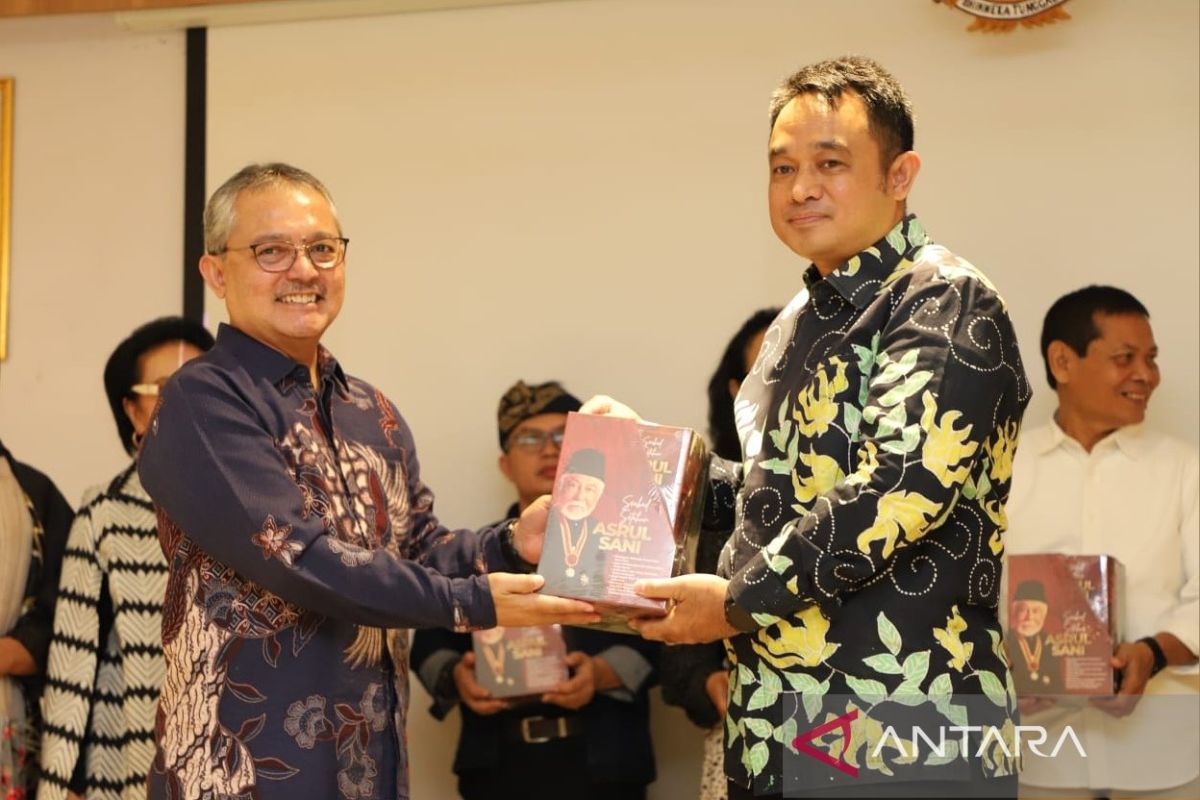
The cultural approach to religious outreach employed by Asrul Sani holds strong relevance to the character of Indonesia’s pluralistic society. The National Library (Perpusnas) launched a book entitled ‘A Century, A Year of Asrul Sani: Intellectuality, Track of Works, and Indonesian Filmmaker’ to commemorate the 101st anniversary of the literary figure. The book, which consists of two volumes totalling 1,784 pages, is one of the most comprehensive documentations regarding the thoughts, works, and influence of Asrul Sani in the development of Indonesian literature, cinema, theatre, and culture. This work contains 86 writings from 141 contributors, ranging from professionals to Asrul Sani’s family. Head of the National Library E. Aminudin Aziz in Jakarta on Wednesday shared his views on the figure of Asrul Sani, whom he assessed as possessing intellectual integrity and cultural courage. According to him, Asrul Sani was a figure who was never comfortable when faced with situations that contradicted his conscience or the values he believed in. ‘Asrul Sani demonstrated extraordinary earnestness and consistency in his work. From the various archives and documentation displayed in the exhibition, it is clear how every work was prepared with full dedication and seriousness. This totality should be a lesson for the younger generation today,’ he said. Asrul Sani was not only known as a diligent cultural worker but was also assessed as having sensitivity in reading social realities. One example of his work is the character Nagabonar, who is depicted as a pickpocket yet can appear as a hero. On this occasion, Aminudin also stressed that libraries should not only function to collect and preserve collections but also to revive the thoughts, ideas, and works of national figures through various literacy programmes, exhibitions, discussions, research, and publications. ‘I always say that libraries should not be viewed merely as places to store books. We want to change that perception by presenting the library as a vehicle for developing creativity,’ he explained. Therefore, the ‘Centennial Year of Asrul Sani’ commemoration is part of an effort to strengthen cultural literacy while presenting the nation’s intellectual heritage to the public. The publication of the book is a collective effort to record and pass on the ideas, thoughts, and intellectual footprint of one of Indonesia’s important cultural figures. The book launch was made possible through collaboration between the National Library, the Indonesian Association of Literary Scholars (HISKI), Pelaku Sanggar Pelakon, and various stakeholders in the cultural field. Besides serving as a space for reflection on Asrul Sani’s contributions, the activity also strengthens efforts to preserve the nation’s collective memory through documentation, study, and the dissemination of knowledge to the public. On the same occasion, the Minister of Religious Affairs of the Republic of Indonesia, Nasaruddin Umar, remembered Asrul Sani as a monumental figure in the world of Indonesian art and religious propagation. ‘Anyone who loves culture and art will surely remember the great name of Asrul Sani. It is not an exaggeration for me to say that he was the real mubaligh (preacher),’ he said during an online address. Nasaruddin explained that Asrul Sani’s propagation was not conducted through conventional approaches such as pulpits, sermons, or lectures at Islamic study groups. Instead, he expressed his intellectual and spiritual quality through works of art that could reach a wide audience. ‘Asrul Sani’s works touch the intellect, inner feelings, and the reality of society. He was never called a kiai or ustaz, yet his works were highly effective in conveying religious messages,’ he clarified. According to Nasaruddin, the cultural propagation approach carried out by Asrul Sani holds strong relevance to the character of Indonesia’s pluralistic society. ‘Through his works, he taught how society could love its religion while also loving its country and giving tangible loyalty to the nation,’ he stated.