
National Human Rights Commission Highlights Impacts of Nickel Industry in Morowali, Triggering Environmental and Health Crises
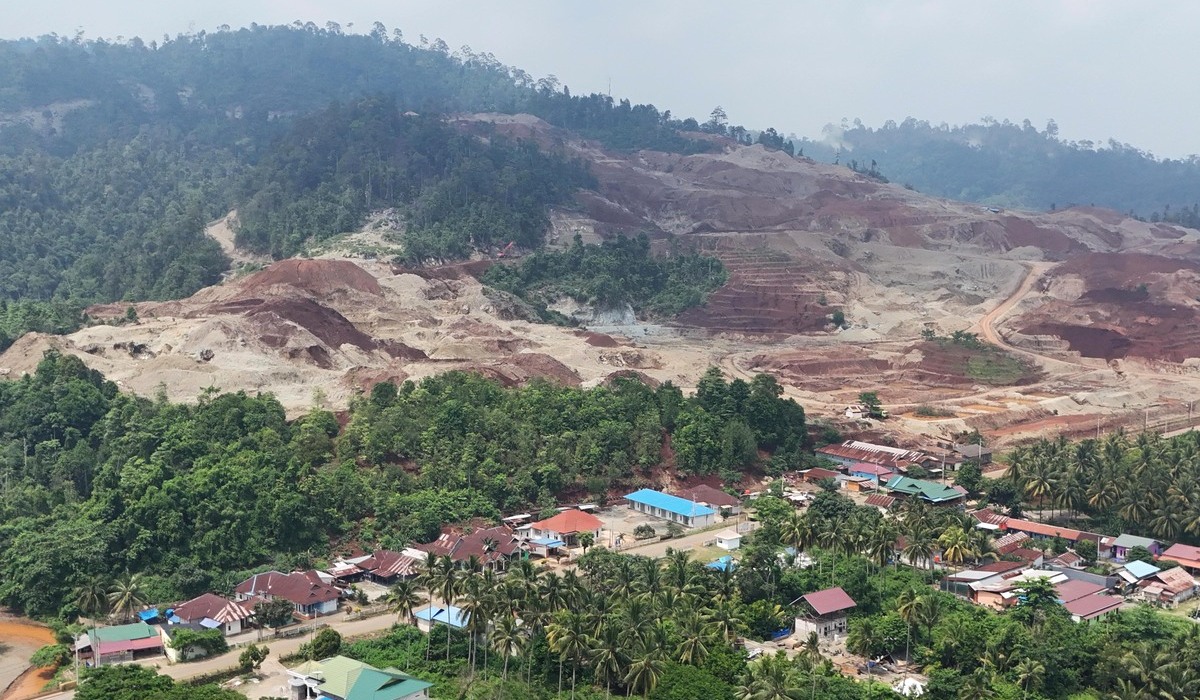
The National Human Rights Commission (Komnas HAM) has highlighted the impacts of nickel industry activities on public health and the living environment in the Morowali and North Morowali areas.
Komnas HAM’s Commissioner for Assessment and Research, Uli Parulian Sihombing, stated that the study was conducted based on community complaints collected from 2020 to 2025, using normative and empirical approaches, including direct inspections of affected sites.
“Data shows a significant increase in acute respiratory infection (ISPA) cases, reaching around 50,000 cases per year in the affected areas,” he said in Jakarta on Thursday (9/4).
He emphasised that the study was carried out comprehensively to examine various issues arising in the industrial zone.
“This study is not done partially, but to view comprehensively (helicopter view) the various complaints in a more thorough manner,” he said.
The study’s results indicate a significant increase in acute respiratory infection (ISPA) cases in the industrial areas. Additionally, mining and smelter activities have led to deforestation, water pollution, and ecosystem changes that trigger flooding and a decline in environmental living quality.
Komnas HAM notes that the decline in air and water quality correlates with industrial activities still reliant on coal. This condition is assessed to worsen emissions and pose challenges in efforts to transition to clean energy in line with the 2060 net zero emission target.
“Limited healthcare facilities in the industrial areas further exacerbate the situation. The capacity of services and the number of medical personnel are deemed insufficient to match the increased disease burden in the community,” he revealed.
From a governance perspective, Komnas HAM highlights the suboptimal implementation of environmental impact analysis (AMDAL). Supervision is still limited, both in terms of quantity and quality of supervisors, while the self-assessment approach has not been effective without direct field verification.
Inter-agency coordination issues are also a concern, particularly due to differences in licensing authorities that could hinder integrated oversight.
Meanwhile, from a labour aspect, the nickel industry is seen as capable of absorbing a large workforce. However, Komnas HAM found ongoing risks of termination of employment (PHK), informal work contracts, and suboptimal worker protection, especially for vulnerable groups.
“Komnas HAM asserts that the strategic economic contribution of the nickel sector is inseparable from its social and environmental consequences. Indonesia itself has nickel reserves of around 5.3 billion tonnes,” he stressed.
To this end, Komnas HAM encourages strengthening human rights-based supervision, enhancing healthcare service capacity, accelerating the transition to clean energy, as well as cross-sector coordination and transparent law enforcement to minimise industrial impacts.