
National Hero: Margono Djojohadikusumo, Prabowo’s Grandfather
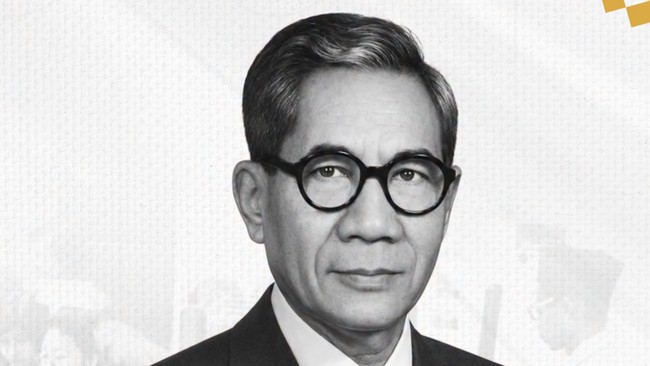
Jakarta, CNBC Indonesia – President Prabowo Subianto awarded national hero status to 19 figures at the State Palace in Jakarta on Tuesday (10 November 2026). One of them was his own grandfather, R.M. Margono Djojohadikusumo.
Margono was an important figure in Indonesia’s economic history. He is known as the driving force behind the establishment of Bank Negara Indonesia (BNI), the first national bank, founded not long after Indonesia proclaimed independence.
The idea of setting up a national bank emerged soon after the Proclamation of Independence on 17 August 1945. At the time, Margono and fellow national economist Soerachman Tjokroadisurjo believed Indonesia needed its own central bank as one of the foundations of state sovereignty.
However, the two men had different views on how to build the institution.
Margono, then chairman of the Supreme Advisory Council, argued that Indonesia should build a central bank using its own resources. In his view, political independence had to be followed by economic independence, including through financial institutions genuinely owned and established by Indonesians.
Since the colonial era, Indonesia had never had a national bank founded by Indonesians themselves. Independence was therefore seen as an opportunity to build a national financial institution from the ground up.
Soerachman, meanwhile, took a more pragmatic view. Citing the book Dari De Javasche Bank menjadi Bank Indonesia (2014), he argued that Indonesia should revive De Javasche Bank (DJB), a bank previously established by the Dutch colonial government.
DJB had extensive experience managing the financial system and was supported by experienced staff. The government, therefore, would not have to build a new institution from scratch.
The debate became increasingly pressing when the Dutch returned to Indonesia after independence with ambitions to regain control of the country.
According to the book Semarang Sebagai Simpul Ekonomi (2022), the Dutch sought to revive DJB as a central bank under an authorisation issued by the Governor-General of the Dutch East Indies on 2 January 1946.
This move threatened Indonesia’s economic sovereignty. DJB also planned to print and circulate Dutch currency, which could disrupt the Republic of Indonesia’s economy.
In these circumstances, Margono’s proposal to establish a national bank became increasingly relevant.
Margono had begun taking action from the outset of independence. He was reportedly given approval by President Sukarno and Vice-President Mohammad Hatta to establish a national bank, named Bank Negara Indonesia, as early as September 1945.
He also managed the state-owned banking foundation known as Yayasan Poesat Bank Indonesia.
The establishment of BNI
These efforts eventually bore fruit. On 5 July 1946, the government officially established Bank Negara Indonesia (BNI) through Government Regulation in Lieu of Law No. 2 of 1946.
Margono was appointed BNI’s first head. The bank’s initial capital came from contributions by Indonesians themselves, reflecting the spirit of economic self-reliance that had inspired its establishment.
At the time, BNI not only performed the role of a central bank but was also authorised to conduct commercial banking activities. These included issuing loans and bonds, and accepting deposits in current accounts, fixed-term deposits and savings accounts.
As it developed, BNI also became one of Indonesia’s instruments in its economic struggle against the Dutch.
Competition between BNI and DJB led to a dual central-banking system in Indonesia. Tensions escalated when BNI issued Oeang Republik Indonesia (ORI) to counter NICA currency issued by the Dutch through DJB.
This situation triggered a currency war between the Indonesian Republic and the Netherlands.
However, BNI’s efforts did not proceed smoothly. When the Dutch reoccupied several parts of Indonesia, the bank’s operations were disrupted. Many BNI branches were forced to close, and some of its assets were seized by the Dutch.
As a result, BNI was unable to perform its central-bank role effectively. This was due more to the war and external disruption than to problems with the bank’s internal management.
After the war against the Dutch ended in 1949, BNI resumed operations. However, its role as a central bank gradually came to an end after the government took over De Javasche Bank in 1951 and converted it into Bank Indonesia in 1953.
From then on, Bank Indonesia assumed the central-bank functions. BNI’s status as a central bank was formally revoked in 1968, and it became a state-owned commercial bank.
Nevertheless, Margono Djojohadikusumo’s contribution to the history of Indonesian banking remains significant. His vision of a bank built through the nation’s own efforts was one of the early milestones in the development of Indonesia’s independent financial system after independence.
Source: jawawa.id (https://jawawa.id/newsitem/national-hero-margono-djojohadikusumo-prabowos-grandfather-1794365449)
Originally published by CNBC Indonesia (https://www.cnbcindonesia.com/market/20261111090952-17-784125/pahlawan-nasional-ini-sosok-margono-djojohadikusumo-kakek-prabowo), translated from Indonesian