
National Forest and Land Fire Hotspots Surge Again
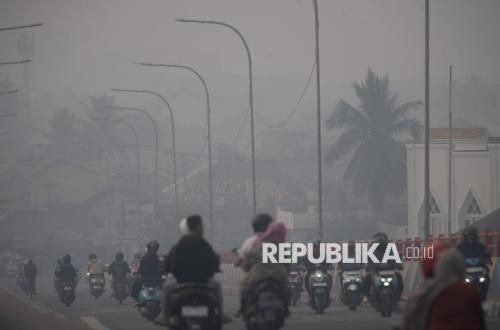
The Ministry of Forestry has announced an increase in the number of high-confidence hotspots for forest and land fires (karhutla) nationwide. The Ministry stated that firefighting efforts are currently focused on Central Kalimantan, which recorded the highest number of high-confidence hotspots among the six priority provinces.
In a statement on Tuesday (6/10/2026), the Ministry of Forestry revealed that, based on SiPongi data, national high-confidence hotspots reached 1,359 points as of Monday (5/10/2026). This represents an increase of 832 points compared to the previous day, Sunday (4/10/2026), which recorded 527 points.
Five out of the six priority provinces for 2026 forest fires experienced an increase in hotspots. Hotspots in Central Kalimantan rose to 569 from 116. Meanwhile, South Sumatra increased to 145 hotspots from 75 the previous day.
West Kalimantan also saw an increase to 69 hotspots from 19. South Kalimantan rose to 28 hotspots from 15. Riau increased by four hotspots from zero, while Jambi remained at zero, consistent with the previous day.
“Overall, the six priority provinces recorded 812 high-confidence hotspots, an increase from 225 points the day before,” the Ministry of Forestry stated.
The Ministry emphasised that they are strengthening preparedness across all priority provinces. The Ministry clarified that hotspots are indicators of surface temperature anomalies detected via satellite and cannot be directly equated to the number of fire incidents or the total area burned.
A single fire incident may be detected as multiple hotspots. All indications must still be verified through ground checks to ensure actual conditions and determine appropriate field handling actions.
The Ministry of Forestry stated that the government has placed 61 aircraft units on standby, consisting of 17 units for patrols and Weather Modification Operations (OMC) and 44 units for water bombing operations. Aerial operations are being conducted alongside strengthened ground operations through patrols, ground checks, direct firefighting, fire line creation, wetting, mopping up, and cooling.
Special attention continues to be given to peatlands. The Ministry explained that embers in peat can persist and spread beneath the surface even when surface fires are no longer visible. Therefore, wetting and cooling processes are being carried out continuously until locations are completely safe.
In addition to hotspot developments, the Ministry of Forestry stated it will continue to monitor air conditions based on PM2.5 concentrations as part of efforts to protect public health. According to recent monitoring, most parts of Indonesia are in the good to moderate category.
However, there are still several regions with unhealthy to very unhealthy conditions, including parts of Kalimantan, Sumatra, Java, and Papua. Some locations also show pockets in the hazardous category.
Air conditions are dynamic and can change following fire developments, particulate concentrations, wind direction and speed, and other atmospheric conditions. The Ministry advises residents in affected areas to follow air quality information and directions from local governments.
“If air quality worsens, the public is advised to reduce outdoor activities and use masks if they must be outdoors. Special attention should be given to children, pregnant women, the elderly, and individuals with respiratory disorders or chronic illnesses,” the Ministry said.
The Ministry noted that forest fires can also impact habitats, food sources, and wildlife movement corridors. Through the Natural Resources Conservation Agency (BKSMA) and related units, the Ministry of Forestry continues to monitor and manage affected wildlife.
The Ministry requested that members of the public who find injured, trapped, or fire-affected wildlife, or animals entering residential areas, refrain from attempting independent handling or evacuation. Residents are advised to maintain distance, avoid actions that may cause stress or aggression in animals, note the location and condition of the animal if possible, and immediately report to the BKSDA or the nearest forestry officer.
Source: jawawa.id (https://jawawa.id/newsitem/national-forest-and-land-fire-hotspots-surge-again-1791327163)
Originally published by Republika (https://news.republika.co.id/berita/tmiboa393/titik-panas-karhutla-nasional-melonjak-lagi), translated from Indonesian