
National Food Agency Deploys Task Force to Monitor Rice Prices Across 13 Provinces
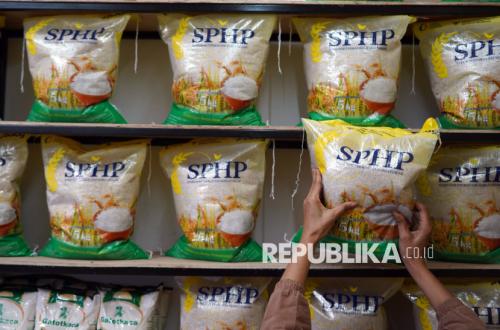
The government is tightening the supervision of rice prices and quality as part of ongoing efforts to ensure prices remain within regulated limits. The National Food Agency (Bapanas) has deployed a Rice Price and Quality Monitoring Task Force to oversee the sale of medium and premium rice across 13 provinces until December 2026.
Bapanas Head Andi Amran Sulaiman has instructed agency officials to conduct direct inspections of rice prices in markets. Business operators found selling rice above the Maximum Retail Price (HET) will receive warnings and may face sanctions if violations persist.
“The current task is to inspect rice prices until December, and all directors of Bapanas are responsible for how to bring prices down. We will conduct sweeps and issue warnings,” Amran stated in Jakarta, as reported on Tuesday (1/9/2026).
Amran emphasised that businesses that continue to sell rice above the HET after receiving warnings could face stricter penalties. These sanctions may range from store closures to the revocation of business licences.
“The shops will be reprimanded. For those who continue to violate the rules, we will close the shops. They will not be allowed to sell, and their licences will be revoked,” he said.
The monitoring programme, which will continue until the end of the year, covers DKI Jakarta, Banten, West Java, Central Java, DI Yogyakarta, East Java, Bali, North Sumatra, South Sumatra, Lampung, South Kalimantan, South Sulawesi, and West Nusa Tenggara.
The Rice Price and Quality Monitoring Task Force was established through the Bapanas Head’s Decree Number 329 of 2026. The task force involves Bapanas, the National Police Food Task Force, Perum Bulog, and local governments.
In addition to monitoring prices in accordance with the HET, the task force is also responsible for supervising rice quality. This serves as a basis for law enforcement against violations regarding HET, rice quality, hoarding, and the distribution of illegal rice.
Amran stated that monitoring from upstream to downstream is necessary to maintain proper rice governance. According to him, increases in rice production must be accompanied by healthy downstream trade.
“I am pursuing the agricultural side, because if there is no rice, nothing Bapanas does will succeed. There is currently plenty of rice, and we cannot afford to fail. Therefore, it must be managed from upstream to downstream. The upstream side is good, so the downstream side must also be good,” Amran asserted.
According to data from the Central Bureau of Statistics (BPS), rice inflation in July 2026 was recorded at 3.10 per cent annually, down from 4.55 per cent in May and 3.98 per cent in June. On a monthly basis, rice inflation stood at 0.49 per cent in July and has not exceeded 1 per cent throughout 2026.
The supervision also extends to fortified rice. Bapanas is currently inspecting 178 samples of fortified rice across 11 provinces, with the inspection covering aspects such as labelling, quality, and the nutritional content of the products.
Source: jawawa.id (https://jawawa.id/newsitem/national-food-agency-deploys-task-force-to-monitor-rice-prices-across-13-provinces-1788256718)
Originally published by Republika (https://ekonomi.republika.co.id/berita/tkofr7416/bapanas-turunkan-satgas-awasi-harga-beras-di-13-provinsi), translated from Indonesian