
National Energy Council Backs Bahlil’s Move to Regulate Natural Resource Exports
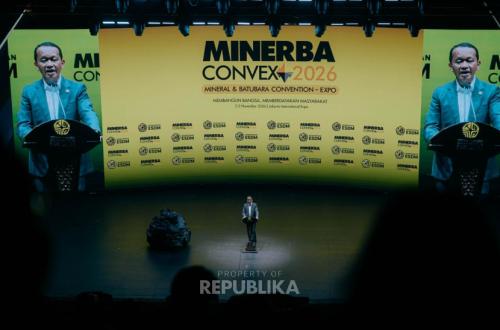
JAKARTA — The National Energy Council (DEN) says a policy promoted by Bahlil Lahadalia, Coordinating Minister for Downstreaming and Energy Transition and Minister of Energy and Mineral Resources, to export natural resources directly to destination countries rather than through intermediaries such as Singapore has a strong economic rationale.
The move could improve trade transparency while strengthening Indonesia’s bargaining position in international markets. “In theory, direct exports offer three benefits: reducing margin leakage along intermediary chains, increasing transaction transparency and strengthening direct bargaining relationships with end buyers,” DEN member Satya Widya Yudha said on Tuesday (3 November 2026).
Satya said these benefits provide a strong basis for the government to improve the governance of national strategic commodity exports. He therefore considers Minister Bahlil’s policy economically defensible. “So the Coordinating Minister for Downstreaming and Energy Transition’s view is well-founded,” he said.
However, Satya said DEN does not yet have a firm estimate of the potential additional state revenue from the policy. Further calculations are needed to establish the economic benefits Indonesia could gain. “We will calculate it,” Satya said when asked about the potential increase in state revenue from direct exports.
Similarly, Ronny P. Sasmita, a senior analyst at the Indonesia Strategic and Economics Action Institution, said the policy has a positive objective, as it could create opportunities for Indonesia to capture more value from trade in energy and mineral commodities.
“In my view, the policy has a positive economic aim and deserves support, provided its implementation is based on an assessment of international trade chains and does not overlook logistical efficiency,” Ronny said.
Indonesia is a major producer and exporter of various energy and mineral commodities. However, some trading, financing, marketing and international distribution activities still involve companies based overseas, Ronny explained.
As a result, some trading margins and profits from support services may be recorded outside Indonesia. Direct exports could provide an opportunity to expand the role of Indonesian companies in global commodity trading chains, he said.
“If Indonesia can capture a larger share of these trading activities, there would be an opportunity to increase profits for national companies, expand financial and logistics services, and strengthen domestic economic revenues,” he said.
Ronny illustrated the potential with a hypothetical trade of 50 million tonnes of coal. If Indonesian companies retained a margin of US$1 per tonne, the gross margin would reach US$50 million; at US$2 per tonne, it would rise to US$100 million.
He stressed, however, that these figures were illustrative, not projections of net profit. Before determining the actual economic benefits, the government would need to account for financing, logistics, insurance and marketing costs, as well as transaction risks.
Beyond potential trading gains, Ronny said the policy could strengthen direct links between Indonesian exporters and end buyers. This would give national companies better access to information on prices, market demand, product quality and the needs of international consumers.
“The benefits are therefore not limited to potential additional earnings from trading margins; they also include strengthening national companies’ position in the global value chain,” he said.
Ronny cautioned that direct exports require more than simply changing trade routes. The government also needs to strengthen national trading companies, access to finance, insurance, port infrastructure and the ability to manage price risks so they can compete with international trading firms.
He said transaction monitoring must also be enhanced to prevent under-invoicing, or the reporting of export values below the actual transaction value. Monitoring should include cross-checks of production data, customs documents, banking transactions and import data from destination countries.
“If implemented consistently, this policy could improve trade transparency, tax compliance and state revenue,” Ronny said.
In the long term, Ronny sees direct exports as part of Indonesia’s strategy to strengthen its economic sovereignty. Its success, however, should be measured by the additional economic value actually retained in the country, not merely by changes to commodity shipping routes. “In conclusion, direct exports offer an opportunity to strengthen Indonesia’s economic sovereignty in commodity trade,” he said.
Source: jawawa.id (https://jawawa.id/newsitem/national-energy-council-backs-bahlils-move-to-regulate-natural-resource-exports-1793710327)
Originally published by Republika (https://ekonomi.republika.co.id/berita/tnxcze522/den-dukung-langkah-menteri-bahlil-tertibkan-ekspor-sda), translated from Indonesian