
National Electricity Vulnerability and the Need for Geothermal Regulatory Reform
The recent rolling blackouts in several regions, caused by coal supply and pricing issues, have once again highlighted that the national electricity system still faces major challenges regarding the security of its primary energy supply. According to data from the Ministry of Energy and Mineral Resources, PLN’s coal demand for 2026 is projected to reach approximately 154 million tonnes, while the contracted volume currently stands at only around 134 million tonnes. This indicates a supply shortfall of about 20 million tonnes that must be addressed to maintain the reliability of national power plant operations. This situation demonstrates that Indonesia’s electricity system remains heavily dependent on coal availability. When supply is disrupted or there is a mismatch between the price expected by producers and the buyer’s ability to pay, the risk to the reliability of the national electricity supply becomes significantly greater. In the short term, fulfilling coal requirements must be a priority. However, from a long-term perspective, this situation also underscores the importance of accelerating the diversification of energy sources for power generation so that the national electricity system is not overly reliant on a single type of primary energy.
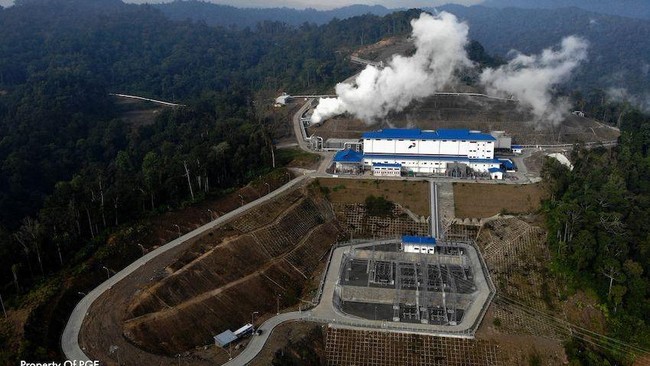
Geothermal energy is one alternative that deserves greater attention. Unlike intermittent renewable energy sources such as solar and wind, geothermal power plants can operate continuously 24 hours a day as a baseload generator. This characteristic makes geothermal energy not only important for supporting the energy transition agenda but also strategic for strengthening the resilience and reliability of the national electricity system. Indonesia reportedly has a huge geothermal potential of around 23,742 MW. The government has even set a target for additional PLTP capacity of 5.2 GW in the 2025-2034 Electricity Supply Business Plan. To achieve this target, an average additional capacity of around 520 MW per year is required. The challenge is that the performance of geothermal development in recent years has fallen far short of this requirement. Throughout the 2020-2025 period, additional PLTP capacity only reached around 309.5 MW, or an average of about 62 MW per year. In other words, the pace of geothermal development needs to increase more than eightfold compared to the average achievement of the last five years if the target in the Electricity Supply Business Plan is to be realised.
The question then arises: why has geothermal development been relatively slow, even though Indonesia has abundant resources and electricity demand continues to rise? One of the answers lies in the regulatory and project economics aspects. In recent years, the economic viability of projects has become a recurring issue in discussions on geothermal development. The current electricity pricing scheme still requires refinement to better align with the capital-intensive and high-risk characteristics of geothermal investment.
Through Presidential Regulation Number 112 of 2022, the electricity price for PLTP is set using a Highest Benchmark Price mechanism based on capacity and project location. However, in practice, the stipulated Highest Benchmark Price remains below the economic requirements of several geothermal projects. For example, for a PLTP project with a capacity of over 100 MW in Java, the maximum tariff is set at around 7.65 US dollar cents per kWh. Meanwhile, various publications indicate that to generate an adequate rate of return on investment, a project of similar capacity requires a tariff in the range of 10-13 US dollar cents per kWh. This issue becomes more complex because geothermal investment has characteristics that differ from conventional power plants. Before electricity can be produced and sold, developers must bear significant exploration costs with a high level of risk. Not all drilling successfully finds commercially viable resources. Therefore, investors and financial institutions pay close attention to the certainty of investment returns before deciding to commit capital.
Another frequently highlighted issue is the provision for tariff reduction after the 10th year of operation. In Presidential Regulation 112/2022, the tariff for large-scale PLTP in Java drops from around 7.65 US dollar cents per kWh to approximately 6.50 US dollar cents per kWh after the 10th year. In reality, during this phase, developers still need to make further investments to maintain production sustainability, including drilling make-up wells and various reservoir maintenance activities. Consequently, the current tariff structure is considered not to fully reflect the geothermal business characteristics that require continuous investment throughout the project’s lifespan.
The next challenge is access to financing. Several economic simulations, including those conducted by the Indonesian Geothermal Association, show that under the current tariff structure, a number of geothermal projects still produce a negative Net Present Value, ranging from approximately minus US$44.6 million to minus US$187.89 million. The resulting Internal Rate of Return also only ranges from minus 5.16 percent to 5.47 percent. This figure is far below the rate of return generally required by financial institutions for commercial projects, which is around 12-15 percent. Permitting issues also remain a major obstacle. Normatively, the geothermal exploration period can last about seven years, followed by three to five years of construction before entering the operation phase. However, in practice, the exploration process, which includes licensing and drilling, can take much longer.