
National Electric Car: Who Benefits?
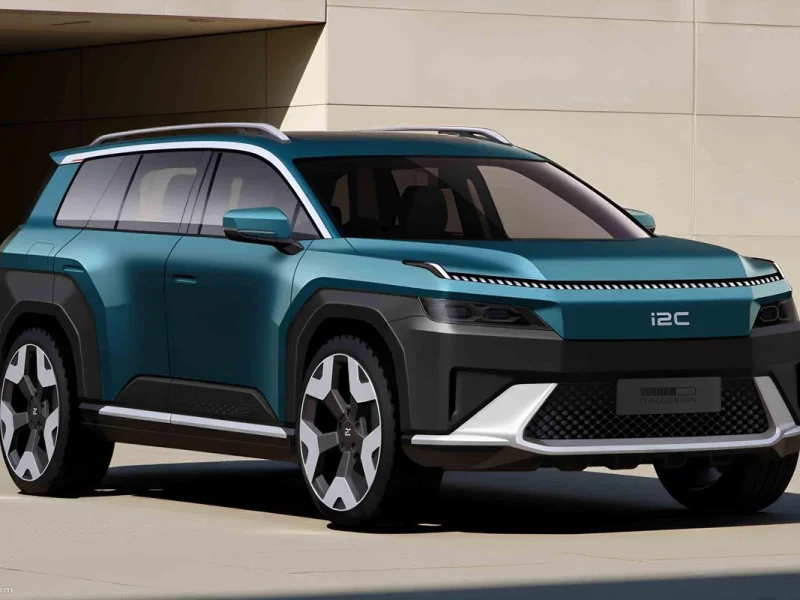
Under the pretext of reducing dependence on fuel oil and promoting environmentally friendly transport, the government is currently promoting vehicles that use electric energy. Not only motorcycles, Prabowo Subianto is targeting mass production of electric cars by 2028, calling it a ‘game changer’.
The development of electric motorcycles was initiated through collaboration among domestic business players such as PT Indika Energy Tbk and supported by ecosystem financing from the Daya Anagata Nusantara Investment Management Agency (BPI Danantara). By partnering with private and foreign companies, including global manufacturers such as VinFast Automobile and BYD Motor Indonesia, they are ready to invest heavily to build national electric car manufacturing facilities in the Subang area of West Java.
Danantara CEO, who is also Minister of Investment and Downstreaming Rosan Perkasa Roeslani, revealed that around 10 Indonesian companies are ready to work on the National Electric Car. This is, of course, subject to strict criteria and selection until they are deemed worthy of producing the electric car. Lippo Group boss James Riady has even stated his commitment to purchase 20,000 electric car units.
President Prabowo Subianto greatly appreciates the initiative and courage of business players in building the national electric car industry and its supporting ecosystem, as expressed at the Alva factory in Bekasi Regency, West Java. But will this appreciation bring benefit to the public, given how many corporations are involved in this project?
Shifting from fuel-powered cars to electric cars is not an easy matter; it must be supported by various related facilities and proper public education. On the other hand, the electricity that serves as its energy source is still problematic, as blackouts still occur in several regions. This is caused by the scarcity of coal as fuel, because business owners prefer to sell it abroad at higher prices than to PLN. One can imagine how the national electric car can be claimed as a strategy for national car industry sovereignty if its electricity supply is still dominated by coal corporations.
The manufacture of electric cars fully supported by business owners can be assured to benefit the oligarchy. Meanwhile, the people as a whole only feel the impact. This is in line with a WALHI report that electric vehicles may not produce emissions on the road, but their supply chain leaves a large ecological footprint in mining areas. Auriga data states that the electric vehicle fever over the past two decades has caused the loss of 193,830 hectares of Indonesia’s natural forest, which is certainly very dangerous for the survival of the forest itself.
This is inseparable from the principle of capitalism, which pursues material profit without considering its impact. For a handful of people, the national electric car project is a way to reap large profits, while the people are merely objects for selling their products, and the state acts only as a regulator.
This is clearly different from the Islamic perspective. A state that implements Islam comprehensively will produce leaders who are a junnah (protector/shield) and caretaker of the people. Every policy will be based on sharia law and the welfare of society. As the Prophet Muhammad said: ‘The imam/leader is the ra’in (guardian) of his people, and he will be held accountable for the people he leads.’ (HR Bukhari)
Therefore, Islam stipulates that fulfilling the need for transport and energy facilities is the responsibility of the state as ra’in. The state is obliged to provide, fulfil, and facilitate access. Its procurement must be based on the welfare of the people, not on oligarchic business profits. Abundant energy resources must be utilised as much as possible to guarantee the basic needs of the people, by having the state manage them itself without handing them over to the private sector, let alone foreign parties.
The Islamic political and economic system guarantees the state’s financial sovereignty so that it does not depend on oligarchs. This is reinforced by state revenue posts such as kharaj, fai, jizyah, ghanimah, plus the management of zakat from Muslims allocated to the eight asnaf. In addition, natural resources, which are public property, are also managed by the state and the proceeds are allocated for the welfare of the people, such as education, security, and health, which can be enjoyed free of charge. Furthermore, by managing natural resources itself, the state will certainly open very wide employment opportunities for the public, especially fathers and husbands who are obliged to provide for their family members.
With the implementation of the Islamic economic system, whatever product the government initiates will certainly bring benefit to various parties, with careful calculation and involving experts and scholars, so that it does not cause environmental damage and is safe for public use. Environmentally friendly vehicles in line with technological and energy developments will be realised without sacrificing the people or benefiting only a few.
It is clear here that leaders born from the Islamic system are very different from the current capitalist leadership. Capitalist leaders view the people as objects for gaining profit, to the point of being willing to join hands with corporations and become regulators through policies and laws that benefit corporations; it is not uncommon that the government itself is part of the oligarchy. Islam, on the other hand, views the people as objects who must be cared for and protected, both in matters relating to life in this world by fulfilling all their needs, and in the hereafter by constantly reminding them that the pleasure of Allah SWT is the pinnacle of all activity.
Wallahua’lam bis shawwab.