
National Education Transformation Does Not Have to be Expensive
Indonesia’s education crisis can no longer be addressed with conventional approaches. For over two decades, PISA results have shown that approximately 75–80% of Indonesian students remain below basic competency levels in literacy, numeracy, and science, while less than 1% achieve global competency standards.
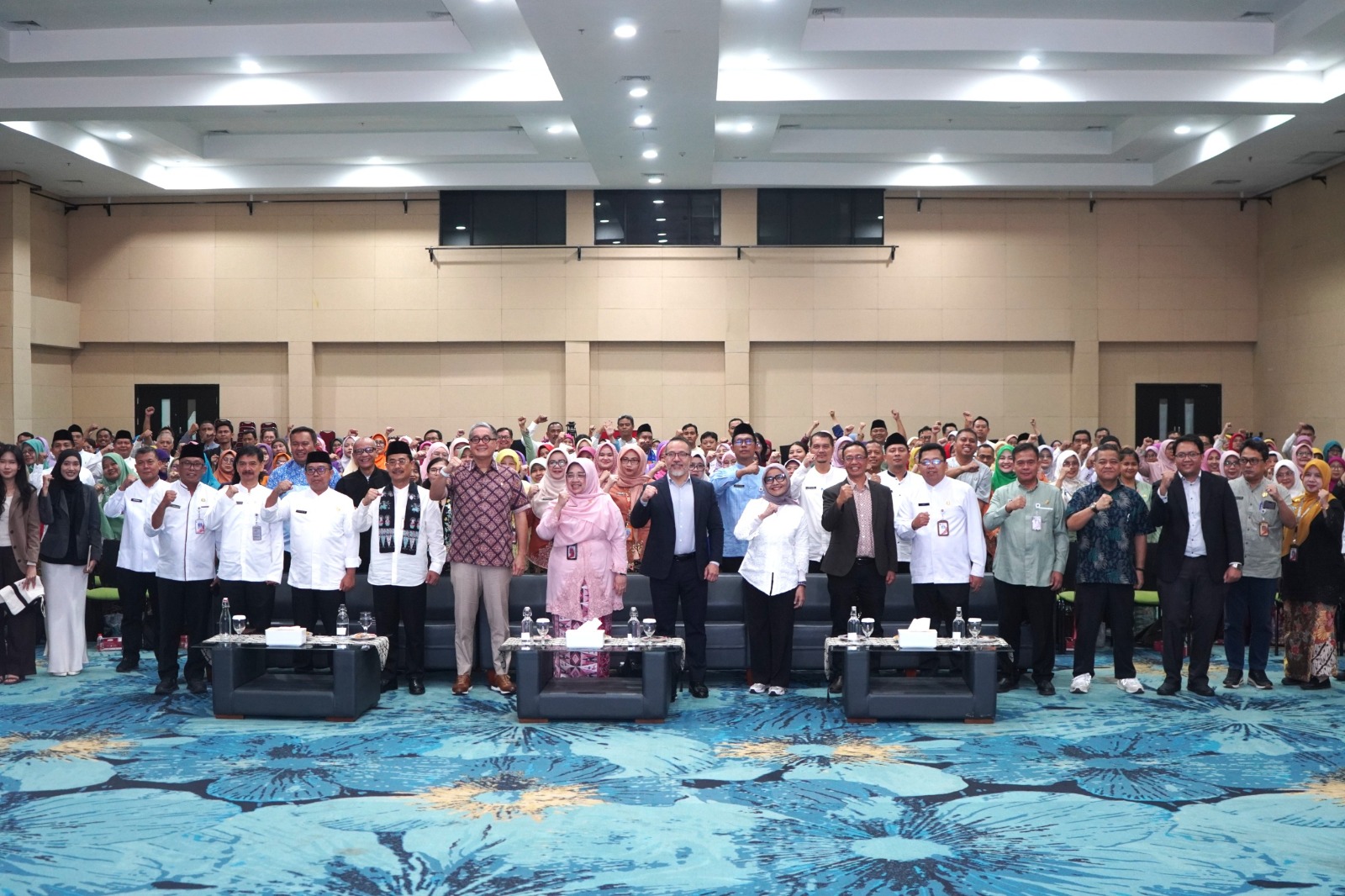
“Indonesia’s education is experiencing a chronic and structural crisis,” stated Prof. Elwin Tobing, founder of Literacy for the Future (LIFT), during the closing of the School Leadership Workshop in Jakarta. According to Elwin, the ‘Indonesia Emas’ (Golden Indonesia) vision can only be realised if Indonesian human resources are transformed into capable human capital—mastering knowledge and capable of producing productivity, innovation, and superior character.
During the workshop, LIFT introduced NEXUS, a transformational learning ecosystem that integrates principals, teachers, parents, communities, reading culture, and data-based evaluation. The system places students at the centre of learning, using non-textbooks as a primary instrument.
“NEXUS serves as an answer to the need for national mobilisation to overcome Indonesia’s education crisis. Formal curricula and learning remain important, but they are not enough. We need innovation capable of moving all educational stakeholders in an integrated, directed, and efficient manner,” said Elwin.
He added that improving educational quality does not necessarily equate to high costs. “What is needed is space for impactful, measurable, and efficient innovation to work alongside the government, schools, families, and the community.”
The Head of the Jakarta Provincial Education Office, Dr Nahdiana, emphasised the importance of leadership and collaboration in building the future of education. She noted that collaborating with LIFT is part of a strategic effort to strengthen educational quality and support Jakarta’s vision as a global city.
Meanwhile, member of the Indonesian House of Representatives (DPR RI) and Jakarta education figure, Putra Nababan, warned that failing to improve education today will have serious consequences for the nation’s future. Nababan noted that NEXUS is worthy of wider adoption as it directly targets the fundamental issues of Indonesian education: literacy, numeracy, interest in science, and student character.