
National Economy Soars 7.8%, Former Official Alleges Fake Data
The announcement of India’s economic growth hitting 7.8% in the latest quarter, surpassing the initial estimate of 7%, has triggered significant controversy within the country. Subhash Garg, a former Finance Secretary under the Narendra Modi administration, has bluntly accused the figures being touted as an ‘extraordinary achievement’ of being mere manipulation.
Citing Reuters on Tuesday (8/9/2026), Garg alleged that the government deliberately revised down last year’s current price Gross Domestic Product (GDP) figures solely to inflate this year’s growth rate. He believes that India’s real economic growth is actually plummeting at a level of 2.6%. These televised allegations have gone viral, sparking a wave of criticism regarding the loss of transparency and the erosion of the credibility of India’s economic data infrastructure over the past decade for political interests.
This scepticism is further reinforced by the International Monetary Fund (IMF), which last November assigned a ‘C’ rating (the second lowest) to India’s national accounts data due to the use of outdated methodologies, unexplained calculation discrepancies, and a lack of seasonal data.
Economist R. Nagaraj also highlighted the government’s track record of suppressing unpleasant findings, delaying important surveys, and removing critical officials. Nagaraj himself protested vehemently in 2014 when a figure in a GDP report was suddenly inflated to 108% of his committee’s original agreement. “It appears there is a systematic effort by the government to hide the truth,” he stated.
Data manipulation is not a new phenomenon. In 2019, the government was found to have concealed unemployment reports that reached a 45-year high of 6.1%, leading to the resignation of two members of the National Statistical Commission.
The delay in conducting the census, which was postponed in 2021 and only commenced in April 2026, has further exacerbated data inaccuracies. Nevertheless, Shamika Ravi, a member of the Prime Minister’s Economic Advisory Council, dismissed all criticisms, labelling them as noisy, politically charged debates. “The IMF’s ‘C’ rating is the same rating held by China for its statistics. This revision is a change recommended by the IMF,” she asserted.
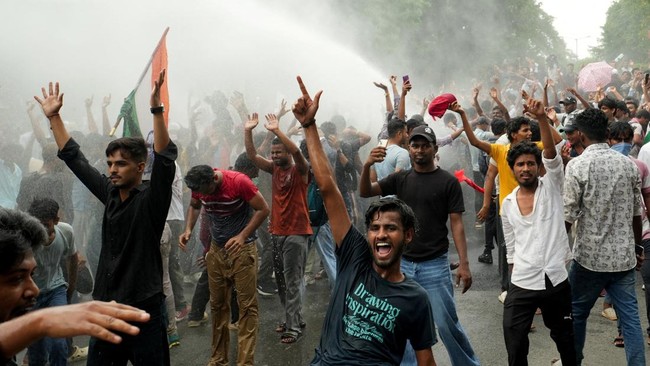
Responding to this defence, former Chief Statistician of India, Pronab Sen, emphasised that the real issue lies in the level of trust in the base data used by the government. This debate clashes harshly with the reality of the crisis on the ground, where youth protests continue to erupt due to systemic failures in education and job provision. A report from Azim Premji University reveals that nearly 40% of graduates under the age of 25 are now unemployed, while a government think tank notes that 87 million Indian youths are not in employment, education, or training.
Economist Reetika Khera warned that manipulated data will lead to policies that devastate the populace. Due to the census delay, she estimates that approximately 100 million poor citizens are being deprived of their rights and are not receiving food subsidies because the government is still using outdated population references.
This acute controversy has even drawn the attention of neighbouring countries, with the Sri Lankan daily, Daily FT, openly urging its policymakers not to emulate India’s ‘statistical theatre of lies’.
Source: jawawa.id (https://jawawa.id/newsitem/national-economy-soars-7-8-former-official-alleges-fake-data-1788882924)
Originally published by CNBC Indonesia (https://www.cnbcindonesia.com/news/20260908165802-4-766269/ekonomi-negara-meroket-78-eks-pejabat-singgung-data-palsu), translated from Indonesian