
National Daiyah Multaqa 2026 Produces 7 Recommendations for Palestinian Independence
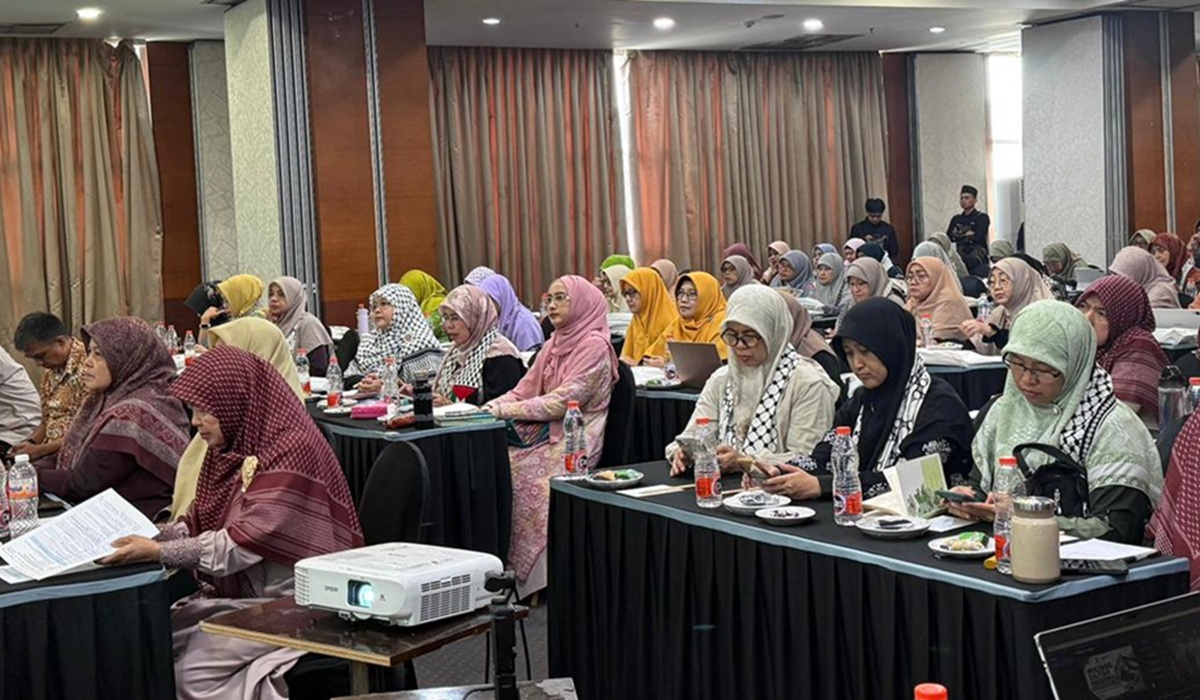
The Coalition of Daiyah for Al-Quds and Palestine (KDIQP) together with the Coalition of Indonesian Women Caring for Al-Aqsha (KPIPA) successfully held the National Daiyah Multaqa for Palestine in Jakarta on Sunday (22/6).
Carrying the theme “The Voice of Daiyah, Hope for Palestine”, this strategic agenda, held for the first time at the national level, brought together representatives from 10 Muslim women’s mass organisations and delegates of female preachers from various regions of Indonesia, from Aceh to North Kalimantan.
The meeting was packaged in the form of a Focus Group Discussion (FGD) to gather concrete input from daiyah working at the grassroots level.
KPIPA Chairwoman Nurjanah Hulwani emphasised that the results of this meeting would be directly integrated into tangible work programmes.
“Today’s Daiyah Multaqa produced recommendations that will be incorporated into the programme. Next, we will form a daiyah forum and hold regular meetings, both online and offline,” said Nurjanah.
She also underlined the importance of tactically inserting Palestinian education into Majelis Taklim (MT) study sessions. According to her, the material must be packaged flexibly so that it is easily understood by various layers of the congregation, from lower-middle-class communities to socialite mothers and office-based MT groups.
In line with this, Committee Chair Erika Suryani expressed hope that this forum would give birth to a real movement spearheaded by female preachers.
“This activity is proof that we care and contribute to efforts to save our oppressed brothers and sisters. We hope that the voice of the daiyah will become a mouthpiece that provides input for us to move for Palestine,” said Erika.
Present as a keynote speaker, Deputy Chairman of the International Union of Muslim Scholars (IUMS), Dr. Salim Segaf Al Jufri, gave high appreciation for this initiative. He challenged the daiyah to formulate a clear timeline towards Palestinian independence, in line with the mandate of the Indonesian constitution.
“The fundamental problem of Palestine is how they achieve independence. This is the most important thing. As stated in the preamble of the 1945 Constitution, one of the goals of the Indonesian state is to participate in implementing world order based on independence, lasting peace, and social justice. Therefore, it is our duty to voice Palestinian independence,” Salim asserted.
Furthermore, Salim outlined three main roles that the voice of the daiyah must carry: the Voice of Truth, not remaining silent in the face of injustice; the Voice of Ummah Unity, strengthening Islamic brotherhood, national brotherhood, and humanitarian brotherhood; and the Voice of Hope, always fostering optimism among the people.
To enrich the participants’ perspectives, the forum also dissected four main topics presented by experts: The Militancy of Zionist Leaders and Society in Efforts to Destroy the Al-Aqsa Mosque by Mohammad Novel Ariyadi; The Status of Al-Aqsa Mosque and the Role of the Ummah by Dr. Saiful Bahri; The Role of Daiyah in Defending Palestine by Eva Muzlifah; and The Current Condition of Palestine by Nurjanah Hulwani.
As a concrete output of the FGD, the National Daiyah Multaqa for Palestine 2026 officially agreed on seven recommendation points. Future Palestinian education will be structured in stages, adapting to the character of the congregation, and linked to issues of family closeness (women, children, and adolescents).
The seven agreed recommendation points are: Capacity Strengthening, enhancing Palestinian insight among female preachers through regular basic material provision; Organisational Structure, forming a specific Palestinian affairs field or division in every Muslim women’s mass organisation and institution; Teaching Material Standardisation, compiling Palestinian teaching materials and holding Training for Trainers for all institutions under the guidance of KDIQP and KPIPA; Material Priority Scale, compiling curriculum materials based on levels (basic and specialised materials according to congregation segments) equipped with updates on the current situation in Palestine; Issue Contextualisation, compiling Palestinian materials linked to themes of congregation closeness, particularly issues of family role models, women, children, and adolescents; Da’wah Consistency, conducting regular studies on Palestinian issues in various forums; and Policy Advocacy, conducting strategic audience visits to the Ministry of Education and the Ministry of Religious Affairs.