
National Corn Production Strengthens as 100 Tonnes of Bengkayang Corn Exported to Malaysia
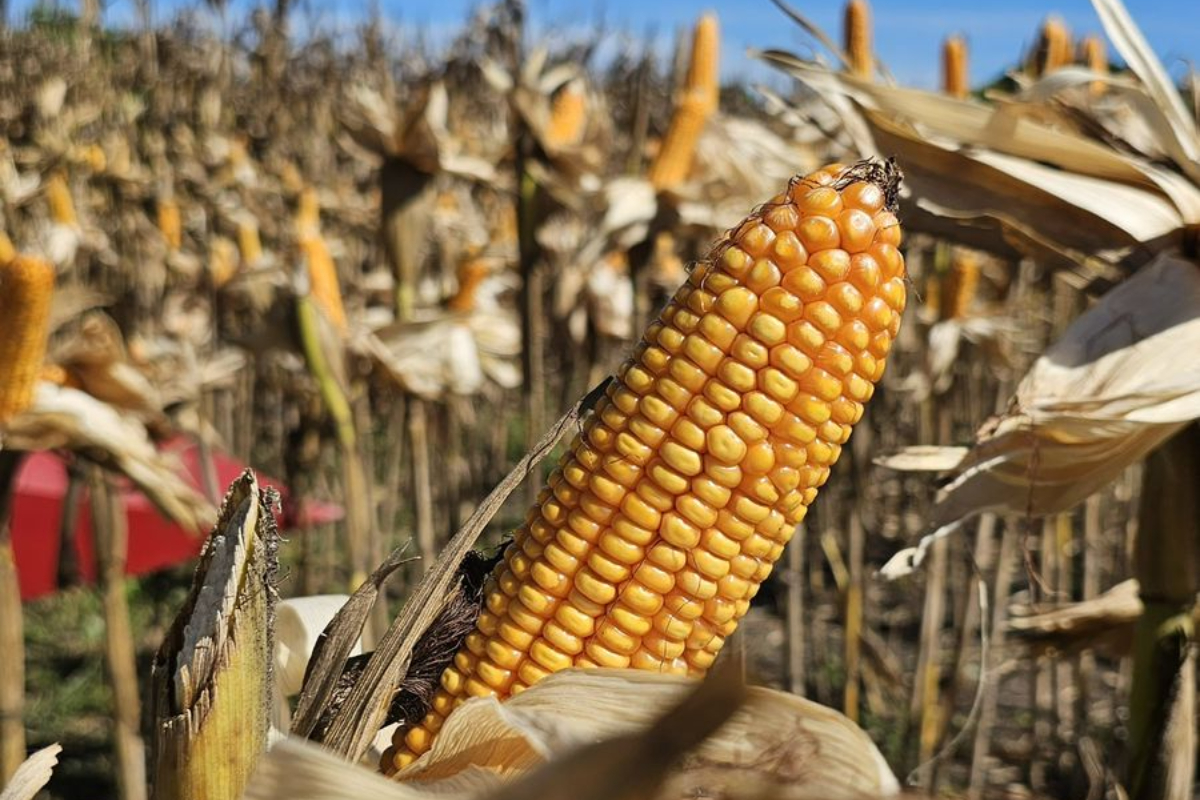
National corn production growth is opening up wider market opportunities, including overseas. One example is the export of 100 tonnes of corn from the second quarter 2026 simultaneous harvest in Bengkayang Regency, West Kalimantan, which has entered the Malaysian market via the Jagoi Babang Cross-Border Checkpoint (PLBN). The export was part of the National Simultaneous Corn Harvest for the second quarter of 2026, held virtually on Saturday, 16 May 2026, with President Prabowo Subianto. This initiative is part of efforts to strengthen national food self-sufficiency and expand access to overseas markets for Indonesian agricultural commodities. In his report to the President, National Police Chief General Listyo Sigit Prabowo stated that the second quarter 2026 corn harvest took place on 189,760 hectares of land with a potential output of approximately 1.23 million tonnes. ‘100 tonnes of the harvested corn will be exported to Malaysia via the Jagoi Babang border crossing in Bengkayang Regency, West Kalimantan,’ said the Police Chief. Agriculture Minister Andi Amran Sulaiman previously stressed that increased national corn production creates opportunities for Indonesia to strengthen export markets and accelerate food self-sufficiency. ‘When production increases and domestic needs are met, the next step is expanding market access. Exports prove our agricultural products are becoming more competitive and providing greater added value for farmers,’ said Minister Amran. Minister Amran also praised the police for their oversight of the agricultural sector, from upstream to downstream. A concrete achievement is Indonesia’s self-sufficiency in feed corn, marked by a production increase of around one million tonnes, significantly strengthening the national economy and eliminating feed corn imports. ‘This success is not achieved alone. There is strong collaboration, including police support in safeguarding production and distribution. This joint effort benefits farmers and the public directly,’ said Minister Amran. This production boost is reflected in national corn performance, showing a consistent upward trend. According to fixed figures from the Central Statistics Agency’s (BPS) Area Sample Framework (KSA), dry shelled corn with 14% moisture content production from January to December 2025 reached 16.16 million tonnes, an increase of 1.02 million tonnes or 6.74% compared to the same period last year. This production increase aligns with a rise in national corn harvesting area. From January to December 2025, the harvested area for shelled corn reached 2.71 million hectares, an increase of 0.16 million hectares or 6.35% compared to the same period the previous year. This positive trend is expected to continue in 2026. According to BPS data, the potential corn harvesting area for April-June 2026 is projected to reach 0.66 million hectares, a 0.57% increase from the same period last year. This signals a positive outlook for sustained national corn production amid efforts to strengthen food security and expand export markets. Meanwhile, the corn exports to Malaysia also highlight Bengkayang Regency’s potential as a food security hub and a gateway for strategic agricultural exports in West Kalimantan. This successful shipment is hoped to mark the start of stronger cross-border agricultural trade, opening up broader market opportunities. The Ministry of Agriculture continues to promote sustainable national corn production through strengthening agricultural infrastructure, supplying superior seeds, providing farmer cultivation support, and optimising agricultural technology and mechanisation. These efforts are reinforced through cross-sector collaboration, including with the police in supporting planting areas, monitoring agricultural programmes, and strengthening national food security. This synergy is expected to further enhance the competitiveness of Indonesian agricultural products to penetrate wider export markets and improve farmers’ welfare.