
National Coordination Meeting on 2026 Academic Competency Test Strengthens Coordination for Integrity
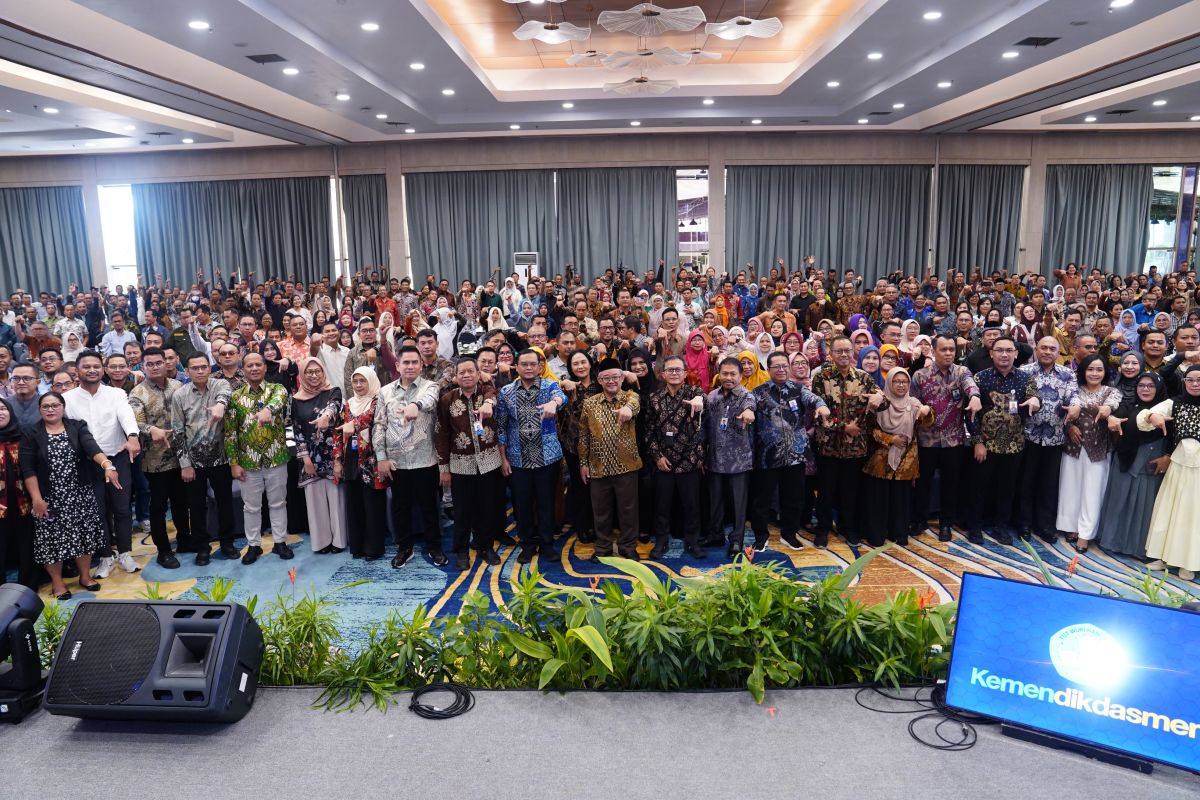
The Ministry of Primary and Secondary Education (Kemendikdasmen) is strengthening cross-stakeholder coordination in the education sector to ensure readiness for the implementation of the 2026 Academic Ability Test (TKA) through the National Coordination Meeting (Rakornas) for the Implementation of TKA at the SD/MI, SMP/MTs, and SMA/SMK/equivalent levels in 2026.
Minister of Primary and Secondary Education (Mendikdasmen) Abdul Mu’ti in Jakarta on Wednesday expressed appreciation for the hard work of all parties who have organised the TKA well.
According to him, the 2025 TKA implementation recorded the best performance and was able to gain increasingly higher public trust.
This trust is reflected, among other things, in the wider utilisation of TKA results.
Among them, he said, TKA results have become one of the references in new student admissions at universities and are used in the New Student Admission System (SPMB), particularly in the academic achievement pathway.
“TKA should not be viewed merely as numbers or rankings. In essence, assessment results must be utilised as important information to improve the quality of learning and education,” said Minister Mu’ti.
Mu’ti stated that if the assessment at the initial stage is used to measure learning achievement, then the assessment results should subsequently be utilised as input to improve and enhance the quality of the learning process.
“TKA is an inseparable part of our efforts to realise Quality Education for All. TKA is not only for measuring learning achievement, but TKA results must become very important and valuable input in order to improve the quality of learning and the quality of education,” he said.
On the same occasion, Head of the Primary and Secondary Education Policy Agency (BKPDM) of Kemendikdasmen Toni Toharudin emphasised that the implementation of TKA is a collective effort that requires the readiness of all parties.
Therefore, the national coordination meeting became an important momentum to ensure that all organisers have the same perception and standards.
The coordination covers policy readiness, technology systems, participant data collection, infrastructure, implementation mechanisms, supervision, and public communication strategies.
Furthermore, Toni viewed the National Coordination Meeting as also an important stage in aligning the utilisation of the 2026 TKA results for primary and junior secondary levels.
TKA results are expected to be utilised by education stakeholders as one source of information for evaluating and improving learning.