
National Consumer Protection Agency Urges Technology-Based Maritime Safety Transformation
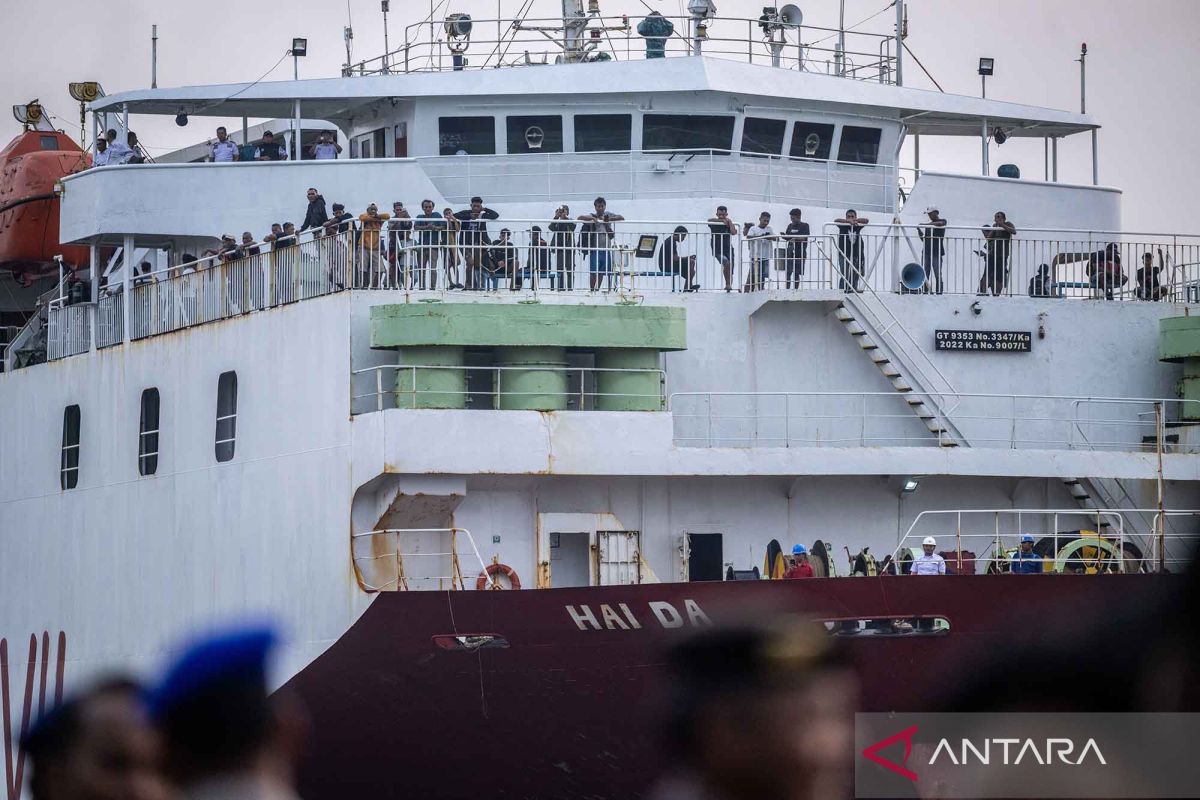
Jakarta (ANTARA) - The Indonesian National Consumer Protection Agency (BPKN) is urging the government to accelerate the transformation of maritime safety systems through technology as a preventive measure to enhance passenger protection and the safety rights of sea transport users.
BPKN Chairman Mufti Mubarok stated that strengthening maritime safety cannot rely solely on evaluations conducted after accidents occur; instead, it must focus on prevention systems capable of detecting and responding to potential risks at an early stage.
“Technology must be used to save lives. We need to move from a reactive system to a preventive, technology-based safety system,” Mufti said in a statement received in Jakarta on Monday.
According to him, the utilisation of technology can be a vital component in building a more preventive maritime safety system. Technology can be employed to monitor weather conditions and wave heights in real-time, vessel positions, ship stability, as well as early warning systems and emergency communications.
He noted that system evaluations are necessary so that maritime safety can be predicted before accidents happen.
This push from the BPKN follows the tragedy of the KM Virgo Transport 8, which capsized and sank in the Java Sea while travelling from Surabaya to Banjarmasin on Sunday (13/09/2026). According to SAR authorities, the vessel was carrying approximately 243 people. While some passengers have been successfully evacuated, there have been fatalities, and others remain missing.
Mufti believes this accident should serve as a momentum to thoroughly evaluate maritime transport safety systems, including the readiness of operators to face extreme weather conditions.
“If a ship has received information regarding bad weather, there must be a measured decision: whether to continue sailing, delay departure, or change routes. Operational factors must not override human safety,” he said.
BPKN is requesting an audit of ships and operators, covering vessel seaworthiness and condition, maintenance, stability, passenger and cargo capacity, cargo distribution, manifest systems, crew competence, safety equipment, and procedures for facing extreme weather.
He added that the implementation of technology needs to be integrated with the monitoring and decision-making systems of both operators and maritime authorities. This would ensure that information regarding weather, vessel conditions, and potential risks serves as the basis for determining whether a voyage is safe to proceed.
In addition to promoting technology, BPKN requested that the findings from the National Transportation Safety Committee (KNKT) investigation serve as the foundation for improving the national maritime safety system.
“If systemic weaknesses are found, they must be repaired immediately. Investigation recommendations should not merely become documents that are forgotten once the news cycle fades,” he emphasised.
Mufti added that strengthening safety systems is part of fulfilling the rights of the public as transport service users. He noted that passengers who purchase tickets have the right to receive transport services that meet safety standards.
BPKN hopes that the KM Virgo Transport 8 tragedy will not merely result in an evaluation of a single accident, but will instead drive a comprehensive change in maritime safety governance by prioritising prevention, supervision, and the use of technology.
Source: jawawa.id (https://jawawa.id/newsitem/national-consumer-protection-agency-urges-technology-based-maritime-safety-transformation-1789358465)
Originally published by Antara (Indonesian) (https://www.antaranews.com/berita/5739380/bpkn-dorong-transformasi-keselamatan-pelayaran-berbasis-teknologi), translated from Indonesian