
National Children's Day: Gus Ipul says 'Sekolah Rakyat' exists to fulfil children's rights
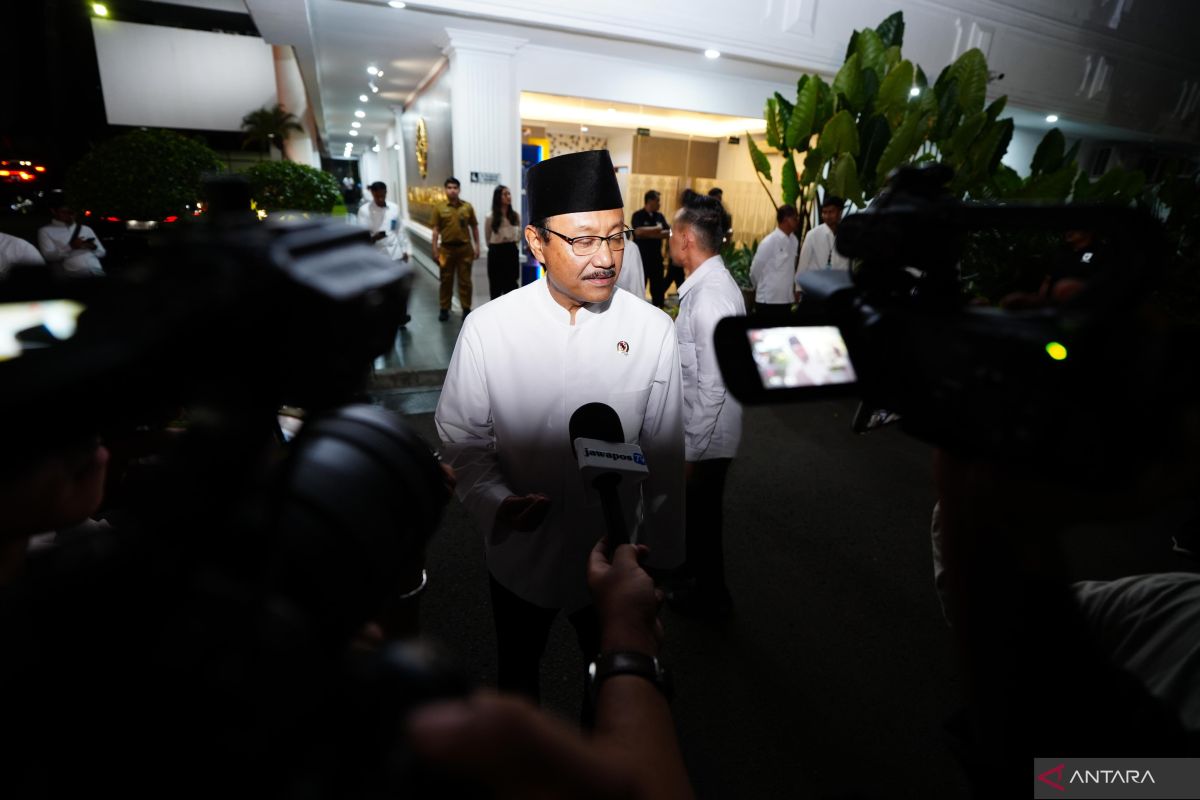
Jakarta (ANTARA) - Minister of Social Affairs (Mensos) Saifullah Yusuf, or Gus Ipul, has stated that the government continues its efforts to fulfil children’s rights, particularly the right to a proper education and a quality learning environment, in commemoration of National Children’s Day.
“With advances in technology, our challenges in providing protection and assistance — and sometimes rehabilitation as well — have become important matters,” said Gus Ipul in a statement in Jakarta on Tuesday.
In line with the directives of President Prabowo Subianto, the minister revealed that one of the government’s main concerns at present is preparing Indonesian children through the strengthening of families.
“How do we prepare vulnerable families — those in the first and second income deciles, families who are less fortunate, families who have not yet been included in the development process? One of our nation’s great homework today is the issue of inequality,” he said.
Gus Ipul explained that on National Children’s Day, the government wants to ensure that all children receive an education in a quality environment. He said this is a shared responsibility amid the various challenges facing children today.
He said this attention is being given specifically to vulnerable families — the invisible people — who have not fully enjoyed the fruits of development.
Citing data from Statistics Indonesia (BPS), Gus Ipul noted that there are still nearly four million children who have never attended school, are not in school, have dropped out, or are at risk of dropping out. For this reason, the government is striving to reach them through the establishment of People’s Schools (Sekolah Rakyat).
“One of these is the People’s Schools. These are boarding schools with no academic entrance test, but they reach children who are not in school, have never attended school, or have dropped out. The hope is that they can receive a good education so that their future is better,” said Gus Ipul.
He explained that on average more than 65 per cent of parents of pupils from underprivileged families are primary school graduates. Through the People’s Schools, the government hopes that pupils will not only complete their education but also become agents of change for their families and communities.