
National Children's Day and the Unfinished Promise
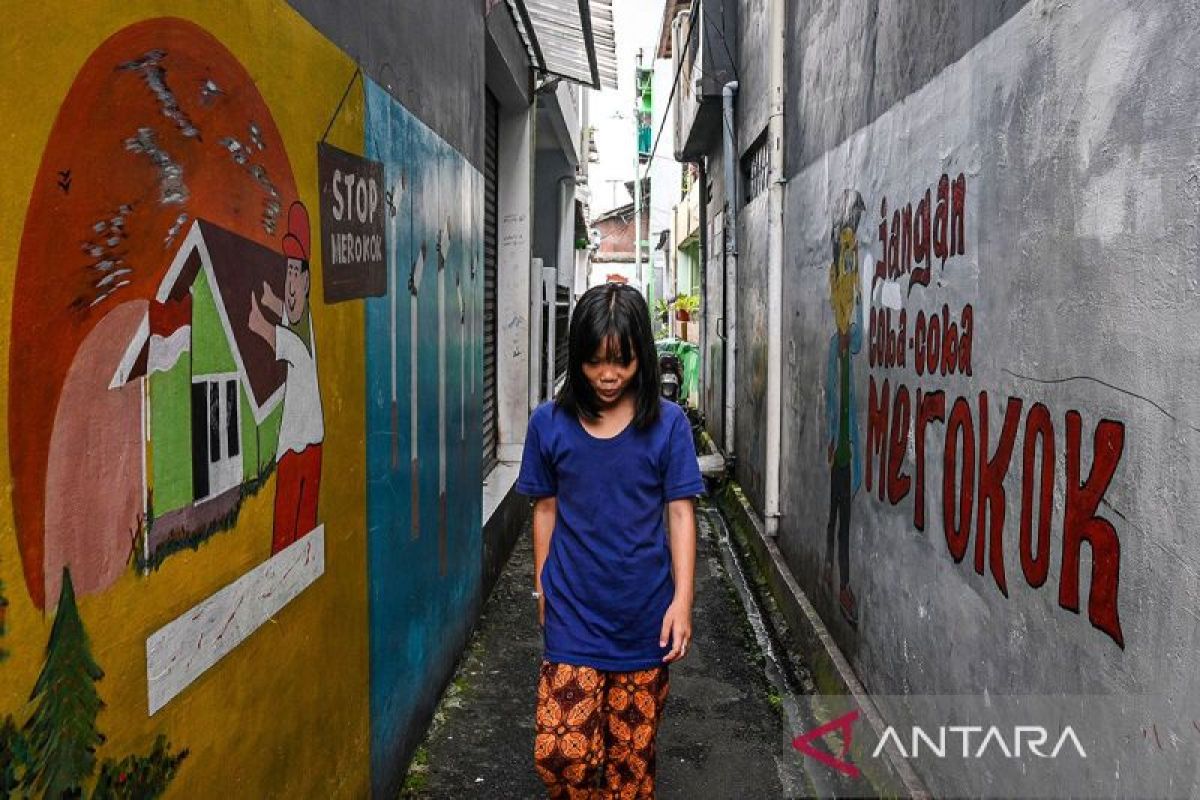
Before a child is able to explain the dangers of cigarettes, they often first learn that cigarettes are something ordinary.
Jakarta (ANTARA) - Every year, National Children’s Day arrives carrying the same promise: that every child has the right to grow up in an environment that is safe, healthy, and supportive of their future.
This year’s theme, “Together We Protect Children”, repeats that promise—child protection is not only the responsibility of families, but also of schools, communities, the business world, the media, and the government.
Yet each time this promise is renewed, there is a question that is rarely answered fully: to what extent have we actually kept it?
When we speak of child protection, what is it that we should actually be protecting first? Is it enough to equip children to face various risks, or is it time for us to begin reducing the risks continually placed before them?
Few issues illustrate this question as clearly as cigarettes. For a long time, protecting children from cigarettes has largely been interpreted as an effort to change children’s behaviour. They are given counselling, invited to make commitments, and reminded to say “no” to cigarettes.
All of that is certainly important. However, no matter how well the message is conveyed, it is difficult to expect a child to swim against the current when the environment around them keeps teaching something different.
No parent teaches their child to smoke. No teacher asks their pupils to try a cigarette after school. Yet every day, there is another lesson children receive that never appears in any curriculum.
That lesson comes from the environment. From stalls selling single cigarettes near schools, shop counters full of cigarette displays, adults smoking in public spaces, to peers who begin to see cigarettes as part of social life.
Before a child is able to explain the dangers of cigarettes, they often first learn that cigarettes are something ordinary.
The lessons taught by that environment are reflected in Indonesia’s current situation. The 2023 Indonesia Health Survey estimates there are around 5.9 million smokers aged 10–18. Meanwhile, the Global Youth Tobacco Survey (GYTS) shows that smoking prevalence among teenagers aged 13–15 rose from 18.3 percent in 2016 to 19.2 percent in 2019.
These figures show that the problem is not merely that children still smoke, but that so many children are starting to smoke. Every year, a new generation enters the cycle of cigarette consumption.